




Posted 14 years ago
 PrecisionR…
(11 items)
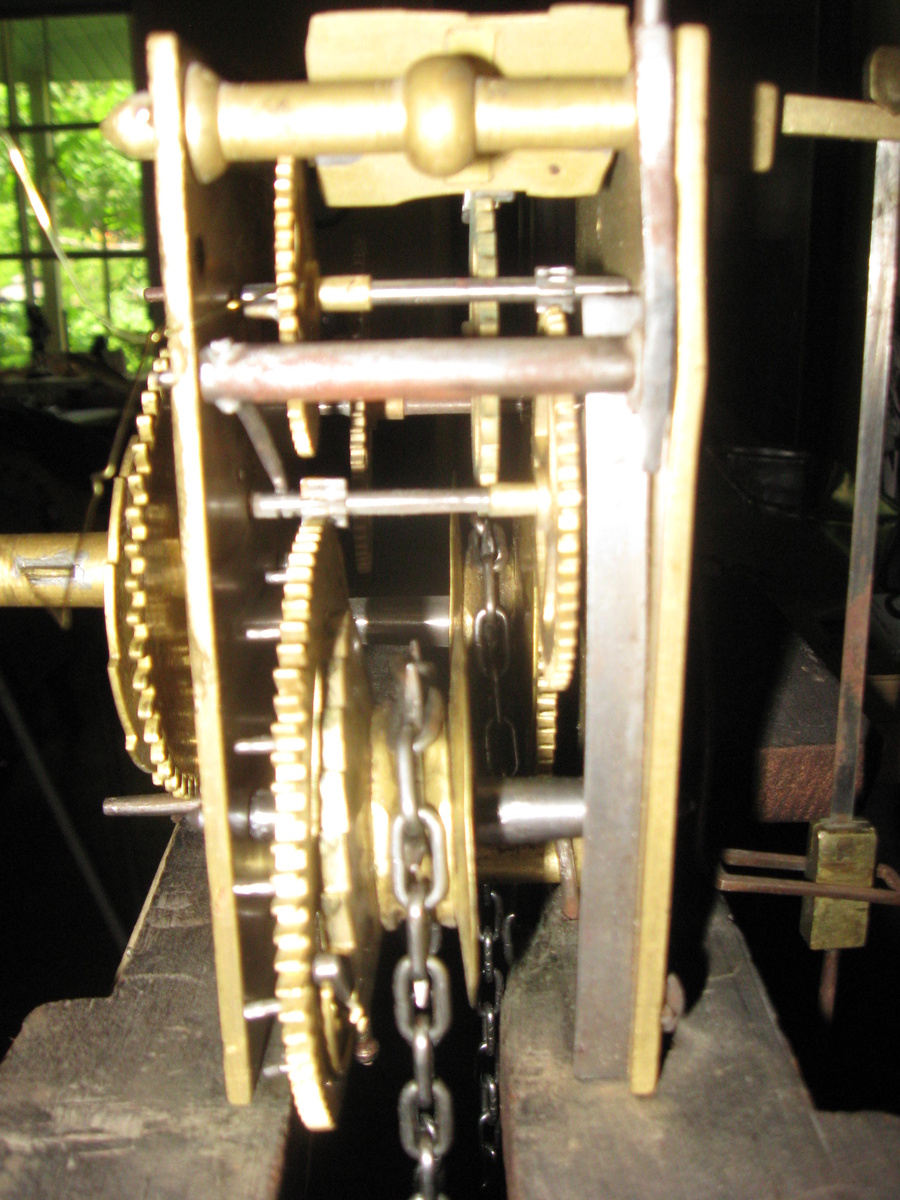
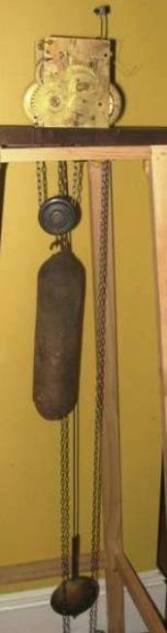
Note that this movement is made with only three pillars, instead of the usual four. It is powered by an endless chain and a single weight of about fifteen pounds. (The effective driving weight to each train would be 1/2 that, or 7-1/2 pounds.) Someone removed the lifting and locking levers, the rack and the gathering pallet many years ago. I gave the customer a quote to restore the strike, but they did not want to spend that much money on it.
The photos are, from left to right: time train, strike train, movement on the test horse, dial



Forgot to mention the following: When I first looked a tthis clock, I thought it was supposed to be powered by a rope, and someone had replaced the rope with a chain. BUt the pulley for the weight is also spiked, which would not have been the case if it were rope powered. The spiked weight pulley has voids in the brass, indicating that it was also made of recycled brass, the same as the rest of the movement. So I concluded this is a rather unusual American-made brass movement. Brass was not produced in the United States until after the Louisana Purchase of 1810, when zinc deposits were discovered in the West. Prior to that, all brass was imported, and it was common practice to melt down and re-use brass items, to make others. This clock is an example of that.