



Posted 14 years ago
potrero
(156 items)
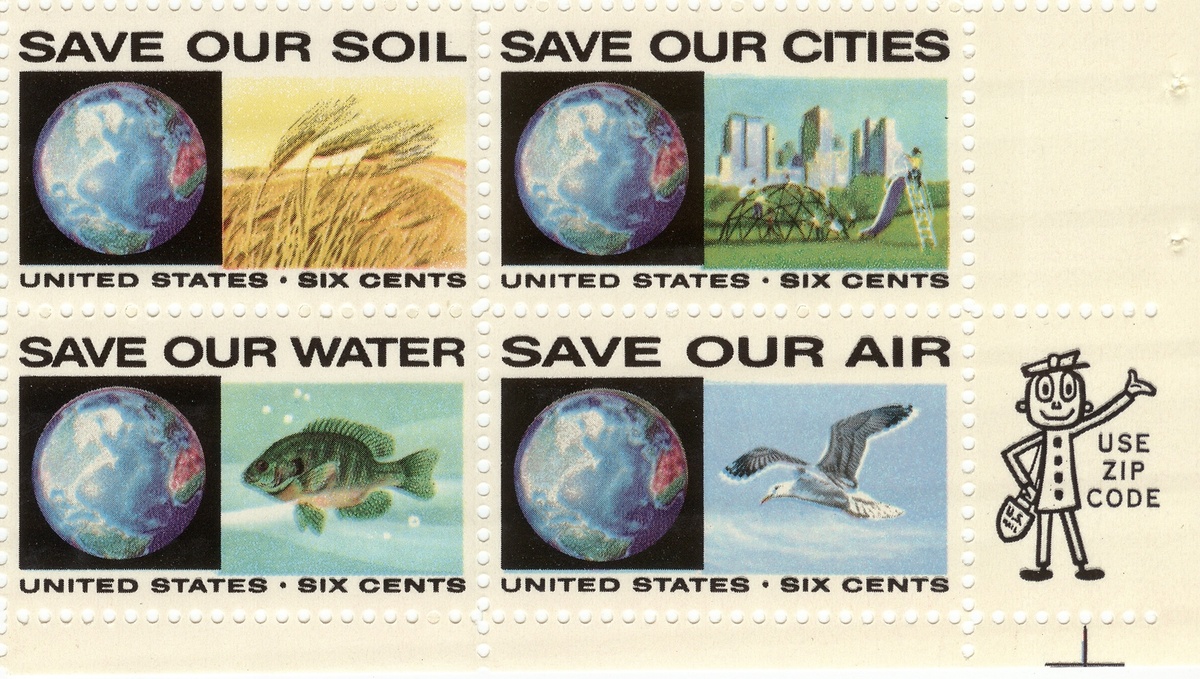
Still relevant.
The 1960s was the start of large scale environmentalism (larger than say John Muir and TR), with the publication of Rachel Carsons Silent Spring and other things that woke people up to the dangers of DDT and species extinction.
Note the happy little zip code guy in the margin. Doesn't care about the environment, just whether you use the zip code!



I am inventorying my late father's stamp collections. He save commerative plate blocks, but several don't have the serial #. Don't the plate blocks have to have the serial #'s, on the selveged edge to be valuable? Aren't those w/o the serial # just worth face value?
Thank you.
Peggy - I don't know that its so much the presence of the serial number that matters (though it definitely helps), as the rarity of the stamps themselves.
As with another post, I like your commentary.