

Posted 12 years ago
veto
(1 item)
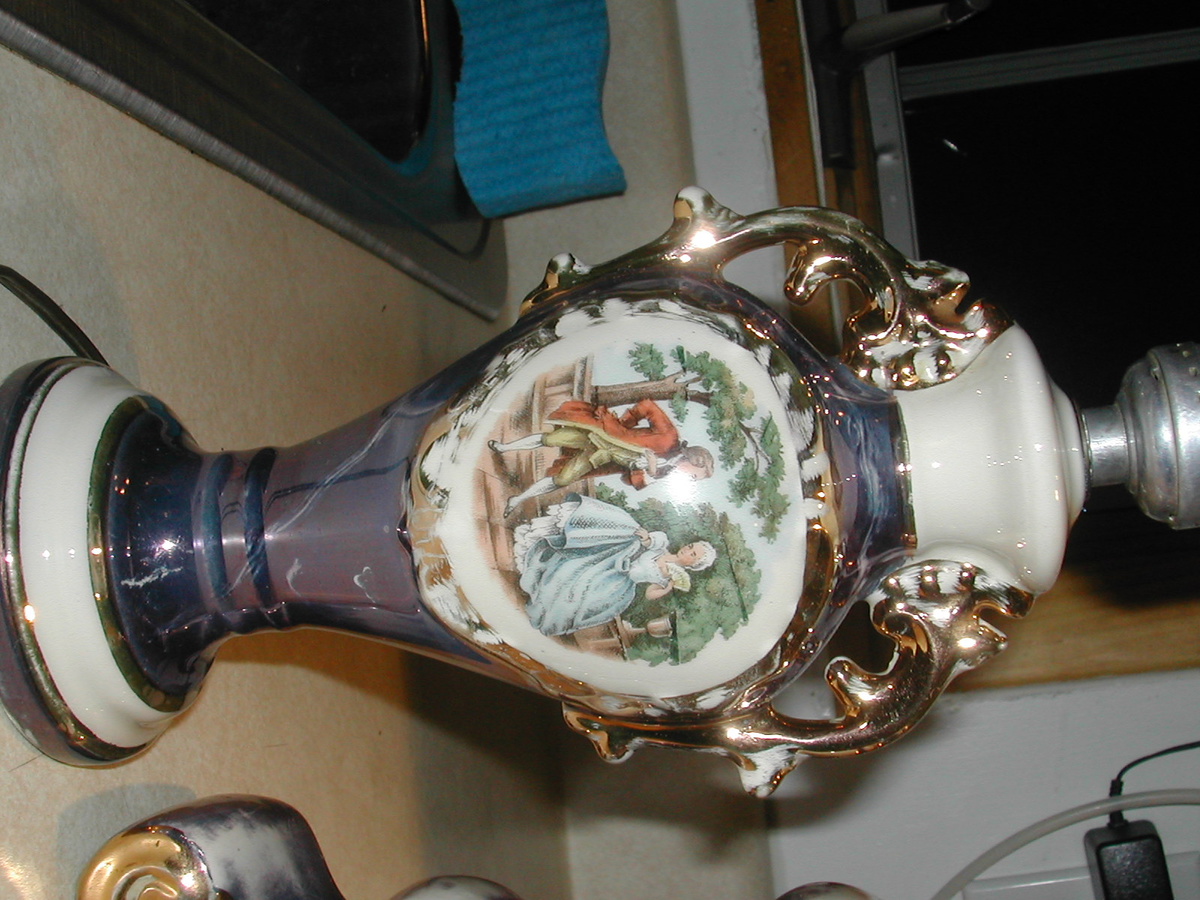
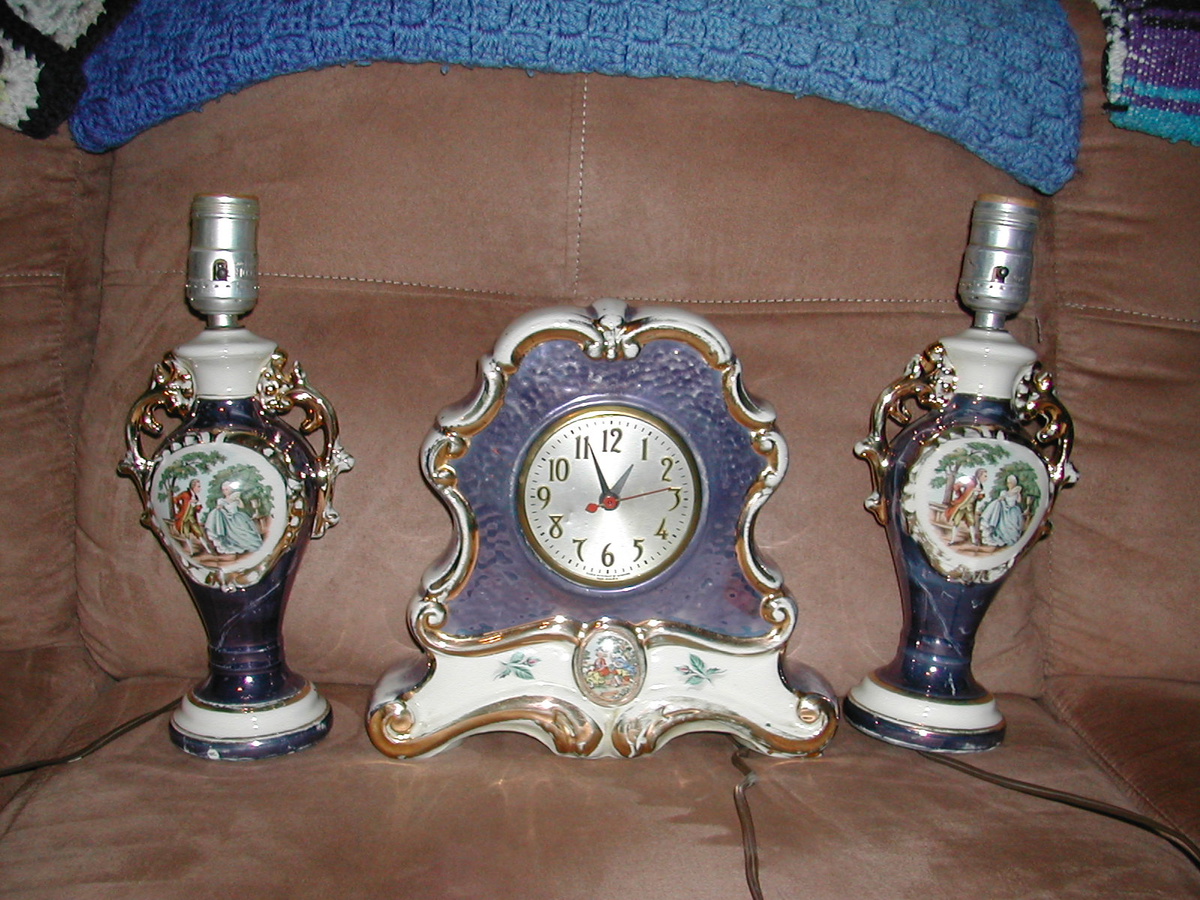
Porcilan lamp and clock set over 50 years old I have no idea who, what ,where, no marking any where no chip or dings some wear. I know nothing about the item
Lamp clock set | ||
| Clocks2834 of 4012 |  |  |
Posted 12 years ago
veto
(1 item)
Porcilan lamp and clock set over 50 years old I have no idea who, what ,where, no marking any where no chip or dings some wear. I know nothing about the item

Help us close this case. Add your knowledge below.
Create an account or login in order to post a comment.



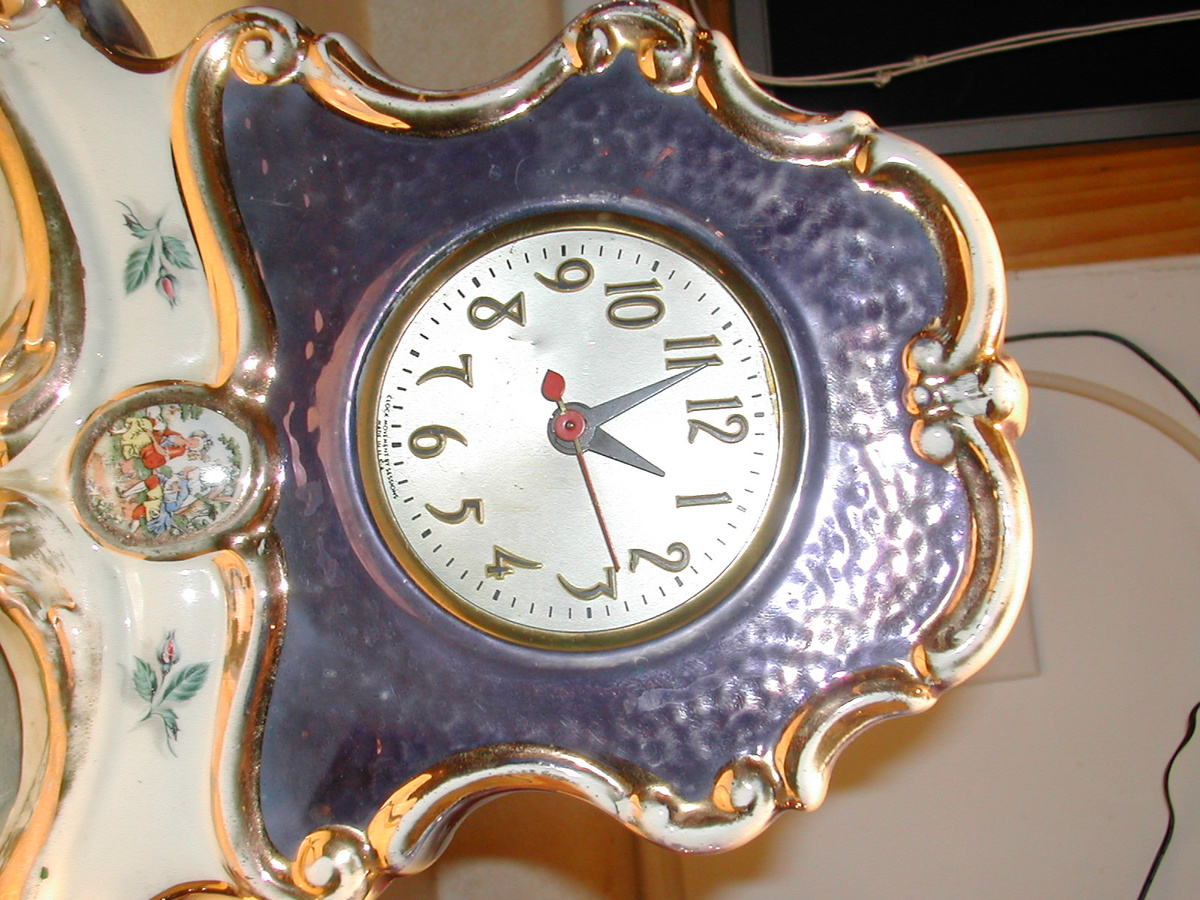
veto, at the bottom of the dial, below the 6, it says:
Clock movement by Sessions
Made in U.S.A.
Sessions Clock
From Wikipedia, the free encyclopedia
The Sessions Clock Company ("Sessions") was one of several notable American clock companies centered in Connecticut. The E Ingraham Clock Company, the New Haven Clock Company, the Seth Thomas Clock Company, Sessions and its predecessor E.N. Welch Company, and the Waterbury Clock Company collectively produced most of the mechanical clocks made in America between the early 19th century and 1950.
History
About 1900, William E Sessions and other family members purchased a controlling interest in the E.N. Welch Company, a clock manufacturer located in Forestville, Connecticut. Sessions' father owned a foundry located in Bristol, Connecticut that produced cases for E.N Welch Co. On January 9, 1903, the company was reorganized as The Sessions Clock Company.
Within a few years the Sessions Clock Company was producing clock movements, cases, dials, artwork and castings for their line of mechanical clocks. Between 1903 and 1933 Sessions produced 52 models of mechanical clocks, ranging from Advertisers, large and small clocks with logos of various businesses, to wall, or regulator clocks, and shelf or mantel clocks, designed for the home. Many of the Session clocks from this period are prized by collectors.
In 1930, the company expanded to produce electric clocks and timers for radios, while continuing to produce traditional brass mechanical movements. Beginning at the end of World War II Sessions W Model (electric) was widely used by various casting companies for their clocks. The dial of the W Model read Movement by Sessions. In the early 1950s Sessions begin to produce timers for television.
In 1956, Sessions was absorbed by a company interested mainly in their timing devices. In 1959, William K. Sessions, grandson of William E. Sessions left the Sessions Clock Company and formed the New England Clock Company. In 1960, one of the Sessions Clock buildings was sold to the Bristol Instrument Gears Company.
Kept as the Sessions Company, the new owners ran the operation until 1969 when changes in the market forced the Sessions Company into liquidation. In 1970, the remaining buildings were sold to Dabko Industries, a machine parts manufacturer
Dave
This doesn't tell you who made the porcelain clock case and lamps though.
Dave