An Interview With 1950s TV Lamp Collector Mark Stevens
What got me interested in TV lamps? I’ve always had an interest in the tackier artifacts of the 1950s and 60s. The cheesy stuff, the kitsch. Old B movies, monster and sci… Read more
| What do you collect? | Fashion + Jewelry | Watches + Clocks | Pottery + Glass | Furniture + Home | Art + Photos | Music + Movies | Toys + Games | Sports | Coins + Stamps | Paper + Books | Ads + Signs | Autos + Transport | Eras + Decades | Other » |
| 1970s | 1960s | 1950s | 1940s | 1930s | 1920s | 1910s | 1900s | 1890s | 1880s | 1870s | 1860s | Pre-1860s |
The 1950s are routinely described as “fabulous!” Indeed, the decade gave us Wham-O Hula Hoops and Chevy Bel Airs, Mickey Mantle and Johnny Unitas, Marilyn Monroe and Elvis Presley. Postwar prosperity and its resulting baby boom were in full swing, televisions became as commonplace as radios had been in earlier decades, and increased mobility spawned a range of businesses that catered to people in their automobiles, from drive-in movie theaters to drive-in restaurants, where roller-skating waitresses brought burgers and shakes to your car.
Any one of these icons or trends would have made the decade memorable. But the 1950s were also fabulous in other, more serious ways. In 1954, despite Cold War fears, the demagogy of Joseph McCarthy was roundly rejected. That same year, the U.S. Supreme Court ruled school segregation unconstitutional. And in 1955, Jonas Salk created a vaccine for polio. As for the decade’s “Ozzie and Harriett” reputation, in which dad went to work and mom stayed home with the kids, by the end of the 1950s there were as many women in the workforce as there had been at the height of World War II.
After watching the Soviets take the lead in the space race with Sputnik in 1957, the U.S. responded with its own unmanned orbiter, Explorer I, in 1958. That same year, National Airlines began the first passenger jet service in the country. By the end of the decade, the U.S. interstate highway system was well underway, and two territories, Alaska and Hawaii, were finally granted statehood.
Elsewhere in the world, colonial powers were giving back lands and nations they had once ruled. Italy exited Libya; France left Cambodia, Vietnam, Tunisia, and Guinea; and the United Kingdom let go its grip on the Suez Canal zone, Sudan, Ghana, and Iraq. With the help of Che Guevara, Fidel Castro overthrew the Batista regime to become Cuba’s prime minster in 1959. All of these events would have profound effects on the lives of citizens around the world for the next 50 years.
In the 1950s, New York City usurped Paris as the capital of the art world, thanks to the abstract expressionist paintings of Franz Kline and Willem de Kooning, as well as the pre-Pop art of Robert Rauschenberg and Jasper Johns. Literature became the playground of the Beats, whose principal chroniclers were poet Allen Ginsberg (“Howl,” 1956) and novelist Jack Kerouac (“On the Road,” 1957). First-edition copies of books from this era published by City Lights are highly prized by collectors, as are other 1950s classics—from J.D. Salinger’s “Catcher in the Rye” to Ray Bradbury’s “Fahrenheit 451,” which was serialized in a new 1950s magazine called “Playboy” (Marilyn Monroe was on the magazine’s first cover).
One of the landmark events of the decade was the opening of Disneyland in 1955. Built on a former orange orchard in Anaheim, California, Disneyland was an instant destination, which meant that it was flanked by an ample parking lot. By the end of the decade, many of the cars parked in that lot featured tailfins that came to dangerously sharp points—the 1959 Cadillac Eldorado is considered the king of the tailfin cars.
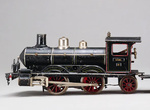
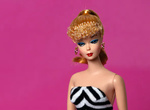
If automobiles were the new toys for adults, Barbie dolls were the preferred playthings for little girls—the early-1959 introduction of Barbie revolutionized the doll market overnight, leaving more traditional companies like Ideal in the dust. For boys there were Matchbox cars, as well as H0 scale model trains, made by Märklin, Lionel, and others.
The 1950s were an incredible decade for live theater, particularly musicals. Rogers and Hammerstein alone gave us such classics as “The King and I” and “The Sound of Music.” Other notable Broadway musicals were “Guys and Dolls,” “The Pajama Game,” “Damn Yankees,” and “West Side Story.” Signature dramas included Arthur Miller’s “The Crucible,” Tennessee Williams’ “Cat on a Hot Tin Roof,” Eugene O’Neil’s “Long Day’s Journey Into Night,” and Samuel Beckett’s “Waiting for Godot.”
In the movie palaces, fans flocked to see Charlton Heston in “The Ten Commandants” and “Ben-Hur,” John Wayne in westerns like “Rio Grande” and “The Searchers,” and Cary Grant in Alfred Hitchcock’s “To Catch a Thief” and “North by Northwest.” Marlon Brando was another box-office draw, appearing in “A Streetcar Named Desire” and “On the Waterfront.” Fellow bad-boy, James Dean, shined in “Rebel Without a Cause” and “Giant” before meeting an untimely end in 1955. As for Marilyn Monroe, “Gentleman Prefer Blondes,” “The Seven-Year Itch,” and “Some Like It Hot” say it all.
Television may have gotten its start in the 1940s, but the medium took off in the 1950s. Sid Caesar’s “Your Show of Shows” preceded “Saturday Night Live” by 25 years while “I Love Lucy” led successive crops of family sitcoms, from “The Adventures of Ozzie and Harriett” to “Leave It To Beaver.” Milton Berle had a show, as did Jack Benny, Bob Hope, and Jackie Gleason. Kids got “Captain Kangaroo” and “The Mickey Mouse Club,” reality-TV fans watched “Queen for a Day,” and newshounds got their daily download from Edward R. Murrow and Walter Cronkite.
One place where television and music came together was "The Ed Sullivan Show," where Elvis Presley performed three times in 1956 and ’57. But Presley was not the only musical superstar of the decade. Frank Sinatra began his storied collaboration with Nelson Riddle in the 1950s, Miles Davis helped give birth to the cool, and Ray Charles enjoyed some of his most fruitful years with Atlantic Records producers Ahmet Ertegun and Jerry Wexler.
Down in Louisiana, a whole lotta shakin’ was going on whenever Jerry Lee Lewis sat down at the piano. In Lubbock, Texas, Buddy Holly played a Fender Stratocaster on songs like “Peggy Sue” and “That’ll Be The Day.” And the Man in Black, Johnny Cash, recorded “I Walk the Line” for Sam Phillips at Sun Records.
For fashion, the spectrum ran from poodle skirts and cigarette pants to Dior A-line dresses. Grace Kelly wore fitted bodices and full skirts with lots of tule underneath. Chanel gave women smart suits; Schott Bros gave men Perfecto leather motorcycle jackets.
Up on top, some women’s hats that took their shapes, and names, from food—the mushroom cloche and melon hat come to mind. Casques, sailors, and large-brim hats were worn interchangeably, and small cocktail hats were decorated with everything from dyed feathers to faceted beads. Shoes leaned toward the spiky, both in terms of heels and the point of the toe. And purses suddenly got very colorful, with clutches in pinks, purples, and chartreuse. Chanel and Hermes were just two of the big-name designers, while companies such as Wilardy, Rialto, and Llewellyn made novelty purses out of a range of colorful new plastics, including Lucite.
At home, Mid-century Modern was in full swing (although it wasn’t called that then), with Eames chairs around the dining table, a George Nelson clock on the wall, and an RCA television set in the living room. If you were fortunate enough to purchase a new home, chances are good it was in a Levittown-type development, although the style was often basic ranch.
In baseball, the New York Yankees pretty much owned the World Series, thanks to the play and pitching of Mickey Mantle, Yogi Berra, and Whitey Ford. The team won the championship six times between 1950 and 1959, and reached it eight times. Stan Musial of the St. Louis Cardinals was one of the decade’s most reliable hitters, as was Hank Aaron of the Milwaukee Braves.
Back in the 1950s, pro football had no Super Bowl, but it did have players like Johnny Unitas of the Baltimore Colts. In a decade that had been dominated by the Cleveland Browns and Detroit Lions, Unitas helped his Colts to consecutive NFL Championships in 1958 and 1959.
Finally, there was Gordie Howe, who joined the Detroit Red Wings in 1946 and dominated ice hockey throughout the 1950s. Howe helped his team win three Stanley Cups in the 1950s, each time defeating the Montreal Canadiens for the championship.
Pedal cars, first developed in the 1890s, reached the height of their popularity in the 1920s and 30s, and saw a resurgence in the… (more)
Tin toy cars saw their heyday in the 1950s and 1960s, before being displaced by diecast models in the 1970s. One of the first manu… (more)
The Ford Fairlane, produced from 1955 to 1971, began as a premiere full-size car with curvy lines and a distinctive stainless stee… (more)
82 watchers91 watchers43 watchers32 watchersOne of the earliest media and pop culture mega-stars, Marilyn Monroe left behind a wide range of vintage collectible memorabilia. … (more)
Blue Note Records was founded in 1939 by Alfred Lion, who was soon joined by associate Francis Wolff. Lion signed the prime jazz a… (more)
Mid-century Modern describes an era of style and design that began roughly in the mid-1940s and continued into the mid-1960s. It i… (more)
The transistor, forerunner of today’s microprocessor, was invented in the early 1950s by Texas Instruments. After Emerson, Philco,… (more)
General Motors Chevrolet division produced the Bel Air from 1953 to 1975, initially as a premium car, then mid-range and ultimatel… (more)
68 watchers120 watchers32 watchers108 watchers46 watchersVintage Mid-century Modern lamps are characterized by simple lines and a fun space-age feel. Whether designed by a big name like E… (more)
Danish Modern tables and chairs, desks and dressers, and other types of furniture from the post-war period are recognizable for th… (more)
115 watchersChevrolet introduced the Corvette in 1953, and continues to produce it today. As with many sports cars, the 1960s Corvette models … (more)
20 watchers25 watchers21 watchers7 watchersKnown for her classic beauty and ballerina figure, Audrey Hepburn was a leading actress in the 1950s and 60s, starring in such fil… (more)
For people of a certain age, seven-inch 45 rpm vinyl records are what music was, and is, all about. They just can’t think of Elvis… (more)
After World War II, design evolved from Art Deco and Streamline Moderne to Mid-century Modern, which reigned from the mid-1940s un… (more)
The first neon advertising sign was used for a Parisian barber in 1912. Since then, neon has been used to add color highlights to … (more)
43 watchersAs with most Eames-influenced designs, lamps of this period are far simpler than their predecessors. Long, narrow stems and metal … (more)
The most famous switch-hitter of all time, Mickey Mantle holds a notable record: the longest home run ever. At 565 feet, many thin… (more)
A very groovy phone concept imported from Europe: originally designed by Ericsson in Sweden, manufactured and distributed in the U… (more)
In the 1950s, selling singles was a bigger deal for up-and-coming rock ’n’ rollers than selling albums. That’s where the money was… (more)
During World War II, Lionel’s Irvington, New Jersey factory was kept busy fulfilling government war contracts for binnacles and ot… (more)
The first coin-operated phonograph made its debut at the Palais Royale in San Francisco in 1889. The brainchild of Louis Glass and… (more)
The lunchbox phenomemon began in the 1950's, the daytime equivalent of the TV dinner. Aladdin and American Thermos were the two ma… (more)
In the 1950s, the first decade of mass television adoption, there was a common belief that watching TV in low light could damage o… (more)
Even though Adolph Rickenbacker is credited with being one of the co-creators of the first electric guitar in 1931, the company th… (more)
Gibson vintage guitars have their roots in Kalamazoo, Michigan where, in 1894, an eccentric, self-taught luthier named Orville H. … (more)
37 watchersCharles and Ray Eames, who pioneered modern chair design in the 1940s and '50s, were responsible for some of the most innovative c… (more)
17 watchersThe Stratocaster was not the first Fender solid-body electric guitar—that honor belongs to the 1950, one-pickup Esquire, which wen… (more)
12 watchersThe model 500 was the Bell System's mainstay phone for decades (1950s through 1980s), first as a rotary dial and then push-button.… (more)
The Zippo Manufacturing Company was founded by George Blaisdell in Bradford, PA, in 1932. That same year he created the first Zipp… (more)
The Ford Thunderbird was introduced in 1955 as a sporty, luxurious two-seater car and then went through several design iterations.… (more)
90 watchers24 watchers83 watchers122 watchers
What got me interested in TV lamps? I’ve always had an interest in the tackier artifacts of the 1950s and 60s. The cheesy stuff, the kitsch. Old B movies, monster and sci… Read more
I didn’t really get into to pinball machine collecting until maybe 15 years ago, but when I was a freshman in college, video games were really big. I went to Purdue Univers… Read more
The Parker "51," produced by the Parker Pen Company, is considered by many collectors to be the best pen ever made. Developed in 1939 and introduced in the U.S. market in 19… Read more
I started as a collector and I’m a web designer, so I thought I would design a website from my passion. I threw it up there and people just found me and it started to take … Read more
I don’t actually remember exactly when I became a Marilyn Monroe fan, I’ve basically been collecting Marilyn items my entire life. I started collecting Marilyn Monroe per… Read more
Mid-century Modern used the technology of mass production to produce good-looking pieces of furniture out of the latest materials. A number of these materials became commonpl… Read more
As a teenager, I collected everything from vintage bicycles to Coca-Cola to Victorian stuff. Once I realized some of this stuff contained concepts of art and design, I starte… Read more
These wonderful snow-filled objects are a world of fascination in themselves. Just shake one and see if you can resist the silent magic it evokes, not unlike an actual snowfa… Read more
Cigarette lighter collecting is a hobby that never gets boring. Just by browsing eBay auctions for ten minutes, for example, I recently found a lighter shaped like a lion’s… Read more
I’m 61 now, and I’m an engineer. I was thinking if I ever wanted to collect something, I would probably collect slide rules because they’re small, they don’t take up … Read more
In the 1950s when I was a teenager I used to work for a television repair shop and we’d get sets from the 40s every once in a while and I was fascinated by them. So in 1999… Read more
I’ve been around Chevy cars my whole life and had them when I was in high school. It’s a lifetime thing. Some people do Fords; others Chryslers. It can be as easy as what… Read more
I’ve been interested in jewelry since I was in high school. I’ll be 60 in September, so that’s a lot of years. I wore jewelry and collected it. I liked the jewelry of o… Read more
I grew up in upstate New York in Rochester, and started playing guitar when I was about 10 years old. We had this place in Rochester; called the House of Guitars. It was this… Read more
Collecting Paillard-Bolex cameras was something I started doing by accident. It was a combination of several interests I had, including, photography, broadcasting and even co… Read more
Perhaps you recently saw a picture of a cool looking pocket radio from the early 1960’s and were reminded of your carefree, youthful days? Maybe it was the pastel colors or… Read more
I collected football cards when I was a kid, back in the late ’60s, early ’70s. Then I set them in the closet for about 15 to 20 years and picked them up again in 1989. A… Read more
| 1970s | 1960s | 1950s | 1940s | 1930s | 1920s | 1910s | 1900s | 1890s | 1880s | 1870s | 1860s | Pre-1860s |