In this interview Rob Niederman talks about collecting antique wood cameras from the late 1800s. Based in Minnesota, Rob can be reached via his website, Antique and 19th Century Cameras, which is a member of our Hall of Fame.
How did I start collecting cameras? Actually, I had an interest in photography as a kid and owned a darkroom by the age of 12 or 13. My interest in photography grew. I spent lots of time in a Chicago gallery learning about black and white photographs by the old masters and was very fortunate to study with Ansel Adams in one of his workshops in the mid 1970s. My first exposure into antique cameras occurred in the late 1970s. I was given a beautiful, large wooden Century No.7 studio camera as a birthday present. As it happened, the studio camera had quite a history and was used by a portrait photographer in Oconto, Wisconsin, who photographed the townsfolk in the early 1900s.

The Folding Montauk, Style 1, c. 1899 by G. Gennert Company
I became fascinated with the concept of a wood camera. It looked nothing like the metal cameras that I was familiar with, and it certainly didn’t use rollfilm. Most people don’t stop and think that before metal and plastic cameras, cameras were made out of wood. The great expanses of polished wood set with brass hardware and knowing that highly skilled craftsman lovingly hand-built wood cameras was intoxicating.
A little later on I was traveling in Door County, Wisconsin, and happened to stop into a camera shop to pick up 35 mm film. Behind the counter I spotted an old wood and leather camera. The body was covered in dark, deeply pebbled black leather while the interior glowed from what appeared to be highly polished rosewood adorned with bright nickel plated hardware. My curiosity was piqued and I had to know more. The camera was a 1907 Conley that included lots of original developed glass plates showing images of times gone by. It then occurred to me that cameras had a story to tell and I decided to seek them out.
As time went on, I started seeing the diversity in their designs. About 10 years ago I met other collectors who shared the enthusiasm of wood and brass cameras. They also knew a great deal of the history of pre-1900 apparatus. It was my first exposure to learning the true history of photography, and as a result, I got serious and passionate about collecting. Having been raised around antiques most of my life, I realized that to fully understand older cameras, research needed to be done. And with the explosive growth of the Internet and e-mail, it became much easier to make new acquaintances and learn from those who had already been collecting for years if not decades.

Pearsall Compact Camera c. 1883 by New York Photographer, Frank Pearsall
I’m not collecting just to collect; I have very specific themes that give me direction on what to seek out. I want to understand the lore and legacy of the camera itself, to know more than just who made it and the approximate date of manufacture. Each camera has a story that enriches the collecting experience. I want to know why it was made, who it was marketed to, and if there’s any historic background to it. This type of information is beyond what appears in antique references and books.
Case in point, I acquired a camera earlier this year, an 1883 Compact View made by a well known Brooklyn photographer by the name of Frank Pearsall. The camera is quite rare with only three known examples. The collecting community already knew of Pearsall as a prominent artist and that his Compact View was historically important because it set forth an innovative design pattern that literally fostered in a new era of portable cameras. Was there more to learn, I asked myself? As it ended up, the answer is a resounding “yes!”
Diligent research uncovered a great deal of fascinating information about Frank and Alva Pearsall, brothers who had competing studio / galleries in 1880s Brooklyn, NY. But an unexpected bit of information slowly disclosed itself. Frank had a connection to American baseball in the late 1880s. Aside from being an avid fan, he was also the personal photographer to Henry Chadwick, widely regarded as the “father of baseball.” Pursuing this further, I uncovered information in an obscure book by baseball historian Peter Nash that included a comment by Chadwick noting that, “Pearsall had invented a portable camera appropriate for baseball.” From there it started to come together.

Quta Photo-Machine c. 1904 – 1911 by Quta Camera & Plate Company, New York
From a historic point of view, it simply didn’t make sense for a studio artist to suddenly create a portable camera for use outside of the studio, let alone a design that changed the industry and fostered a new generation of cameras in the 1890s. Uncovering new information like this is incredibly exciting, especially when it links two collecting communities together. And once you start digging deep into the history and legacy of these things, surprises abound.
Ironically, two months after making this connection, I was contacted by a baseball historian doing research for a new book he was writing on a rare series of 1880s baseball cards. He wanted to learn more about the photographic equipment used to create cabinet photographs of players that were used to produce the baseball cards. He also felt it was important for baseball historians to understand the photographic “tools of the trade” that produced baseball cards and decided to include a side-bar in his book on the topic. After explaining what I uncovered about Pearsall and his connection to baseball, the author also found this information exciting. In summary, we both learned a lot and I ended up authoring nearly the entire side-bar for the new book; which will also include a picture of the Pearsall Compact Camera.
Collectors Weekly: Are many of your cameras one of a kind?
Niederman:As I became more immersed in the history of photography, a greater appreciation for rare and historically interesting items grew. It is a common “symptom” with serious collectors; the desire to move your collection up the antiques food chain so to speak. At this time, my drive is to acquire the best rare examples of interesting cameras, especially those that are relatively unknown and have good stories to tell. As it happens, these are often the most difficult to find because very few exist and that other collectors may already have acquired the pieces.
Collectors Weekly:What are some of your favorite models?
Niederman: The camera that really turned me from an aimless collector into a passionate historian is an 1891 model of a self-casing camera by the American Optical Company called the Henry Clay Camera. There are estimated to be three known examples of this particular 1891 model. When first acquired, I didn’t realize its significance or that it had an odd design. Upon realizing that it was an undocumented model and unknown to the collecting community, I felt compelled to find answers. It was hard work at the time because not everyone was using e-mail.

The Henry Clay Camera c. 1891 – 1899 by American Optical Co., Scovill & Adams Co., props
I have a couple other favorites. One is the Pearsall Compact Camera that I spoke of earlier. It’s historically important because this is the camera with a new design that launched a whole new style of cameras. Kind of like the first mini van, that opened up a whole new realm of car design. Part of the love of collecting is that you get these unexpected crossovers. Besides, Pearsall’s camera is simply gorgeous.
Another favorite of mine is an 1882 Blair Tourograph, of which there are also only three examples known. This camera is almost borderline mythical and a good example of a great idea for amateur photographers that was poorly executed. It was made at about the same time as the Pearsall camera, but was unnecessarily complicated for to use. Even though it’s historically important, it was an utter failure as a camera and its design became an evolutionary dead-end.
Another camera I acquired, a Trick Camera made by DeMoulin Bros., is not even a real camera. It’s an early version of a squirt camera. Part of the fun is not being so serious about collecting. It was so silly and fun when I saw it at auction; I decided I had to own it. Even though I like to target pieces made before 1900, I thought, “how can you not love a wooden camera that squirts water?” And the camera really works. One evening I loaded it up with water and tested it on my son. The darn thing squirts about 10 feet with the power of a super soaker! How fun is that? Not everything has to be serious.
Collectors Weekly:How do you find these cameras? Do you research them first or just come across them?

Trick Camera c. 1910 – 1930 by DeMoulin Bros. & Company
Niederman: It’s both. I have themes and a focus as well as a wish list. But I do come across some unexpected items, like the Trick Camera. Before eBay, you had to meet people, scour magazines and visit antique shows. Today, the best way to get the super rare, interesting cameras is through a network of contacts. I do that because I don’t want them to appear on eBay and have to fight over them. The five most recent cameras I acquired had nothing to do with eBay. That doesn’t mean something nice doesn’t show up from time-to-time on eBay, the problem is that eBay has done a great service to collecting communities and educated a lot of people. And it’s good for the seller when a lot of people fight over a highly desired item, yet it can also get to the point where inexpensive cameras sometimes go for a lot of money.
Last year was a bad year for me, I think I only acquired a couple cameras; but this year I’ve already acquired five significant pieces. These latest cameras became available privately through a network of contacts. For example, one collector and close friend is slowly selling off his collection. We have a special relationship and he has kindly given me and a few others an opportunity to pick and choose items that fit our collecting themes. In this particular situation, the seller feels that the integrity of the buyer and his dedication to collecting (as opposed to being a dealer) is an important factor in making a decision to part with a camera. Although it’s a difficult decision to sell any camera, the seller is happy because he can “visit” his former cameras on my website.
Collectors Weekly: Where do you end up finding most of the information about these rare cameras?

Shew Xit c. 1898 by James F. Shew in London
Niederman: The Bible of camera collecting is McKeown’s Price Guide to Antique and Classic Cameras. It is an imposing book and the latest edition typically costs over $100. This reference has become a reliable source for collectors because of the number of people who contributed their knowledge over the years. I am also a major contributor to McKeown’s. There are 12 editions from probably over 24 years. It covers just about the complete history of cameras and includes over 10,000 photos and probably information on over 30,000. It’s a terrific reference, but like everything else it might be right or wrong, and therefore should be treated as a “guide.”
“The Pearsall Compact Camera was kind of like the first mini van—it opened up a whole new realm of design.”
I also try to buy the original catalogs and other references issued by the camera manufacturers. Some makers issued books on how to make photographs. These have a wealth of information and often include large sections of advertisements, articles about the cameras, information about newly issued patents, and profiles of new cameras introduced to the market. You can learn a lot not only from the manufacturer’s ads but from retailers catalogs, so I try to buy as many as possible.
I also get a lot of information from books that have been scanned and presented in Google’s books area. While it takes the challenge out of the hunt, Google’s impressive book search service makes things go a lot faster. You still have to do a lot of work and dig around, but it is much easier today. I also know the technology curator at the George Eastman House and have been out there a couple times to go through their library. I can also email him for research assistance. Another source of information is from my network of friends. The camera collecting community is pretty friendly and we help each other out a lot. There are also discussion boards. Even with the new technology search tools on the Internet, you still have to work hard to search out information on early wood cameras because it’s not like going to Barnes & Noble and looking for a book on Nikon cameras.
Collectors Weekly: How do you keep your cameras in such good condition?

The Clifton Camera c. 1898 – 1906 by E. & H.T. Anthony & Co.
I do what I call preservation. Cameras that are over 100 years old will have dry leather that might need a bit of TLC. Not wanting to cause harm to a rare camera, I contacted some leather and restoration experts for advice on how to care for antique leather. Some cameras may have leather that is already deteriorating, and once started, it cannot be stopped. But I do want to slow the process of deterioration through careful preservation. The problem with getting cameras in the best possible condition is that you end up paying a higher price. It’s not about what makes it expensive, it’s about what makes you happy. As a collector and a historian I’m a purist.
Collectors Weekly: How do you display your cameras?

Shure Shot Detective Camera c. 1897 by Robert H. Ingersoll & Bro. (shown with dry plates)
Niederman: I’m in my office right now, and every camera I own, I can see. I also contracted a carpenter to build a display case, however many are on tables and a couple in book shelves. Nothing is hidden away in drawers. I know people that have over 4,000 cameras, but how do you enjoy them if they can’t all be on display? The fragile cameras are under glass.
I have a rule; any camera I own is on display. If I ever reach a point where I have cameras stuffed away in drawers, I’ll have too many cameras, or too little room. Not everybody agrees with that, but it keeps me from becoming a junk collector. I am also starting to add a couple knick-knacks like ground glass viewers and early meters.
Collectors Weekly: Any other advice for someone just starting out with camera collecting?
Niederman: My advice is really no different than recommendations for anyone new to collecting. First and most important, take the time to learn about what you want to collect and seek out information from others. The more you know the better prepared and protected you are. Focus and spend some time on developing a theme or collecting direction. Don’t collect as an investment because you’ll never win. Collect what you really enjoy and make it something you want to live with, but don’t collect because you think it’s going to go up in value. Just make it fun and enjoy the experience. In many cases, others will not understand our collecting passion, so be patient and don’t try to impress everyone. Finally, join collector groups, read books, and go to shows.
Collectors Weekly: Can you give some examples of “themes”?
Niederman: If someone says they collect cameras, the first question I’ll ask is what kind of cameras they collect. Many collectors do not have a theme or focus, and I’ve heard several tell me that they buy anything with a lens. In contrast, my focus is on wood cameras, preferably pre-1900 cameras – and that’s still a big theme. Although I like to cap off around apparatus built up to the year 1900, anything newer is not considered unless it’s really strange, rare, or historically interesting. I also have sub-themes such as acquiring the very first models of self-casing cameras by each major American manufacturer. After nearly 10 years in pursing this target, I have managed to acquire first version examples made by Kodak, American Optical, Blair, Scovill and others.

Tourograph c. 1880 – 1882 by The Blair Tourograph & Dry Plate Company
This also brings up an interesting collecting conundrum in deciding what first to buy. Collectors often find themselves unable to afford interesting items – including me! One internationally famous collector summed it up best when I asked him about it. His reply was to go after the most difficult and rare cameras first, and after that everything is easier. I found this to be excellent advice that shaped my collecting habits. I became more selective and patient. Instead of buying cameras that I know will appear several times a year for years on end, I put money aside in preparation for rare cameras on my “most wanted” list. I am happy to say the strategy works and I’m enjoying collecting and researching cameras more than ever.
(All images in this article courtesy of Rob Niederman’s Antique & 19th Century Cameras website)
 Dawn of the Flick: The Doctors, Physicists, and Mathematicians Who Made the Movies
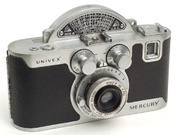
 Cool Cameras: The Univex Mercury
 Dawn of the Flick: The Doctors, Physicists, and Mathematicians Who Made the Movies
 Hollywood at Home: Vintage Bolex Movie Cameras
 Wood CamerasEven before the first 19th century cameras were produced, wood was used for…
 Kodak CamerasThe Eastman Kodak Company of Rochester, New York, was at the forefront of t…
 CamerasAntique and vintage cameras are valued by collectors for countless reasons,…
 Mari Tepper: Laying it on the Line
 Nice Ice: Valerie Hammond on the Genteel Charm of Vintage Canadian Costume Jewelry
 How Jim Heimann Got Crazy for California Architecture
 Modernist Man: Jock Peters May Be the Most Influential Architect You've Never Heard Of
 Meet Cute: Were Kokeshi Dolls the Models for Hello Kitty, Pokemon, and Be@rbrick?
 When the King of Comedy Posters Set His Surreal Sights on the World of Rock 'n' Roll
 How One Artist Makes New Art From Old Coloring Books and Found Photos
 Say Cheese! How Bad Photography Has Changed Our Definition of Good Pictures
 Middle Earthenware: One Family's Quest to Reclaim Its Place in British Pottery History
 Fancy Fowl: How an Evil Sea Captain and a Beloved Queen Made the World Crave KFC
I have just been going through all my junk after a move, and found and old lens with some smaller lenses. The lens is an patent Jan 8th 1981 Bausch and Lomb this one still has what i believe to be the original rubber hose attached. Are these still collectable and are they easy to clean?
Thank you in advance for any information you can offer me.
kind Regards
Chris
Hi Chris; It sounds as though you have a lens in a brass shutter. Maybe something such as a Unicum? Anyhow, there are many different styles, models and sizes. They are moderately collectable yet somewhat common and often found in excellent working condition. I’m unsure what you are asking in reference to cleaning. Are you referring to the lens, brass casing, or …? It would be terrific if you posted a picture of the lens in the Collectors Weekly Show & Tell forum. I can then look at it and tell you more. Thanks!
Hi Rob,
I was given a camera by an older gent neighbor when I was in my early 20’s and I am 72 now. I had always thought it was a Kodak, for what reason I don’t know but in viewing your cameras, it looks very much like the first camera at the top of your page with the label “The Folding Montauk, Style 1, c. 1899 by G. Gennert Company”. Although there is what appears to be a serial number on the plate below the lens, and a Bausch & Lomb identification on the shutter release, I do not find an actual brand or model on the camera. Is there any way to properly identify it? I can send a photo of it if you think you can help.
Thanks, Roger
Hi Roger; You probably have one of the classic red-bellows American self-casing cameras. The Gennert you refer to is a nice example and there were many companies that sold this style. Please post images of the camera in the Show & Tell forum and I will do my best to identify it. Thanks!
Is there any way to soften up the bellows material on a 5×7″ Seneca City view camera? Thanks, Don
Hi Eastwestphoto; Good question and it depends on the bellows material for this particular camera. Some are leather. Others are rubberized cloth. If leather, it is possible to soften up the material very carefully. The problem is that the leather is probably dried out and there is risk that leather rot might have set in. The problem typically resides in the bellows liner. The hide glue and liner could have dried out. A very careful application of a leather cream might help. Do not use a liquid because the leather is thin. It could soak through and dissolve the glue. If this is rubberized cloth, I would need to handle the camera to determine the best approach. In summary, it takes a lot of experience to deal with a stiff bellows without causing damage. Feel free to post the camera on the Show & Tell board so that I can get an idea of what you’re dealing with. Thanks!
Hi Rob,
I am an antique collector of all sorts. I am currently re-arranging my collection. Thought I would set all my cameras up according to their introduction into photography. In other words establishing a display of the evolution of the cameras. My question, Is there an old box camera where it always showed the photographer with a hood over his or her head? I can’t seem to find one or any information on the internet.
Hi Lew; In reply to your question, I assume you are asking if there are examples of solid body cameras (as opposed to bellows designs) that required photographers to use dark cloths (viewing hoods) to compose pictures.
The short answer is that the vast majority of solid body (i.e. box) cameras, by their nature, did not require dark cloths because they are self contained. For really early cameras, in most cases the ground glass was positioned in a recessed chamber built into the camera’s body that created a dark room (so to speak) to view a faint image on ground glass.
However there were solid body cameras that would require photographers to be under dark cloths to view a ground glass image. This is because the ground glass was placed on the outside of the body instead of inside a darkened viewing chamber.
For example, August Herzog invented two uniquely designed solid body cameras that would probably require photographers to be under a dark cloth to see the ground glass image. The 1876 model (Popular Photograph Camera) is a ‘square-ish’, truncated box-form cardboard body mounted on a stand. Cardboard as a primary body material was found to be too fragile and in 1881 Herzog created an improved version, the American Gem No.2. It used a bell shaped, metal body (not truly box shaped but a solid body camera nonetheless) in place of cardboard. My website shows both versions (the 1881 example is in my collection): http://www.antiquewoodcameras.com/Herzog.html A summarized version excerpted from my website post is also here on CW at: http://www.collectorsweekly.com/stories/96709-the-1881-american-gem-no-2-a-very-ea
Another example of solid body (box form) cameras that would require dark cloths as viewing hoods are the New Gem and Ajax cameras made by Simon Wing. An example of the Ajax can be seen on my website at http://www.antiquewoodcameras.com/ajax.html
Thanks Rob
Extremely helpful information. I will continue to build my evolutional display of the camera from the late 1800’s to current date of the Smart Phone.