

Posted 15 years ago
 sabyrd8
(38 items)
Who is Fred Morgan and where can I find further info on him and his works? Any help appreciated.
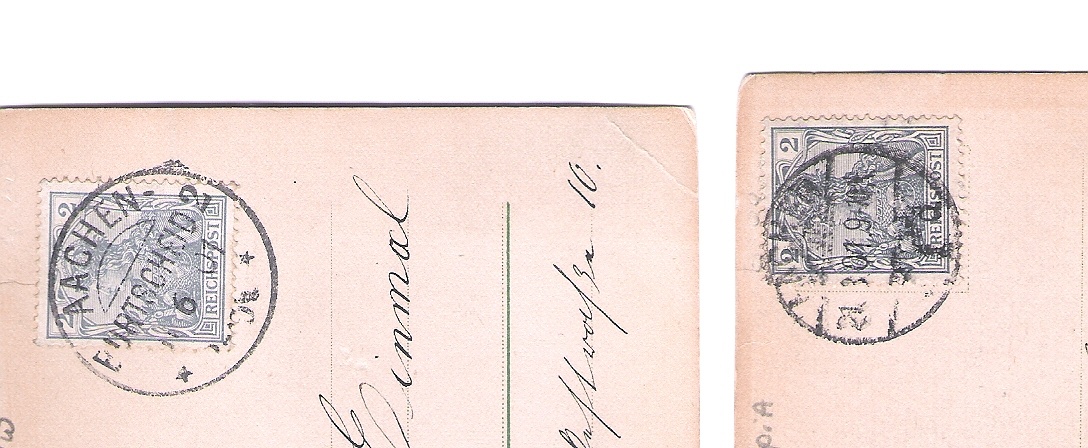
Fred Morgan artist postcards with canceled stamps. | ||
| Artist Signed Postcards40 of 43 |  |  |


Posted 15 years ago
sabyrd8
(38 items)
Who is Fred Morgan and where can I find further info on him and his works? Any help appreciated.

Create an account or login in order to post a comment.



"During the nineteenth century in England, domestic subjects of family at home, children at play and others of the same sort were among the most popular type of genre paintings. Frederick Morgan was one of the greatest British genre painters of his time specializing in happy childhood scenes. His works were very popular as attested by the large number of reproductions created and sold during his lifetime. Frederick Morgan was born in London, England in 1847. His father John Morgan (1823-1886) was a genre artist who received his training in Paris France under the French painter and teacher Thomas Couture (1815-1879). He was known as “Jury Morgan,” after the success of one of his pictures entitled The Gentlemen of the Jury, and was a member of the Society of British Artists, as well as a regular exhibiter at the Royal Academy. (Oldcastle, pg. 4) As John Morgan firmly believed in the importance of learning art at a young age, he took his son Fred (as he was called) out of school when he was fourteen years old to begin his art instruction with him.
Fred’s popularity increased, as did the demand for his paintings of children scenes. Although he was an excellent child portraitist, he “had a problem painting animals,” as noted by Terry Parker in Golden Hours, The Paintings of Arthur J. Elsley, 1860-1952 (Somerset, England: R. Dennis, 1998, pg. 9) As a result, he cooperated with other artists for his images that depicted children with their pets. Among them were the artist Allen Sealey (1850-1927) who specialized in canine portraits, and the genre artist Arthur J. Elsley (1860- 1952). The latter took on that role when he moved into Fred’s studio at 7 North Bank, St, John’s Wood in 1889. Together they produced Ruff Play (c. 1889, once owned by Rehs Galleries), in which Fred painted the little girl and Elsley painted the two terriers, among several other images.
Fred’s scenes of idyllic childhood became so popular that thousands of reproductions of his paintings were made and sold. Among them were Now For The Baby Dogs (c.1891), a color chromolithograph that was offered with Father Christmas, (an annual children’s magazine). This issue of the magazine enjoyed great success to the extent that all three print runs of the magazine were sold out by mid December. Three photogravures of one of his best known paintings entitled Queen Alexandra, Her Grandchildren and Dogs (1902, dogs painted by T. Blinks) were hung in Buckingham Palace. Like his contemporaries, John Everett Millais (1829-1896) and Arthur Elsley, Morgan’s sentimental work was in high demand by advertisers. The Bath – His Turn Next (c. 1891) depicting children and a dog (painted by Elsley), and a Pears’ bar of soap serves as an example. Engravings of this image appeared in several publications including the back cover of The Gentlewomen, and Pears Annual 1915, and were also reproduced as a show-card illustrated in Modern Advertising 1926."
Hope this helps
Wow!!! I am amazed....Thank you so very much for this info, packrat-place.
And I am so sorry for taking so long to acknowledge your response...I haven't really been active on the site for quite a while now....Got to do better. I've been missing so much. Thanks again...I appreciate your help.