

Posted 4 days ago
 seekstar
(3 items)
SEEKSTARLED Highway Variable Message Signs are fixed outdoor LED information displays designed for highways and expressways. They can be used to communicate traffic warnings, lane information, road conditions, construction notices and other changeable messages to approaching drivers.
The current highway VMS range supports P16, P20, P25, P31.25 and P33.33 configurations, with brightness of ?12000 cd/m², IP65 outdoor protection, automatic or manual brightness adjustment, synchronous or asynchronous control and AC 110/220V operation.
Highway Variable Message Signs Specifications
The table below compares the current P16, P20, P25, P31.25 and P33.33 highway VMS configurations. Final model selection should be based on sign dimensions, required message layout, viewing conditions and the technical specification of the road project.
What Do the Highway VMS Specifications Mean in a Real Project?
Specifications become useful only when they are connected to the operating environment. For highway projects, the display must present limited information clearly enough for approaching drivers to recognize and understand it within the available viewing time.
?12000 cd/m² brightness
The current highway VMS specification lists brightness of at least 12000 cd/m². High output is particularly relevant to outdoor road environments exposed to strong ambient daylight. Actual operating brightness can then be adjusted according to project conditions.
?30° viewing angle
Highway VMS is typically positioned toward an approaching traffic flow rather than being viewed equally from every direction. The listed viewing angle should therefore be evaluated together with road geometry, installation position and the driver's approach path.
Automatic or manual brightness adjustment
Day and night conditions can differ significantly. Brightness adjustment helps maintain readability under changing ambient light while avoiding unnecessary output during darker operating periods.
IP65 outdoor protection
The listed IP65 rating is intended for outdoor deployment where dust and rain exposure must be considered. The complete project should still account for cabinet installation, cable entry, structure and local environmental conditions.
Synchronous or asynchronous control
Different traffic projects use different control architectures. Synchronous control is suited to systems where content is driven in real time, while asynchronous control can support stored and scheduled information. The final method should match the traffic-management platform and communication design.
Highway VMS Pixel Pitch Options: P16 to P33.33
Smaller pixel pitch provides more pixels within the same sign area, while larger pitch reduces pixel density. For highway VMS, however, pitch should not be chosen using a simple “smaller is better” rule.
Do not select highway VMS pitch from viewing distance alone
A highway information sign must also satisfy required character height, number of text lines, symbols, traffic speed and local engineering standards. Two signs using the same pixel pitch can have very different real-world readability if their dimensions and message layouts are different.
Highway Variable Message Signs Detail Show
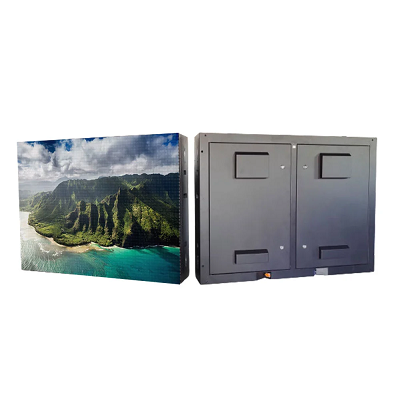
The following product views show typical Highway Variable Message Sign configurations and cabinet structures.
What Are Highway Variable Message Signs Used For?
Highway VMS is intended for information that may need to change as road and traffic conditions change. The exact messages, symbols and operating procedures should follow the relevant traffic authority or project specification.
01
Incident & Accident Warning
Inform drivers about incidents, obstructions or other conditions ahead so they can prepare before reaching the affected road section.
02
Lane Closure & Roadworks
Publish information about construction activity, closed lanes, merging traffic or temporary changes to normal road operation.
03
Weather & Road Condition Alerts
Display temporary warnings related to fog, rain, ice, low visibility or other roadway conditions where this information is provided by the traffic-management system.
04
Detour & Route Information
Communicate road closures, detours and alternative routes when normal traffic flow must be redirected.
05
Congestion Information
Provide current traffic-status information or route guidance when congestion data is integrated into the broader traffic-control system.
06
Safety & Operational Messages
Display approved road-safety reminders, temporary operating instructions and other messages required by the traffic authority.
What Does a Highway VMS System Include?
The transparent led display is only one part of a complete highway information system. Final system architecture depends on the project design and local traffic-management platform.
Remote Control & System Integration
Highway information often needs to change quickly, so the current product supports synchronous or asynchronous control together with automatic or manual brightness adjustment.
Depending on the project architecture, traffic operators may need to update messages remotely, coordinate multiple signs or integrate the VMS with a wider traffic-management platform.
System-integration note: communication interfaces, protocols, secondary development requirements and platform integration should be confirmed against the customer's traffic-control system before production. They should not be assumed from the LED display specification alone.
Highway VMS Installation Considerations
Highway VMS selection should happen together with engineering planning. Sign position, road geometry and message requirements can affect the final dimensions and system configuration.
Sign position: confirm the approaching traffic direction and required reading zone.
Mounting structure: define the gantry, pole or project-specific support structure before finalizing cabinet dimensions.
Power supply: the current product specification lists AC 110 or 220V ±10%, 50–60Hz.
Communication: determine how the control center will send and update information.
Maintenance access: plan safe access for inspection and component replacement.
Local standards: final sign size, characters, colors, symbols, positioning and communication requirements should follow the applicable road authority or project specification.
About the listed 10,000-hour MTTF
MTTF is a reliability parameter listed in the current product specification. It should not be interpreted as a guaranteed total service life of the complete highway VMS, because system life also depends on components, operating conditions, maintenance and project environment.
Highway Variable Message Sign FAQ
1. What is a highway variable message sign?
A highway variable message sign is a fixed electronic traffic-information display that can show changeable warnings, road conditions, lane information, detours and other approved messages for drivers.
2. What pixel pitches are available?
The current SEEKSTARLED highway VMS range includes P16, P20, P25, P31.25 and P33.33 configurations.
3. How bright is the highway VMS?
The current specification lists brightness of at least 12000 cd/m² across the available pitch options.
4. Can highway VMS brightness be adjusted automatically?
Yes. The current product specification supports automatic or manual brightness adjustment.
5. Can highway variable message signs be remotely controlled?
The product supports synchronous or asynchronous control. Remote-control and system-integration requirements should be confirmed according to the customer's communication and traffic-management architecture.
6. What is the difference between synchronous and asynchronous control?
Synchronous control is generally used when the displayed content follows a real-time signal, while asynchronous control can store and play previously configured information. The appropriate method depends on the project control system.
7. What is the difference between highway VMS and a solar VMS trailer?
Highway VMS is designed for permanent fixed-location traffic infrastructure. A solar VMS trailer is mobile and better suited to roadworks, temporary closures, emergency warning and other changing project locations.
8. What information is needed for a highway VMS quotation?
Provide the project country, sign dimensions, required message layout, approximate viewing conditions, quantity, mounting method, power supply, communication requirements and applicable road-project specification.
What to Send for a Highway VMS Quote
A highway message sign should be quoted against the actual road project rather than only by pixel pitch. The following information helps define a usable configuration:
Project country and road authority
Highway or expressway application
Required sign width and height
Required message type and number of text lines
Specified pixel pitch, if already defined
Approximate viewing distance and installation position
Gantry, pole or other mounting requirement
Power-supply conditions
Control and communication requirements
Project technical specification or drawing
Required quantity
HIGHWAY TRAFFIC INFORMATION PROJECT
Request a Highway VMS Configuration
Send SEEKSTARLED your sign dimensions, message requirements, installation location, control method and project technical specification. We can evaluate the available P16–P33.33 configurations against the actual highway application.


