





Posted 15 years ago
 andyman
(128 items)
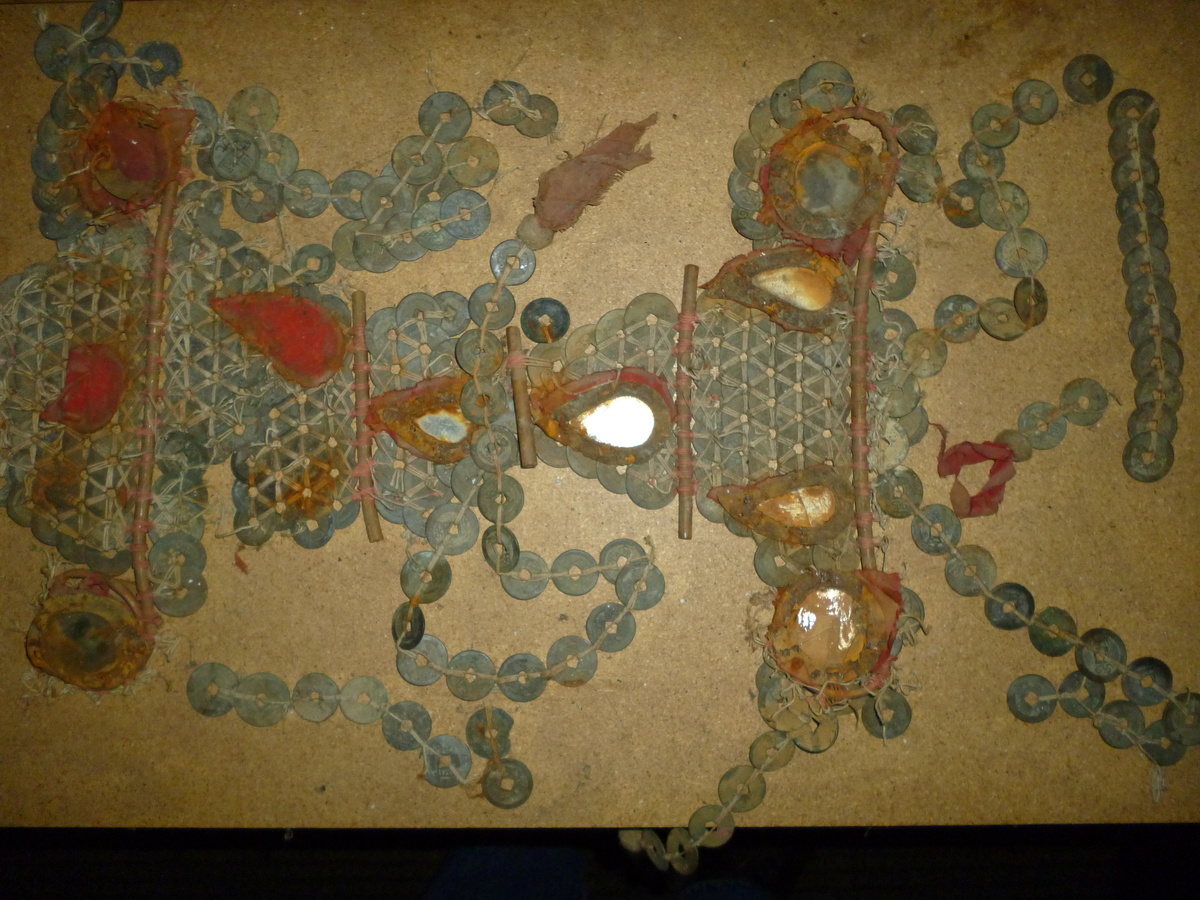
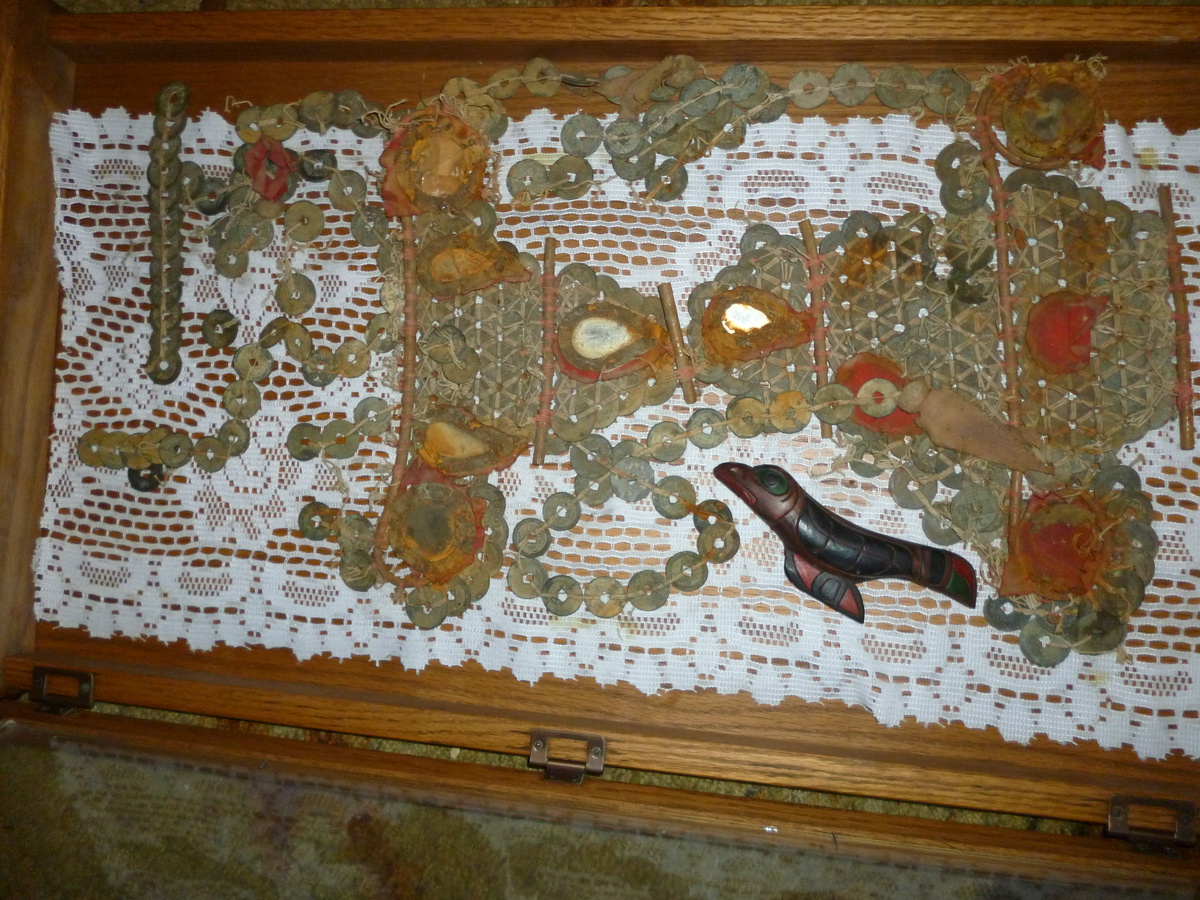
Here is what looks to be the lower part of a woman's dance costume .It is made from Chinese coins which are over 100 years old .
There are 10 mirrors attached they are faded.
I was wondering if anyone could identify it ?




I understand in Bali Chines coins were used as decorations.
Hi andyman!
"Chinese kepeng coins were circulating in Bali in the 7th and 8th centuries. They are sold in stringed bundles of 200, about 12 cm across. Both sides are inscribed. One side has Chinese characters.
The coins are used as offerings on special occasions such as Balinese birthdays, which take place every 210 days, weddings, burials and cremations. They are also used as decorations for temples and shrines. The oldest kepengs that have been found were cast during the Tang dynasty: 618-907 AD."
Budek has a doll here: http://www.collectorsweekly.com/stories/46265-old-coin-figuretied-embellishedtotall?in=user
The kepeng, as a monetary symbol is sometimes used in the making of a coin statue of Batara Sedana, the god of wealth and the husband of Sri, the goddess of agriculture. These two gods have a shrine addressed to them in every Balinese family temple and home. Families keep the statue of Sedana as a token of wealth, as the word Sedana originates from dana, meaning wealth.
The traditional form of Balinese money is the kepeng, also called pis bolong. The word pis must be a shortened version of rupies, the legal tender of Indianized countries for centuries, while bolong, meaning hollow, denotes its peculiar shape, which is round and flat with a hole in the center. The kepeng is of Chinese origin, though, as apparent from the characters that show on the face of the coin."
http://www.worthpoint.com/worthopedia/balinese-bali-god-of-wealth-statue-ancient-kepeng