




Posted 9 years ago
Gracefulpast
(1 item)
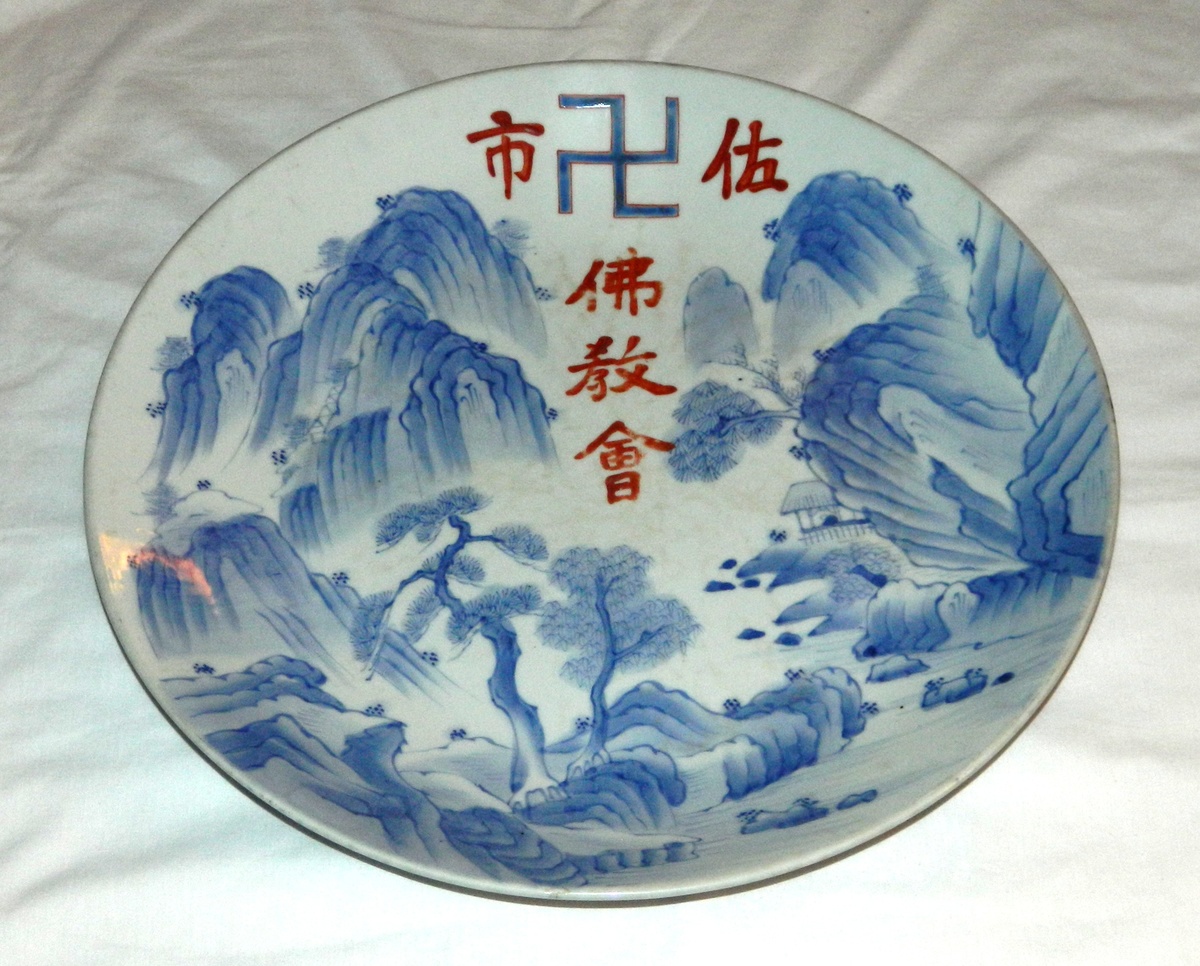
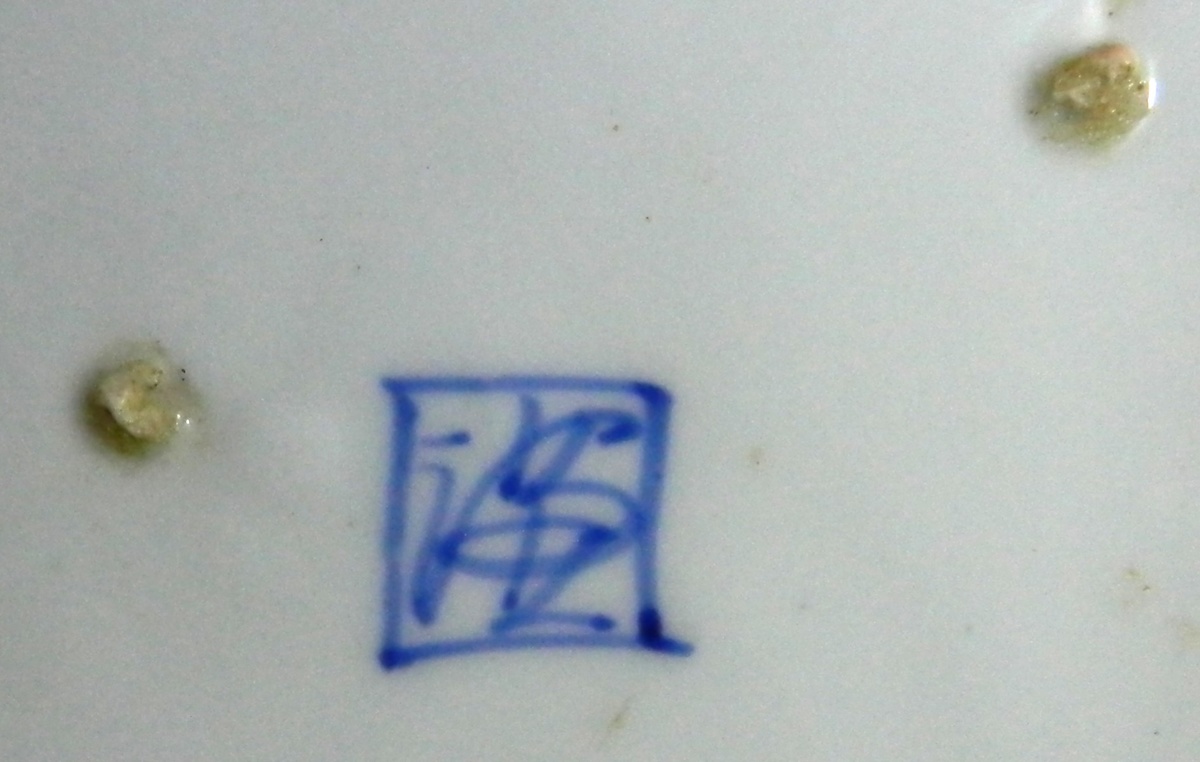
I fell in love with this incredible large Japanese charger as soon as I saw it and the use of the Manji symbol just made it all the better. This is the largest charger I have and it measures 18.5 inches across, 2.5 inches tall and weighs just 1 ounce shy of 8 pounds. It looks to me like it has some age to it but other than that I know very little about it. I would greatly appreciate any help in identifying the makers mark, the writing in red, age etc; but mainly just wanted to share it.




looks like a sort of fuku mark , lot of spurs on the back swastika ferro feels good might be an excellent you fake but it looks 18 century
Hello, I have this exact plate and was wondering if this may be the same one posted here or if there may be duplicates out there? I’m trying to find out more about the plate’s meaning and origin.
waki mnemonic /// uzufuku- sansui-matsu-kashi- no -ki ----- kuchibeni- kumo
waki mnemonic /// uzufuku- sansui-matsu-kashi- no -ki ----- kuchibeni- kumo
photo 3
This specific Fuku mark is called a spiral fuku mark or in Japanese an "uzufuku"= running fuku The mark in this form was normally used during the mid Edo period till early meijji period.meaning is fortune, nowadays you can see this even in the so called contemporary chinese fun shops
actually the mark remains still strange because from origen the square mark ought to be the so called double framed,mark , as far as i know the only exclusion of yours application is HIZEN , , but it is not the same style and it got co-signing ,
IMO this is a SANSUI charge ra traditional theme found in japanese porcelain SAN refers to mountainsand SUI to water , actually the water is all white here , the known MATSU tree here ) pine tree, this is not a KASHI-NO- KI ( oak tree_
IMo you have to see this as a japanese equavalent pagoda a late qianlong CANTON steal pagoda landscape scene without pagoda
then IMO somethong strange happens, what about the rim , it is non descipt ,
formally it is not a KUCHIBENI alloy ( the so called lipstick rim)
also strange is that text is dominating the whole pieve imo it never happen in the 18 century
KILN SPURS MARKS ( are tiny bubbles on the bottom-
Spur marks are the tiny parts of clay when the pieve is on kiln support in the fireclay protecter, it is a prevention against sagging . sticking and warping
Grosso modo japanese porcelain , every piece from 1750 lets say till 1850 will have spur marks from 1850 on the gradually disappeared due to firing improvements
the scattering of the kilnspurs are a better indication af age then the in alignmentbof the kilnspurs
and the inside dimpling of the kilnspurs are a better indication the the smooth flate kilnspurs ( there are exceptions in the underglaze blue
so what is mij problem , because we are committed, we got timewise kilnspurs , havent we ????//
well there is oldscool firing widens the spread , you got seastar , Y alignement X alignemt and X alignement, whatever you want it is not extremely old there is no scattering
so they stretched the period whatever the kilnspurs
and now THE SHIT THE VAN
you think i know it all well , i just push buttons , maybe i am a megalomanic ?
beneath the kilnspurs are garlands , lets say cumulus clouds with som kind of smileys
i don,t know this combination , i only know the cumulus clouds as a stand alone garlands design , which IMO is late mejji
i can,t explain the logic of the erored inside dimpling of the kilnspurs, they could be stretching the period
, this is all i known , get used to it , i always talk bull s,,. , but is too inconsistent to me
the other question was are there much copies , likely butr i have only see it once and dismissed it