




Posted 1 month ago
 Patriotica
(55 items)
What do Magic: The Gathering, Yu-Gi-Oh!, Pokemon, World of Warcraft and even Harry Potter have in common? These are some of the most played collectible card games ever devised. And, as it happens, they really are quite collectible beyond the friends you make just playing the game.
Actually, there are hundreds of these collectible card games, otherwise known as CCG’s, that have been developed since 1993. That was when mathematics professor Richard Garfield developed the very first CCG called Magic: The Gathering, a fantasy game of battling wizards. It is still the most played CCG ever with about 20 million players as of 2015 — most CCGs can’t compete in popularity. Tournaments are held continuously where the winners between each game of two or more players compete with each other until one eventually emerges as the tournament champion (image 1). There are even professional players in Magic: The Gathering who compete for monetary prizes.
AJ’s Sport Shop in Vienna, VA (since closed), where I encountered CCG’s for the first time some years ago, was one of many small locally owned memorabilia shops that still cater to sports and all manner of CCG’s. Dan, a local player since Magic: The Gathering first appeared in 1993 (now a father in his 30s), considers Magic: The Gathering a “…skill based and reaction based…” game that still holds his interest all these years later.
All of the CCG’s require a similar skill set in mind and strategy and it isn’t the intent here to explain the complexities of the games and their individual challenges. Other industry articles can best address that. The collectible value of the trading cards themselves will be the focus here.
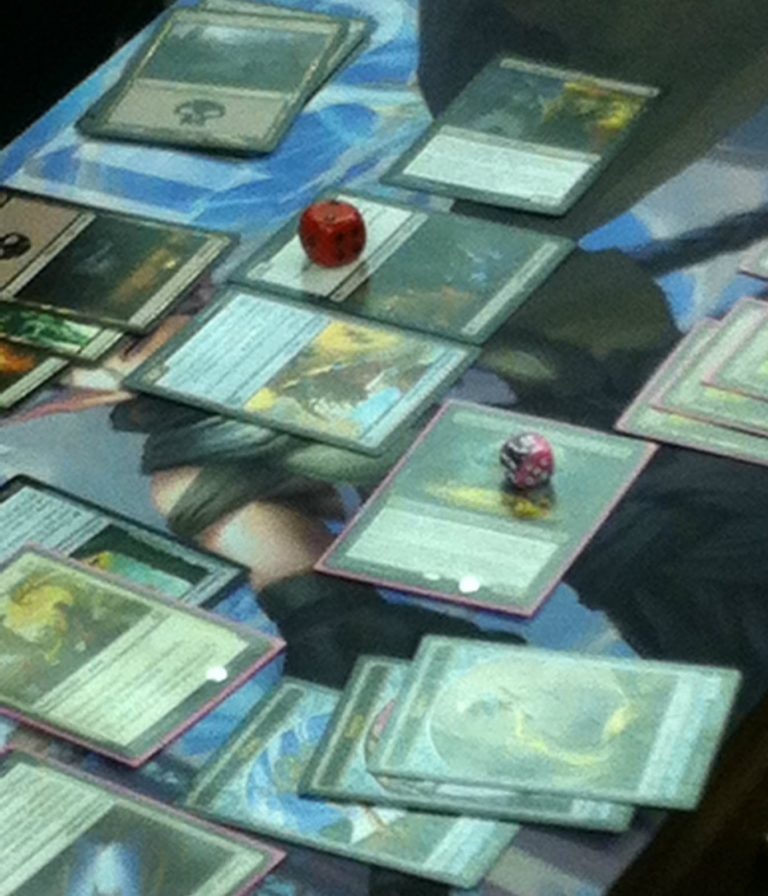
So what makes this category so valuable to collectibles? The answer is the reason for the success of the games to begin with: the cards themselves. Each player first buys a starter set of 60 cards or so which are enough cards to begin play. Then, players buy booster sets that are guaranteed to contain at least one or more rather scarce cards. Not only do these scarce cards have a collector value, they also provide the game itself an extra boost in some way. The fact that you have no idea what is contained in a booster pack is by design. But no matter how many booster packs you buy, you are limited to use only a certain number of cards for each play (40 for Magic: The Gathering; 40-60 for Yu-Gi-Oh, for example), so you need to choose your playing deck carefully for each game (image 2).
And that’s where collectability comes into “play.” Each booster pack, costing around $5 for about 15 cards or so, always contains a very “rare,” or mythic rare card as it is called in Magic: The Gathering, which alone could be worth more than $5 and sometimes in the hundreds simply for its rarity. But “rare” means that perhaps hundreds or thousands of these cards were printed each year.
So, how do you find out what the value of certain cards is? Just check into a few online companies that continuously update price lists for cards and booster packs such as MtG Goldfish and Star City Games, and even older out-of-date games. You can use other online sources, of course, to follow auction values over time, too.
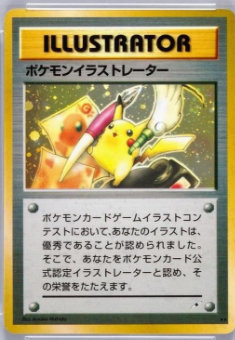
Certain prototypes, specially designed tournament cards for winners, or very early game cards are worth tens of thousands of dollars (one Armament of the Lethal Lord Yu-Gi-Oh card is priced at $1.7 million with only a few in existence),, the Black Lotus card from Magic: The Gathering that sold for $54,000 in 2011. A Pikachu Illustrator card from Pokemon sold in 2016 for $46,000 (image 3), one of only 39 to have been awarded at tournaments. A 1999 Yu-Gi-Oh Blue Eyes Ultimate Dragon promotional card printed in Japanese sold for $11,211 in 2013. Naturally these are the most highly collectible cards in these series that hardly anyone would ever see.
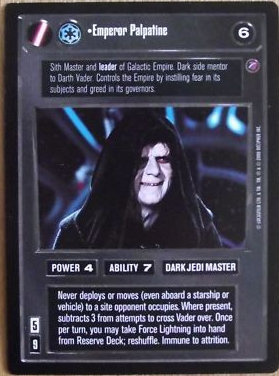
On the other hand, the cards most would be able to get access to for a lot less are the Star Wars CCG Emperor Palpatine card (image 4) that sold for $41 in 2011, a Wildstorms series Fantasticar card that sold for $10 in 2013, and even a Timetwister of Magic: The Gathering that sold for $480 in 2016. Clearly, there is a wide variation of values for cards within the CCG world.
I’m sure there is a lot of nuance here that I missed. For example, Magic: The Gathering has nearly 18,000 different trading cards available which obviously affects the value of the same card over time. Also, some of the cards are listed as “banned” or no longer allowed in tournament play, which might affect their values, too. Condition, rarity, and how they are graded, like baseball cards, also plays a part in value over time.
In short, CCG’s aren’t just for tournament play anymore. Over time, the cards themselves will be a part of an estate portfolio as stock, bonds, paintings, classic cars, rare documents and other collectibles are now. “As both a collectible and competitive game, Magic: The Gathering has evolved its own primitive stock market,” says Kelly Reid, editor-in-chief of Quiet Speculation that focuses on investing in Magic: The Gathering playing cards, although he does consider this as one of the “…most bizarre investment strategies.”
Rudy Mail of Alpha Investments has his own YouTube channel devoted to Magic: The Gathering as an investment with over 65,000 subscribers at the time. So clearly there must be something to the collectible side of CCG’s, especially Magic: The Gathering.
So how do you resist playing a card with such a force as to actually defeat your opponent rather than holding it back in a plastic slab? That’s a tough call worthy of a wizard.
This article was adapted from the original published at WorthPoint.com.



