




Posted 13 years ago
 Buzta
Buzta
(10 items)
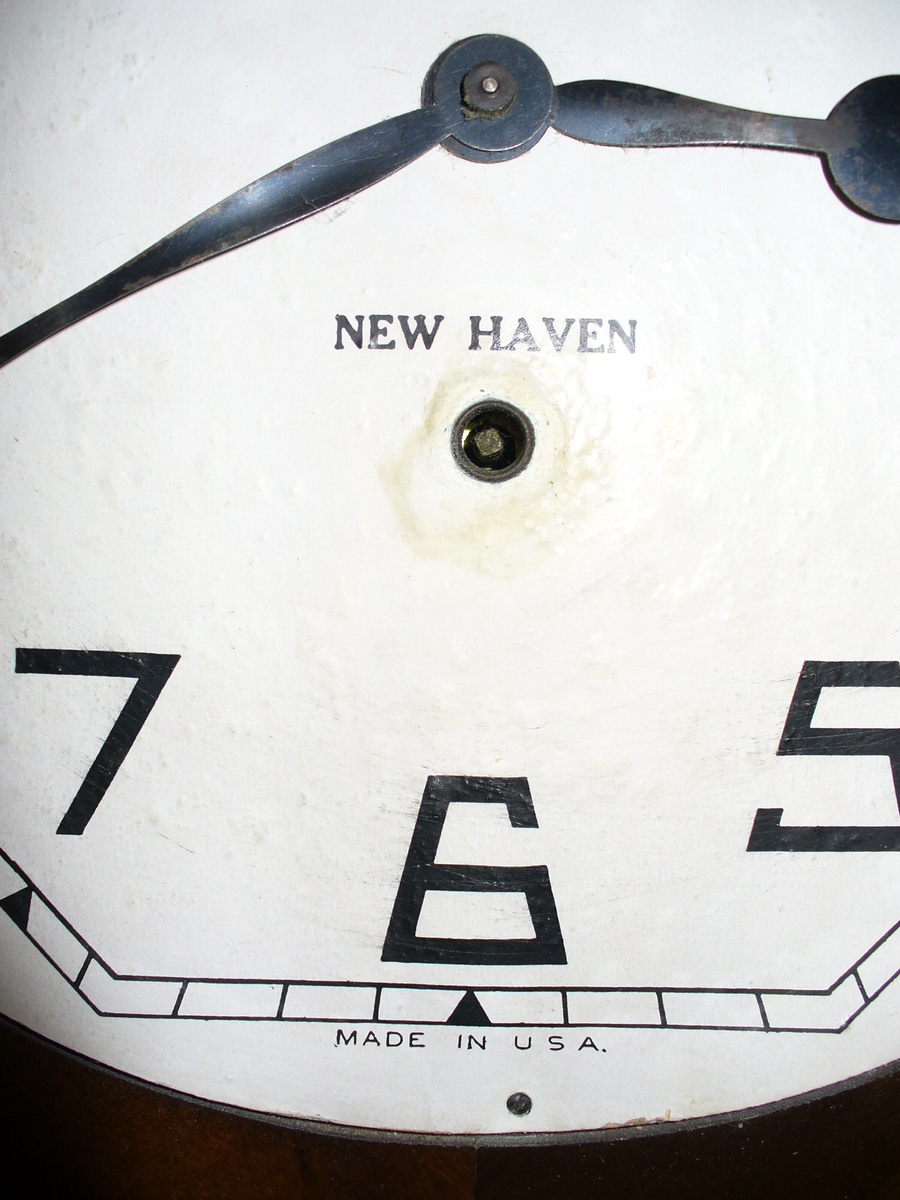
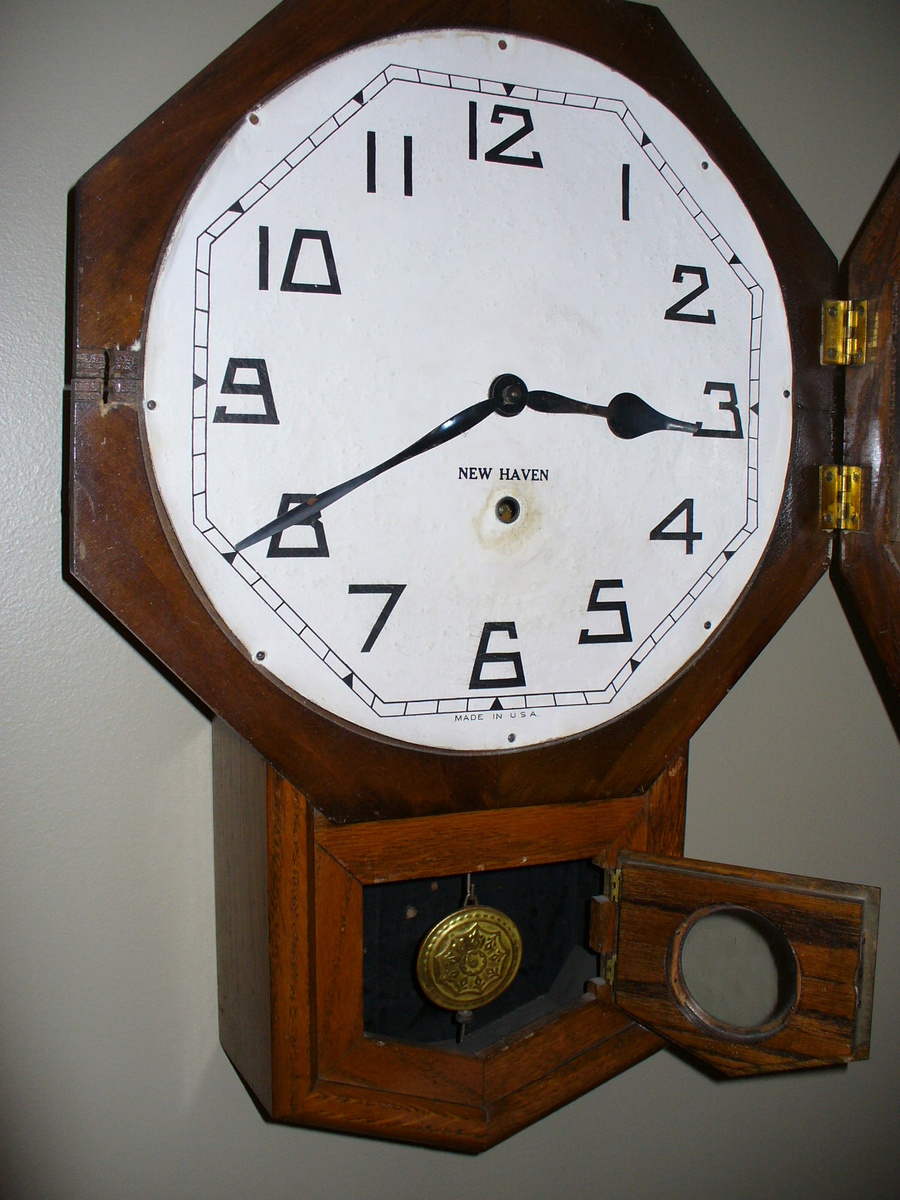
Believed to be around 1920-1930s era, this clock was owned by my grandfather. He attended a local church that was in need of a new "modern" electric clock. So he donated a clock and was given the old clock. He fussed with it and soon it was working fine. It still works almost perfectly (it's a little fast). I decided not to try adjusting it as I really don't care if it's a little fast. The face is in great shape, as you can see, and I do have the key.




What year is this clock?
Still out there? It belongs to a class of clocks referred to as small drop octagons, popularly called School House clocks but without strike, or chime mechanisms they are really timepieces. That's a very unusual Face/Dial pattern. Circa 1880 to 1920. If you give the dimensions of the case I'll see if I can narrow the date a little.
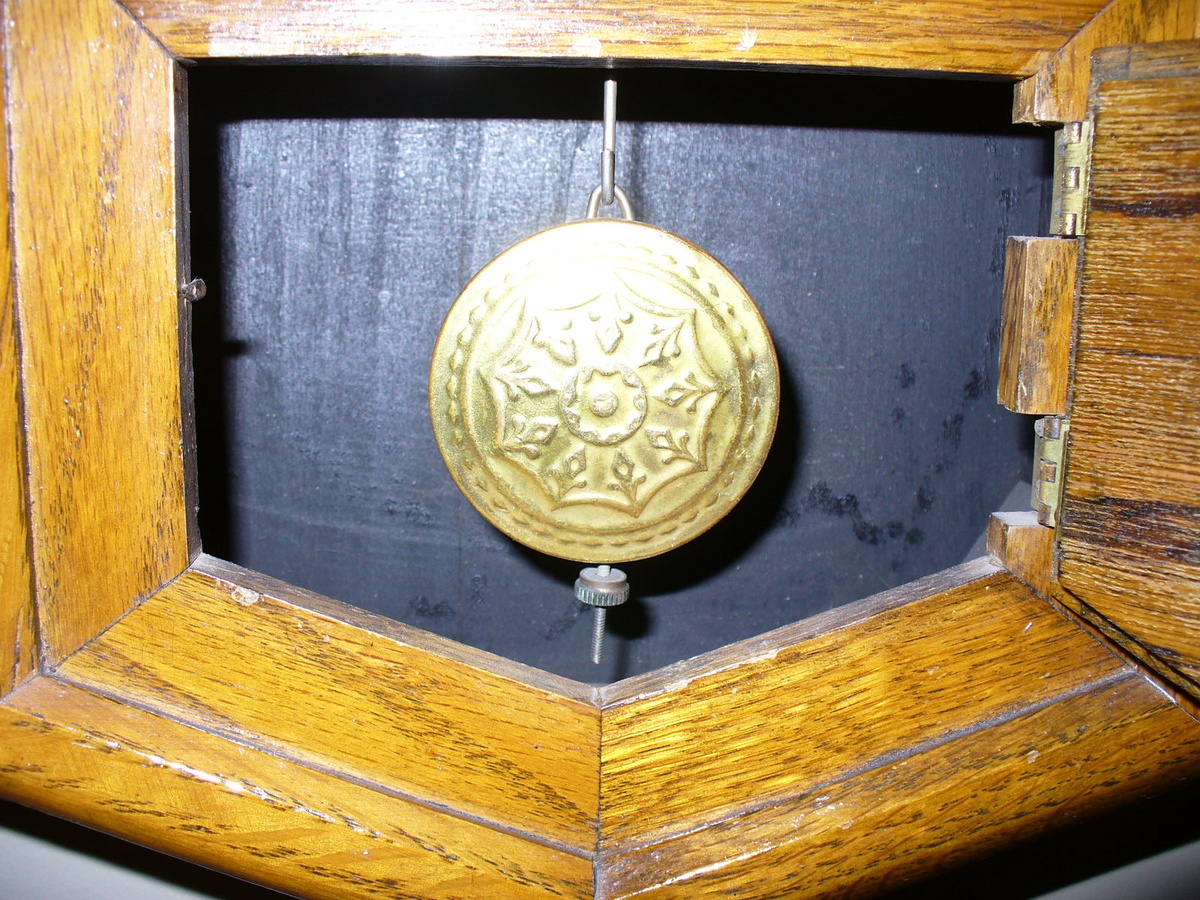
Regulating them is really easy. The regulating nut at the bottom of the pendulum weight usually turns to the left (counter clockwise) to slow the clock, the opposite direction to speed it up of course.