





Posted 2 months ago
 Patriotica
(30 items)
Once upon a time not so long ago when 'society' dictates that those wishing to see or be seen simply drop by. If not at home, a calling card the size of a business card today was left on a silver tray near the front entrance or given to a steward from a car window. Of course, the top left corner was dog eared to show that you had made the trip yourself. For those that couldn't, well, simply engage a taxi driver who has other cards and simply drop them off at the North Entrance for you. Either was socially acceptable.
The intent of all this was to somehow get invited to a social event, a tea, a reception, a dinner, anything at all to brag - uh - casually mention to the others about town your access to those in the know. And, dropping off the card to the White House North Entrance was routine with the expectation of getting an invitation to the next whatever hosted by the First Lady, not usually by the president.
But what is expected of the president or the First Lady of the United States? Well, protocol dictates that they do neither. Simply put, you go to them; they do not go to you.
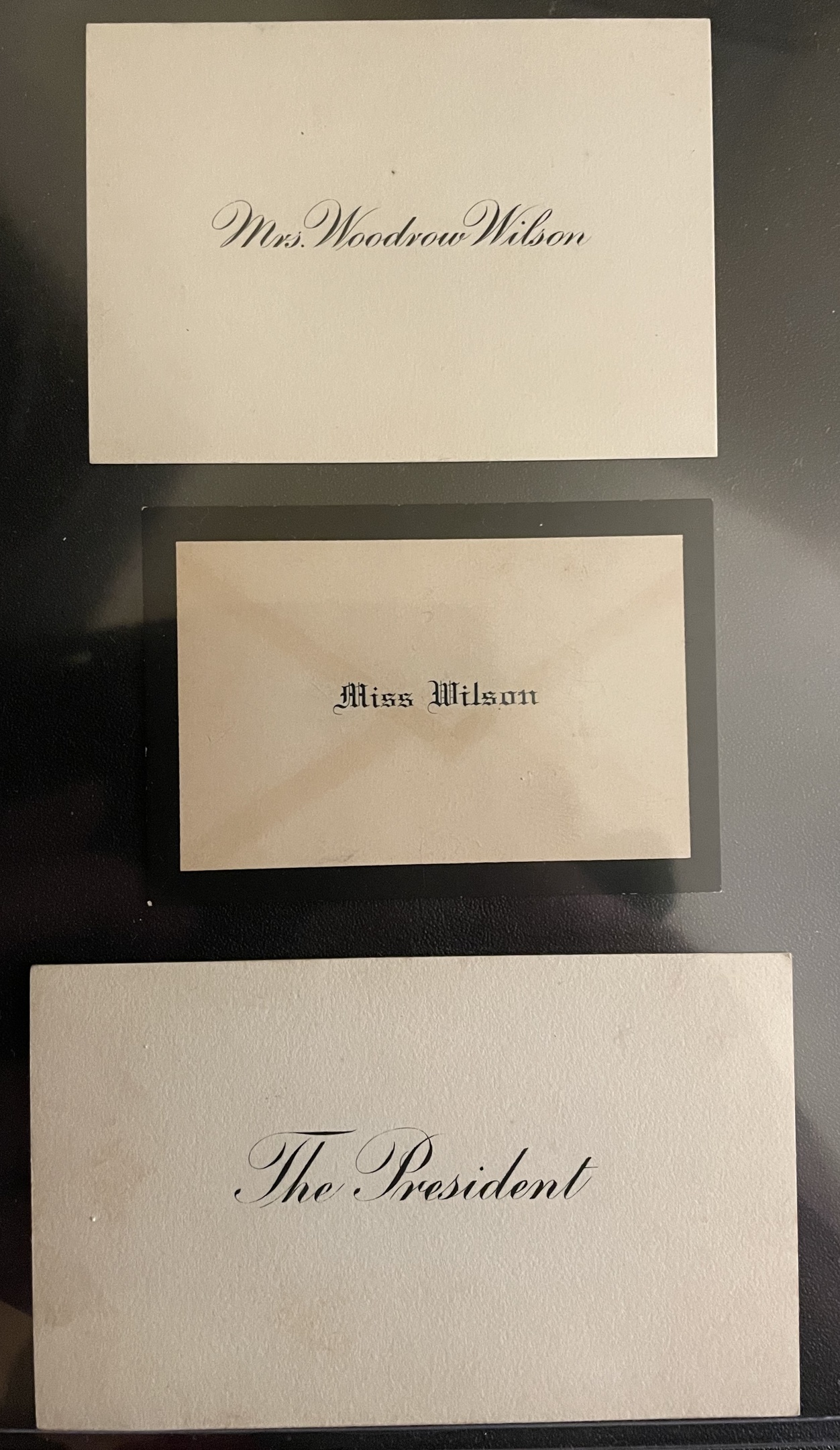
Still, a president or First Lady could makes themselves known to others simply by inserting a special card in a sealed envelope within a gift of flowers, for example, to show they were thinking of you. The first example is a set of calling cards titled 'The President' (it wasn't necessary to say which president; in this case it was Woodrow Wilson), Mrs. Wilson (no other name needed) and Miss Wilson. Curiously, the last is the most interesting of the three.
The first wife of President Woodrow Wilson, Ellen Axson Wilson, died of Bright's disease on August 6, 1914. We're certain that the calling card above is not hers, but that of the second wife, Edith Bolling Wilson, because of the presence of the third calling card for Miss Wilson.
It was social custom at the time for a mourning period to last one year, yet Woodrow Wilson had remarried before the end of the full mourning period had ended. Black was the color for mourning then as it is now and Margaret Wilson, the eldest of the three daughters and the only one unmarried serving as White House hostess until the marriage, followed custom and usually presented her card still bordered in black for the entire mourning period, new stepmother notwithstanding. The three calling cards were delivered to the Central Presbyterian Church in Washington, DC on March 28, 1915 (written in pencil on the reverse) accompanying flowers for the Sunday service making the 'Mrs. Wilson' calling card that of Edith Wilson, not Ellen.
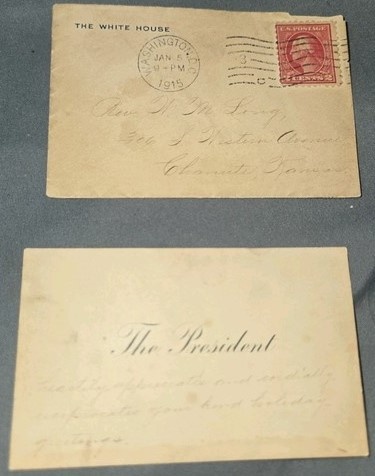
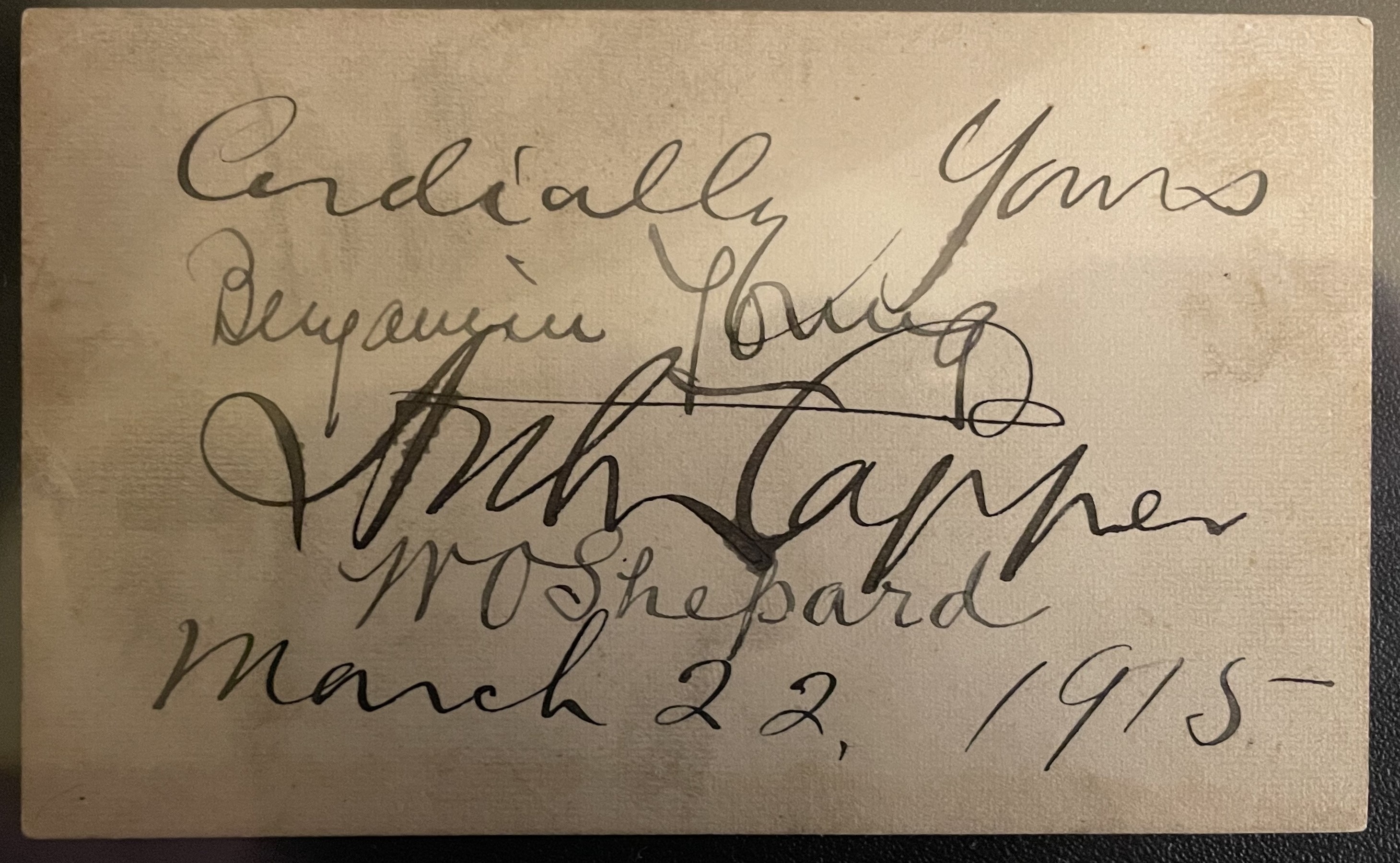
The second and third image are of one card of 'The President', again, Woodrow Wilson, sending a calling card to the Rev. W. M. Long in Kansas, January 5, 1915 on which a note is hand written by staff saying The President 'appreciates and cordially reciprocates your kind holiday greetings', a most unusual use of the presidential calling card. Even more so, on the reverse (image three) is the signature of Arthur Capper, the governor of Kansas writing 'cordially yours' along with two unknown signatories dated March 22, 1915 probably presented to the governor by the Reverand for an autograph. So who are the two signatories, Benjamin Young and W. O. Shepard? If you know, write a comment below.
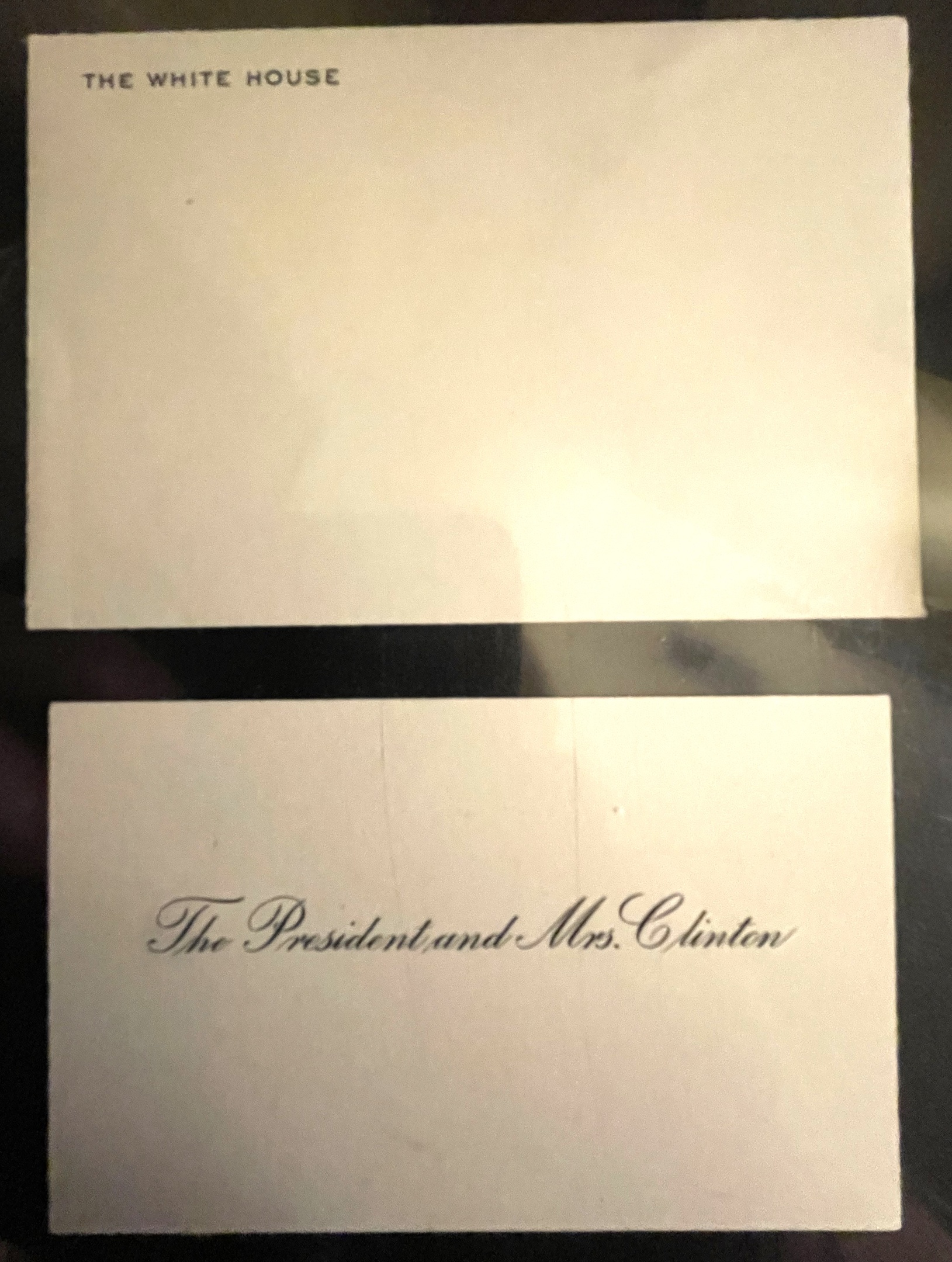
The last set of calling cards are more recent, that of President and Mrs. Clinton. Rather than two separate cards as before, the calling card, when sent as an insert to flowers or a large official White House Christmas card, for example, shows both names not just one. That custom has been followed by most presidents and First Ladies since at least the latter part of the 20th century.
All presidential calling cards are relatively scarce; the mourning card even more so. When collecting, be sure to get the envelope, too, as they are more valuable together than apart.




