



Posted 12 months ago
 Patriotica
(55 items)
The ancient Greeks invented so many things we still use today. Apart from medicine, philosophy and geometry, the ancient Greeks even invented an alarm clock (that ran by water), a vending machine (that dispensed holy water) and even automatic doors (opened when it felt the heat from a fire to a temple). What they also invented was the napkin (from Old French word nappe, meaning "tablecloth," and the Middle English diminutive suffix -kin, meaning "little" or "little tablecloth"), except their version was edible.
"[I]n the days [of ancient Greeks], they ate everything by hand, and that led to the common use of a soft dough to clean off the fingers, a food object called apomagdalie," writes Ernie Smith on tedium.com. “At large banquets, sometimes towels and water for washing the hands were handed round between the courses, and this was always done at the end of a meal. The practice of using the fingers for eating made this indispensable," writes Hugo Blummer, 19th-century archaeologist in his book The Home Life of the Ancient Greeks.
Eventually, the dough was replaced with bread by the Middle Ages, but "...the Romans introduced two kinds of cloth for napkin-related purposes—the sudarium, a “sweat cloth” of sorts for the face, and the mappa, a large cloth for eating while reclining," Smith continues, although you mainly just wiped your hands anywhere you can get them clean.
While its known that the Chinese had invented paper 4,000 years before, they began to routinely make special paper squares for the bottom of tea baskets. This may have been an inspiration by the Japanese when they created the first commercial square paper, or wiper, napkins in the 19th century, much to horror of so many at the time. 'Paper napkins! Who ever heard of such nonsense! What good are they?' some were quoted as saying.
Yet, they caught on with retail establishments like hotels, boarding houses and restaurants as cheap advertising featuring a crudely printed logo or place of service. And while the surly attitude against the use of paper napkins persisted, it wasn't until about 1950 when Emily Post endorsed them that they came into regular use. “It’s far better form to use paper napkins than linen napkins that were used at breakfast,” she said at the time.
So now, paper napkins are everywhere in virtually every establishment that features some sort of culinary item either as a sit down restaurant or a fast food joing with their logo and advertisement made prominent even if they are mostly used and discarded (with some considering that a hazard to the environment).
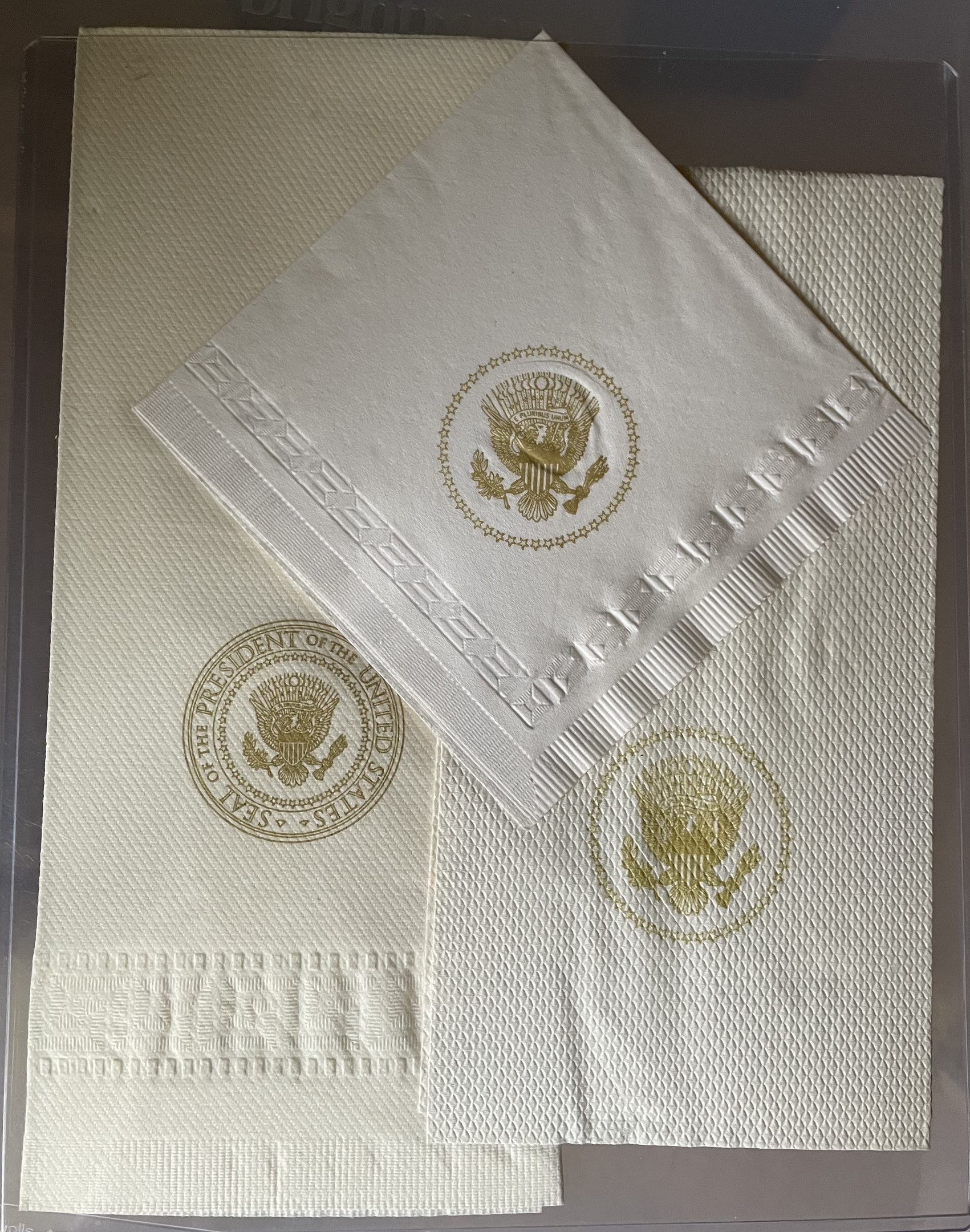
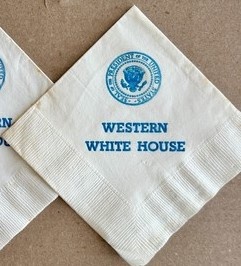
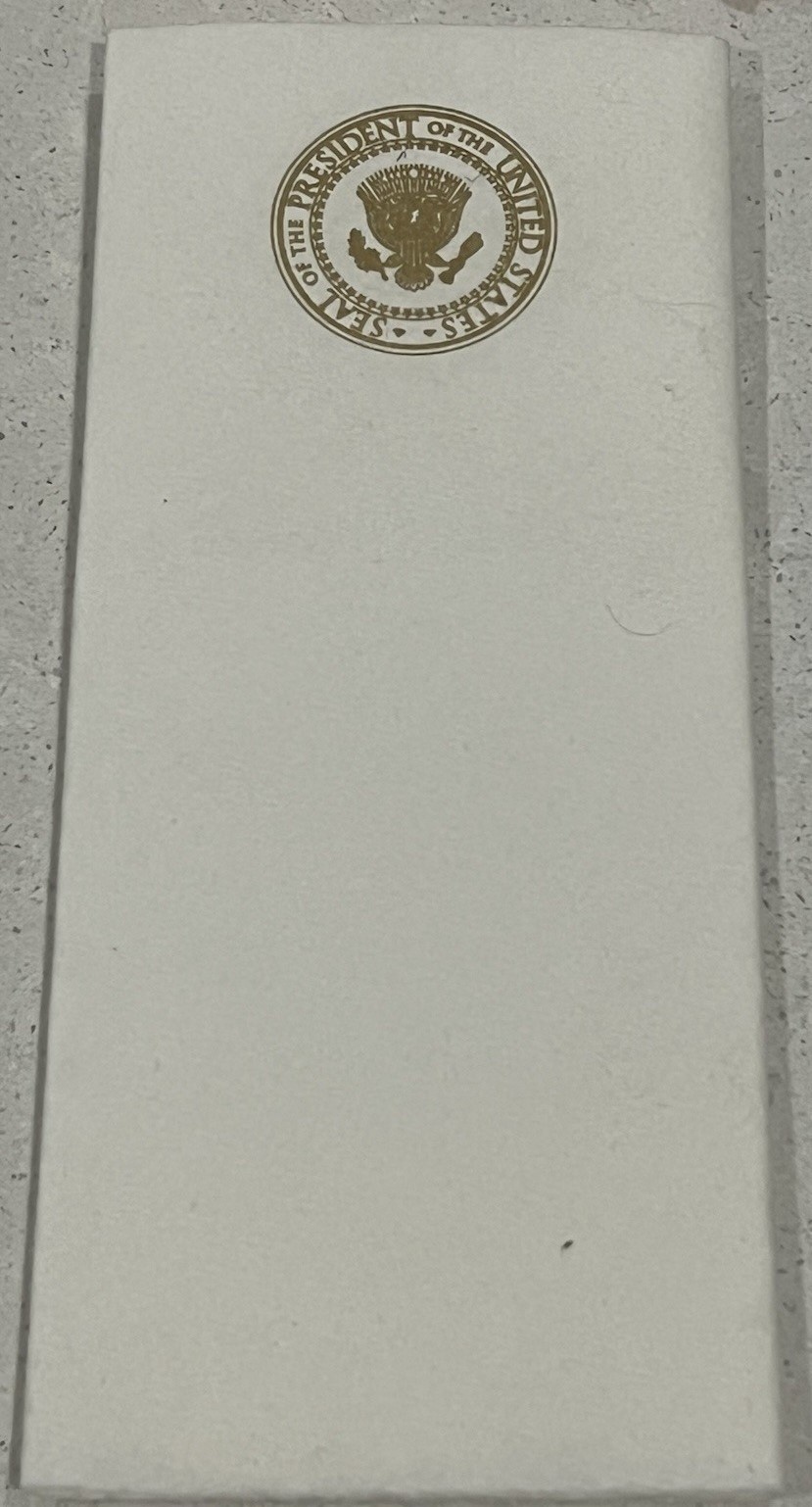
Which brings us finally to the official presidential paper napkin. As a former White House volunteer in the 1990s, I saw paper napkins with the presidential seal in use everywhere at any event that featured refreshments and that's not even counting the heavier grade paper hand towels found in the White House restrooms (image 4) featuring the full presidential seal.
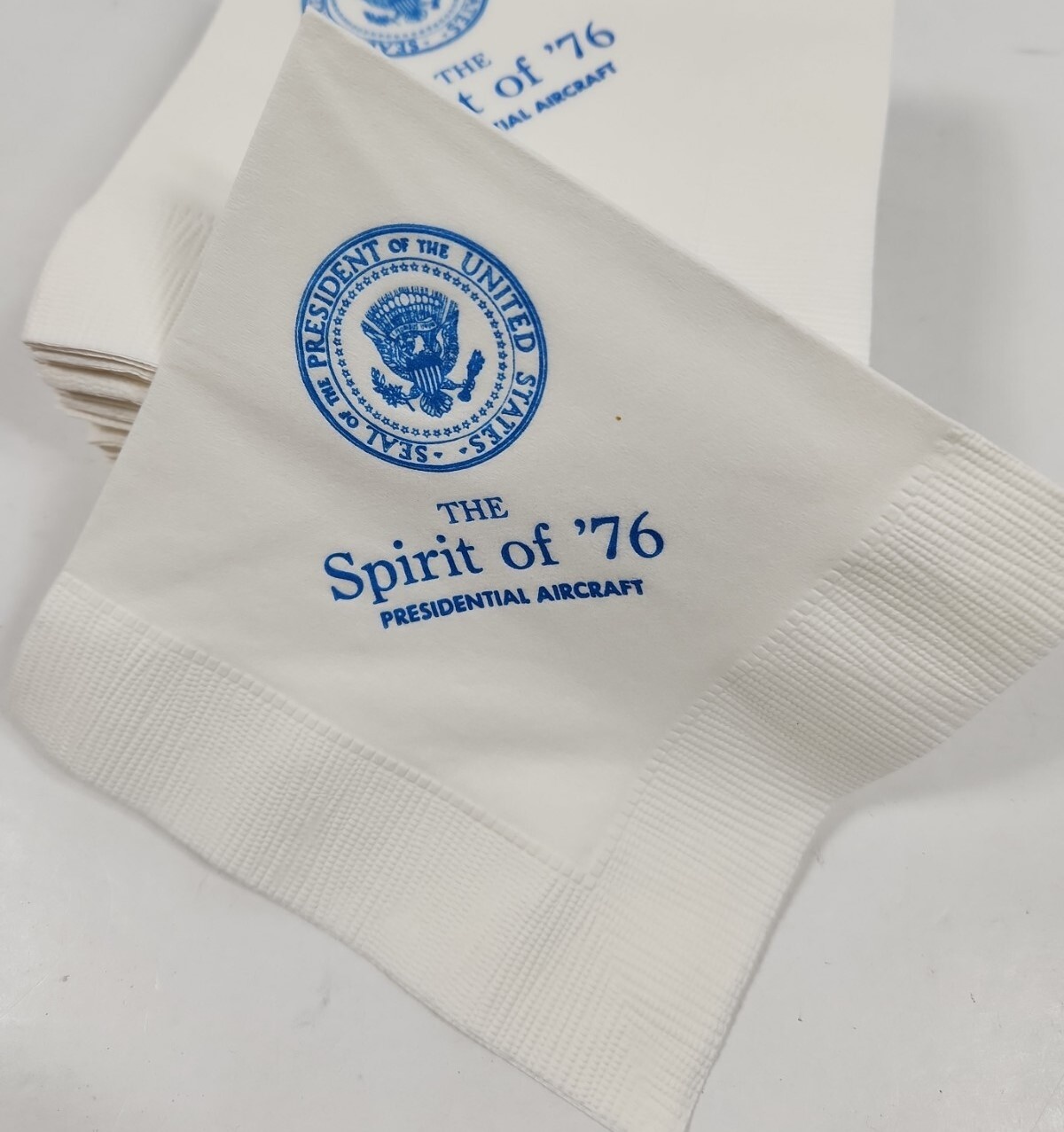
The earliest presidential paper napkin may be Richard Nixon's "Spirit of '76" ones , a nickname given to the Boeing VC-137C presidential aircraft to honor the U.S. bicentennial in 1976. But other paper napkins followed in many different variations through the succeeding administrations. Some featured gold or blue full presidential seals, some just used the shortened presidential coat-of-arms (without the legend, or words, surrounding the circle of stars). Some were printed, others may have been blind embossed (raised printing without color).
And paper napkins weren't just issued for the White House or Air Force One as the Nixon's were. Instead, especially designed paper napkins in many different sizes and designs were also issued for inaugurations, Camp David, Marine One, summer White Houses, presidential yachts, presidential campaigns and even the vice president. In all, a rather diverse and large collection can include all manner of official presidential napkins that are usually only available when you visit with an invitation to an official event. If that fails, there is always the secondary market where paper napkins were first souvenirs and are now auctioned for private collections.
In short, presidential napkins may suggest an access to the center of American politics, but they aren't just for invitees any longer. As a cheap alternative to costly cloth napkins, you can clean up with paper ones that can be served up as a great inexpensive presidential collectible, too.



