





Posted 4 days ago
 Patriotica
(42 items)
It is called “the beautiful game.” With about 250 million players in virtually every country around the world, soccer is the world’s most watched sport.
Soccer, officially known as association football (or just football) most everywhere but North America, can be traced back to a similar game called “cuju” played in China about 206 BC. Players moved a ball without touching it, then kicked it into an open net to score, not unlike the current form of play in association football today.
As it evolved, though, different forms of play developed. Early games encouraged the use of “hacking” or kicking an opponent’s shin, along with tripping, and holding down players with the intent to forcibly slow down their advance to the goal. Eventually, a series of meetings in 1863 in England resulted in the formation of the Sheffield rules, which prohibited the use of these tactics in official matches.
At this point, there was a split. Those that wanted to play by the old rules created the Rugby Football Union in 1871, as well as their own tournaments that still play today. The rest stayed with what was soon called The Football Association and became soccer as we know it, without the physical aspects inherent in rugby. Club teams flourished throughout Great Britain.
In 1886, The International Football Board was established to oversee the rules of soccer in international competition known as the Laws of the Game. By 1904, the Federation of the Internationale de Football Association (FIFA) became responsible for all international competitions under the Laws of the Game from youth leagues to the World Cup.
The most prestigious of the competitions is known officially as the FIFA World Cup. It has been played every four years since 1930 (except 1942 and 1946 during World War II) to recognize the best in senior men’s national soccer teams. In other words, these are not professional club teams, but rather teams that represent their countries during tournament play known simply as The World Cup.
It was estimated that half the planet watched the 2010 World Cup competitions, that’s 3.2 billion people! That’s nearly as big an audience as the Olympic Games (3.6 billion in 2016) or of any other sport, ever. The worldwide audience for the 2026 World Cup in North America isn't expected to be much different.
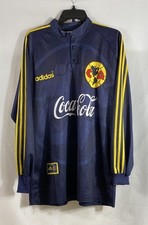
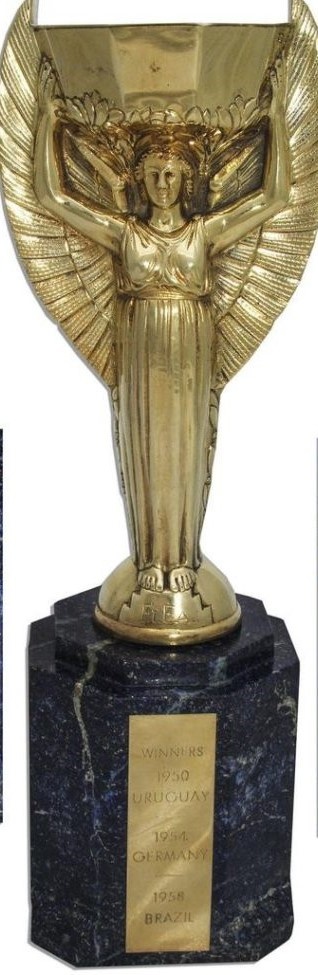
I bring this all up since the number and type of collectibles for the World Cup must be just as numerous as the number of people who watch the competition around the world. Everything from team jerseys, to posters, coins, stamps, medals, player trading cards, pinball machines, rings, toys, pins, tickets, postcards, signatures, hats, soccer balls and even the vuvuzela, (the loudest horn ever). The Jules Rimet World Cup trophy from 1970 (image 2), for example, sold for $12,000 in January 2018. In short, the World Cup is big business with even bigger collectibles.
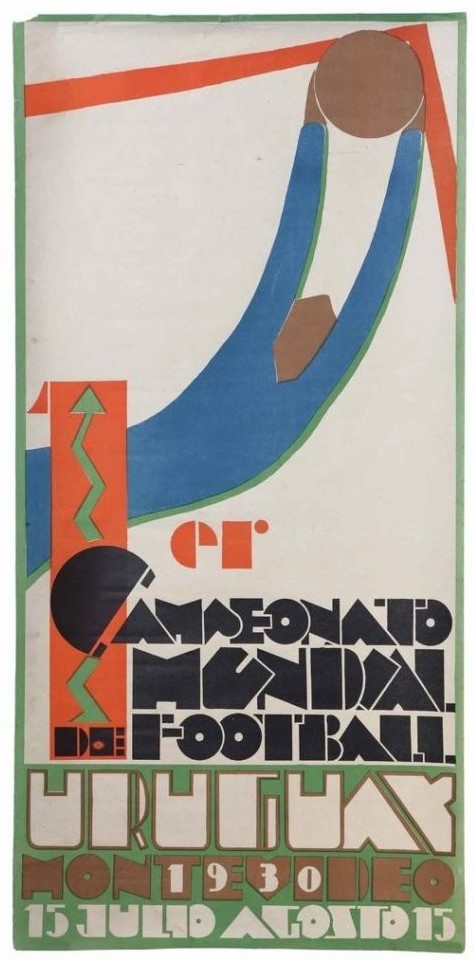
To give some context, an original 1930 World Cup poster announcing the very first World Cup game in Uruguay, for example, was auctioned not long ago for $20,000 (image 3). In comparison, one of the earliest posters from the Olympic Games of 1912 in Stockholm brought $5,000, while the very first Super Bowl poster for the game of American football in 1967 sold for only $40–typically the most watched American sporting event each year. This gap shows the disparate collectibility of soccer as compared to other major sport competitions.
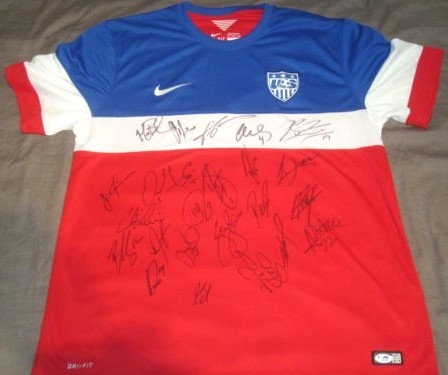
Soccer fans, like other sport enthusiasts, buy and wear the jersey of their favorite player. World Cup players are no different, but they may wear the jersey more for the player than for the team they represent. World Cup signed jerseys ranged from $1400 for a Team USA’s men’s 2014 team signed jersey (image 1) to many individual signed World Cup team jerseys that can be collected, on average, for about $100 or so.
Of course, collecting team signed soccer balls also makes for a great display. A signed soccer ball from Team USA’s Women’s World Cup victory over Japan in 2014 sold at auction for about $1,200. A Team Spain’s men’s World Cup soccer ball sold for $549 with many individual players like David Beckham’s signature on an English World Cup ball that sold for $100.
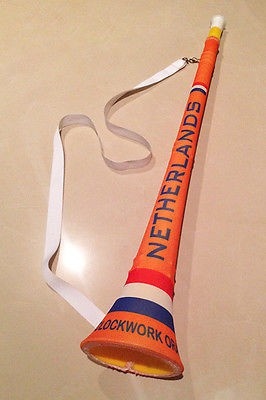
Oh, and the vuvuzela? Nowhere is that one note noise so obnoxious and so ubiquitous when it is used in World Cup matches. It is a sound that reverberates throughout the stadium like something stampeding. It is the most controversial collectible yet, at the same time, has its own official World Cup versions (image 4).
The next men’s World Cup competition, with Argentina defending its title, is June 2026 to be held jointly in the United States, Canada and Mexico, the first time in North America; the women’s World Cup will be in June 2027 with Spain defending its title to be held in Brazil.
While many World Cup enthusiasts have many ways to collect just as other sports enthusiasts do, many of the billions who watch any portion of the televised competition are usually more into collecting the excitement, the fellowship and the sharing of wins, losses and disappointments as a national identity. There is no organized sport that conveys a sense of a singular language or a sense of an extended family that isn’t recognized and understood anywhere you go in the world.
That’s why it is called “the beautiful game.”
From the original article first published at WorthPoint.com