


Posted 5 months ago
 Patriotica
(55 items)
Clothing, currency, shoes, cell phones, and car keys can be easily secured inside the toe of your sneakers at the beach. No one will ever look in there. But, at the gym or at work, things of everyday value will need to be better secured like with a small padlock, for example. But what if the padlock itself is the most valuable item? Turns out, it could be the “key” to your next collection.
There are quite a number of different locks that have been created since the earliest one was first used in ancient Assyria about 2500 years ago. They were wooden locks then. One of the first all metal ones was the warded lock used in ancient Rome and China, then tumbler locks became a more sophisticated metal version with the more recent electronic lock becoming the new norm. These locks are all very good security devices that are usually used to secure permanent spaces such as buildings, homes, storage rooms and offices.
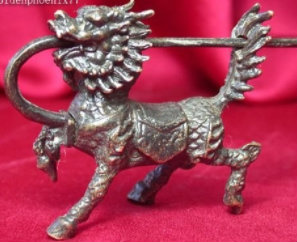
But for the rest of us, the ones that are for more personal use, though, are padlocks. Regular folk use the padlock, because it is more easily transportable to secure personal everyday things such as bikes, lockers, trunks, and small boxes. You know, the one with the latch you keep losing your key to? It turns out that certain early padlocks with keys are as collectible as the things they were meant to secure such as an early Chinese padlock featuring an intricate design of a mythical creature (image 1).
Because padlocks have been around since ancient times, collecting can be a rather daunting, but quite interesting pastime. For example, padlocks made in early China feature animal shapes. Padlocks of 16th century Europe featured all manner of intricate shapes such as hearts, triangles, shields and barrels while 19th century padlocks featured dragons, lions, and bulldog designs. These early locks were usually made of brass, tin, steel and iron, but mostly bronze with highly decorative design that belied its normally functional use. Yet, I couldn’t find any of this period at auction that didn’t appear to be anything but reproductions.
If you are into railroadiana, there are the “logo” locks made specifically for a particular railroad, featuring their logos such as the Santa Fe, Northern Pacific or New York Central railroads that have been auctioned from $20 to as high as $3,500.
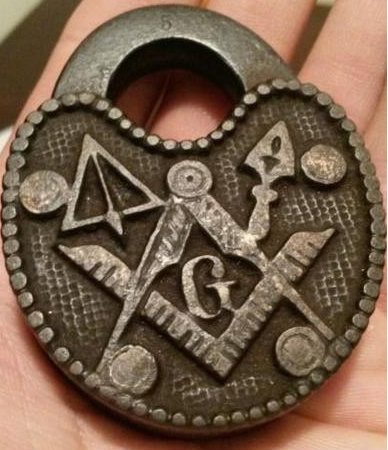
Even corporations and organizations used a “logo” lock. In fact by 1925, there were some 5,000 different ones making them a collecting category of their own. The Masons had their own lock, which featured the Masonic logo (image 2).
Remember the old westerns where the bandit stops a stage coach and makes off with the strong box? One such example of a “logo” padlock was the one that secured the strong box for the Wells Fargo Co. and there are easily many other “logo” locks that can start any collection for less than $100.
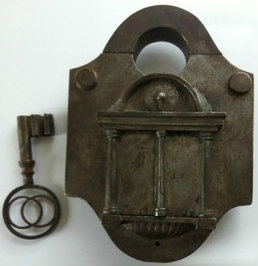
You can also specialize in military padlocks and ones made specifically for the US Postal system. But then you can also collect miniature padlocks, “cutaway” padlocks that showed the working interior intended for salesmen that sold for early $2,400, trick padlocks that required a secret series of levers or sequences to open them (image 3), prison padlocks, and padlocks made by early companies such as Winchester, Sure Grip, Wilson Bohannan, Yale, Corbin Ironclad, Miller, Excelsior.
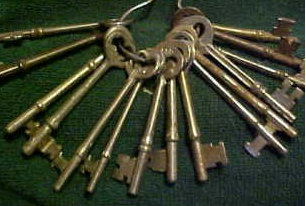
Remember that you usually lost the key to your padlock? Well, so did the early users. So finding a key to your vintage padlock may be easier if you buy them in bulk. Most sets of vintage keys, skeleton or otherwise, sell easily by the bunch (image 4) for less than $10 to $50 or so depending on quantity. In fact, one of the “key” factors in determining whether an early padlock is a reproduction is if it comes with matching keys. Most early padlocks you find don’t usually have the keys at all and only one if you were lucky.
In fact, many of the vintage padlocks have been reproduced in India and China recently, according to collector site GATreasures.com. The animal padlocks from early China, “story,” and “logo” padlocks are the most reproduced and sold mostly on internet auction sites.
What to look for? The style of the lock and its “patina” will help guide the novice and the expert in determining the lock’s true heritage. The American Lock Collectors Association and the West Coast Lock Collectors Association can help new collectors and the more expert sort out the vintage from the reproduction. There are other collector links on other social media sites that may be “key” to keep up with local, regional and national lock collector shows.
Collections, I’m finding, can consist of the most mundane things. A padlock may seem ordinary, but there are times when an ordinary item can quickly become a collectible if you “unlock” its true story – whether it is functional or not.
This article is adapted from its original publication at WorthPont.com



Very interesting. Your patriotic posts were really good too
Lots of fake padlocks..mostly being produced in India. Again, everything needs to be looked at very closely.