




Posted 22 hours ago
 Patriotica
(42 items)
In antiques and collectibles, you’ve got your share of frauds and scams. We’ve been shocked by stories of imposters who can create “authentic” paintings by the world’s masters, produce ancient art objects, forge signatures on baseballs, create “rare” books, “find” long lost stamps and “discover” historical letters or diaries. Even antique wine has been fabricated.
Most reproductions are based on highly sought-after antiquities, but others are created to take advantage of historic auction prices for collectibles we may see every day like toys, furniture, glassware, flags and jewelry.
According to several reports, the following categories of collectibles are the most faked. If you specialize in these collectibles, you may already know which ones to be leery of. Still, it couldn’t hurt to check them again.
Toys
If you’ve seen the original “Star Wars: The Empire Strikes Back” in 1980 you might remember Boba Fett, the Mandalorian bounty hunter hired by Darth Vader to hunt down, well, anybody it seems.
What made this character stand out was the rocket propelled from his backpack. Nice thing to have if you can.
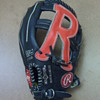
Kenner, the toy company thought so and offered to send you one by mail. Your toy can launch the rocket, but concerns that it could hurt the littler ones caused the originals to be redesigned so that the rocket was no longer able to be launched. The original Boba Fett design with detachable rocket is the most faked toy to date (image 1), with an original prototype being auctioned for $16,000 in 2003 or a toy version for nearly $2,000.
Porcelain
Many of the porcelain statues, figurines, plates, and art objects sold as collectible are so routinely over produced that their long-term auction value is rather low. However, there are some quality porcelain whose craftsmanship continues to command high auction values over a longer period of time, such as a decorative compote set that sold for near $23,000.
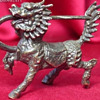
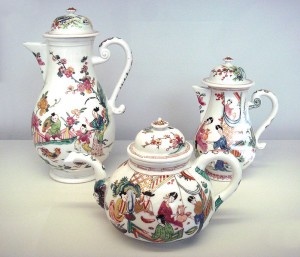
For that reason, Meissen porcelain (image 2) is considered the most faked in this category. Its famous crossed swords trademark has been used since 1720. The next set of porcelain to be routinely faked would be Nippon china made in Japan from 1891 to 1921, after which they were stamped “Japan.” Naturally, that set up an entire industry to produce contemporary Japanese china and stamp it as “Nippon.”
To tell the difference between the authentic and the faked porcelain piece, one must examine how it is manufactured. Look for colors not applied with care, obvious or hidden flaws in its casting, marks applied incorrectly or not included at all, size, shape or features that are just incorrect. All of these are clues that can help keep a collector from finding a fake advertised as an original.
Autographs
Autographs are the most reproduced in political, presidential and White House memorabilia—my area of expertise. Telling the difference between a hand-signed, a staff-signed or a mechanical autograph takes time and study. For a John F. Kennedy signature, for example, the value can range from $45 for a staff-signed letter to $1,500 for an authentic signature. Any JFK signature is automatically expected to not be genuine, since JFK is notorious for signing hardly anything himself throughout his political career.
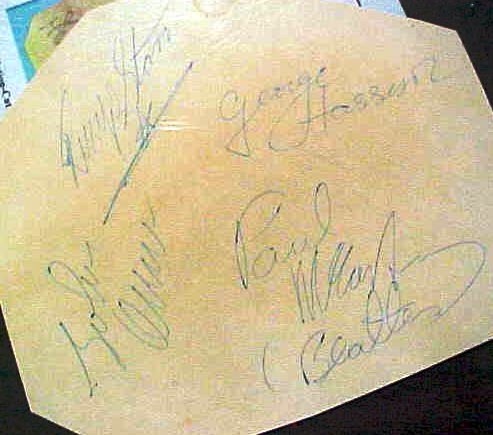
Other autographs at the top of the fake list are Elvis Presley and The Beatles, according to a CNBC report. These authentic autographs, be they alone or on a signed letter or contract can fetch from $1,500 and can get as high as ten times that, depending on the document. Don’t get all shook up, but most Elvis and Beatles signatures available are usually fake like the collection of Beatles signatures in image 3.
In sports, the most reproduced autograph is that of Babe Ruth. Many of his signatures on baseballs were actually made by staff or family toward the end of his life. Lou Gehrig and Mickey Mantle were in the top three in sports autographs, as well.
Civil War Flags
For vexillology (the study of flags and heraldry), the most reproduced flags belong to the Civil War era. Some are so sophisticated they’ve fooled casual collectors, but usually not experts. The reason: how it was put together.
Without being overly specific, certain methods stand out when creating a reproduction battle flag that can appear to look all too authentic. However, understanding overall design, how flags of that era were created, the textiles commonly used and how worn it is are all hallmarks that are exploited by those intent on passing a reproduction as original.
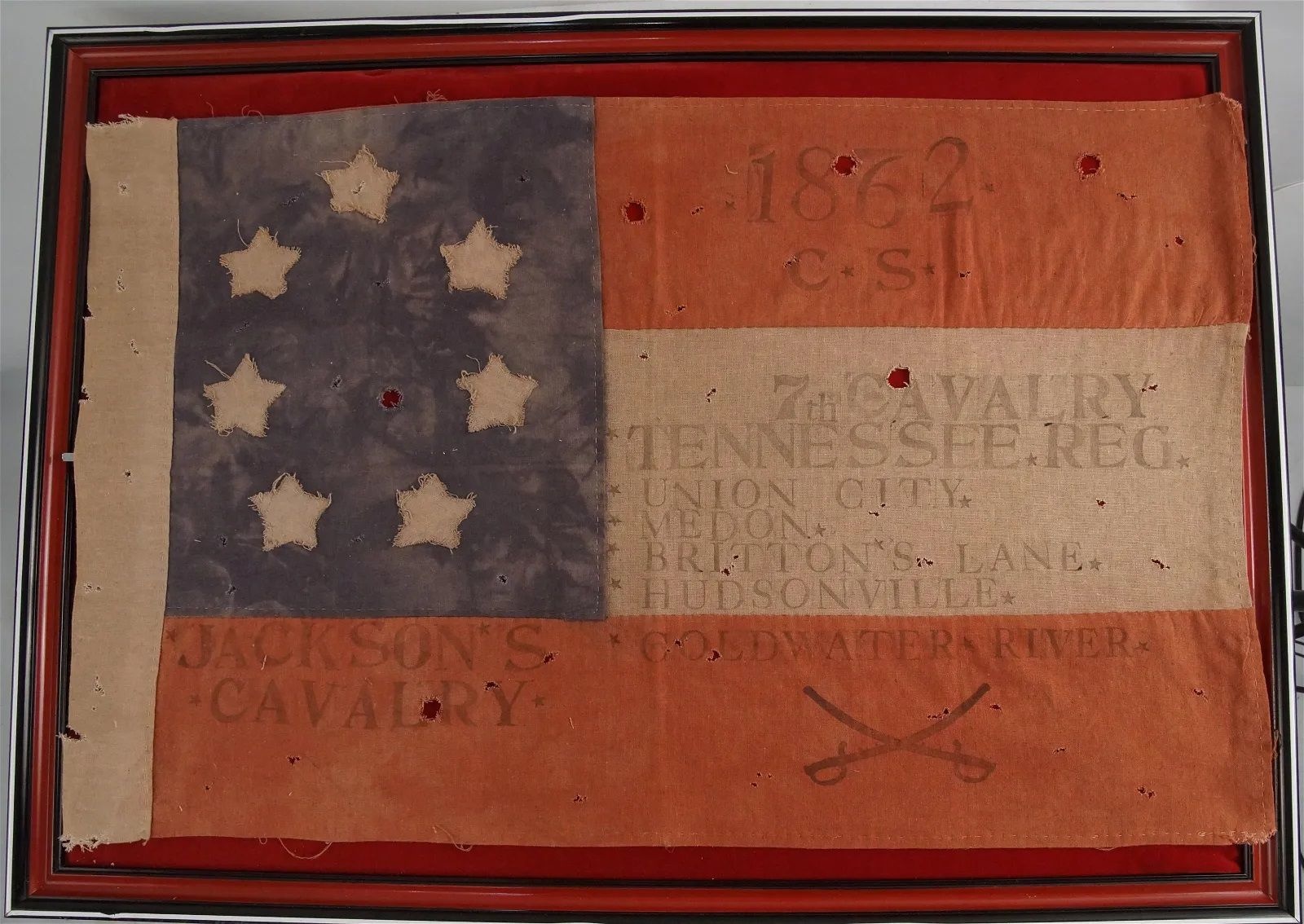
The difference in value range starting from $150 for a reproduction up to $50,000 for a battle-worn standard like the 37th Mississippi battle flag or the Confederate national flag advertised as 'early 1862' without additional provenance that proved to be faked (image 4).
One real clue to determine whether Civil War battle flag is a reproduction is if the flag is poorly made. Soldiers took great pride in their regimental and battle flags, and all were made with great care. An early Star Spangled Banner flag is intended to appear old and worn, but it’s sold as a wall display by companies like the Gallery of the Republic to those who like the older original flags without the auction value.
Artwork
Salvador Dali and Auguste Rodin are two highly valued artists of the 19th and 20th centuries whose works are the most reproduced, according to a survey by ARTNews. Vincent van Gogh is not too far behind.
But the most reproduced artist, according to the survey, is a landscape artist known as Jean-Baptiste-Camille Corot. His works of everyday realism were preeminent during the Barbizon School period from 1830 to the 1870s. As a painter and teacher, Cammille Corot encouraged his students and others to reproduce his work at will—called “doubles”—and so while his originals hang in the museums, others that probably should are not.
Why not? Its difficult to tell if he actually painted it or someone else did. The difference in value can be $365 like the digitized one or $3,200 for an original.
Furniture
While I thought that many types of early furniture were easily reproduced and no doubt are, the most copied piece of furniture, according to the CNBC survey, is the Barcelona Chair designed by Ludwig Mies van der Rohe, a master of modern architecture and furniture design.
Created for the International Exposition in 1929, all authentic Barcelona chairs are handcrafted in chrome and stainless steel and feature van der Rohe’s signature stamped on each one. A pair of early Barcelona chairs were auctioned for $6,300 while later reproductions sold for $350.
The Egg Chair by designer Arne Jacobsen and coffee tables by Isamu Noguchi are also among the most reproduced pieces of furniture. An original Egg Chair sold for $14,400, while the Noguchi wooden and glass coffee tables have sold for nearly $3,100. Both have since been heavily reproduced and sold for the simplicity of design ever since.
Wine
Only recently was I aware that early wine was collectible enough to have its own auction. A case of Chateau Lafite Rothschild 1982 sold at auction for just over $50,000. Mon Dieu!
And so it is natural that even wine can be faked and sold as highly collectible to wine connoisseurs everywhere. Food & Wine magazine printed an article by Brad Goldstein providing a list of the most faked wine. The list includes the 1811 Chateau d’Yquem, which didn’t exist until the 1970s; a 1947 Chateau Cheval Blanc and any Chateau Mouton Rothschild before 1924.
Other suspects
Glassware as art, Bakelite jewelry, pottery and ephemera are other categories where fakes thrive, not to mention watches, books, clothing, movie memorabilia, circus posters and so much more. Many of the categories mentioned here are courtesy of CNBC’s “Treasure Detectives” series under Commonly Faked Collectibles, because the more we know, the better we can keep our collectibles and antiques free from misrepresentation as we pass them along.
Of course, having a reproduction representing an impossible-to-find item in your collection just to fill a space in our collection is just fine. Just be sure everyone else knows about it, too.
This article was adapted from the original published at WorthPoint.com
My sister and I have an etsy store that specializes in vintage glassware and other vintage items. A lot of glass companies copied each other. And a lit of companies re-released previous designs. Often it takes an expert eye to tell the differences. Luckily my sister is a glass guru.
The other issue is: people can ask whatever they want for their items. This often confuses sellers and they think "for sale" prices are a way to value their items. We try to use 3 "sold" prices and average thar price depending on conditions.