




Posted 2 months ago
 Patriotica
(55 items)
Bourbon, rye, corn, and wheat have provided the “water of life” in the form of aged whiskey since medieval times. Is that what makes it collectible?
It can be spelled whiskey or whisky depending on where you’re from; the former (with the 'e') is normally used in Ireland and the United States, while the latter (without the 'e') is used, well, everywhere else, although neither spelling is wholly consistent. In any case, the word is an anglicization of the Gaelic word uisce, meaning “water,” according to the Wikipedia entry.
It was curious to me that whiskey was even considered a collectible. Not a whiskey drinker myself, I just assumed one bought a bottle, drank it, bought another. Sure, some whiskeys were advertised as so many years old, but who held onto a bottle for more than a year or two, no matter how old it was?
That’s until I saw a story on CNN online titled “Rare pre-Prohibition whiskeys offer a taste of American history” by Maggie Bullock, December 5, 2018. It’s a story about 40 cases of unopened bonded whiskey bottled from 1908 to 1930s, most bought before Prohibition went into effect in 1920, that were stored in secret vaults by builder Jean-Baptiste Leonsis. When Prohibition ended in 1933, the bottles and cases remained secretly stored until 2017 when Leonsis’ grandson died, nearly 90 years in total. The family, I guess, then contacted Christie’s to auction off the stash last Friday, December 7th, Pearl Harbor Day. I just had to investigate further.
Turns out that collecting whiskey is somewhat easier than collecting wine. Wine, it seems, can go bad after a while; whiskey never does. It will taste just as it did when it was bottled, no matter how long you have it. It doesn’t “age” or get better, it just remains the same, according to the same article. “Pre-Prohibition whiskey is higher proof,” says Scott Torrence, senior wine specialist for Christie’s auction house and theorizes that a “…deeper baritone note…may be due to the different strains of corn grown in the early 20th century…and most buy what they plan to sip.” The most expensive bottle of whiskey ever auctioned was a Macallan 1926, casked 6 years into Prohibition, and bottled 60 years later in 1986, that sold at auction by Christie’s in November 2018, for $1.53 million.
Still, collecting at auction is not limited to the ultra-rare, pre-Prohibition era whiskey available. But, like any collectible, it’s best to find your particular interest and grow your collection from there. If you already enjoy whiskey, then you already know there are different types; bourbon, corn, rye, wheat, scotch, moonshine, charcoal distilled, bonded, unbonded, single malt, blended malt, single cask, and craft brands.
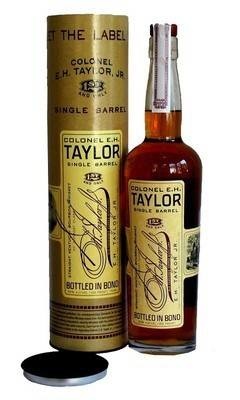
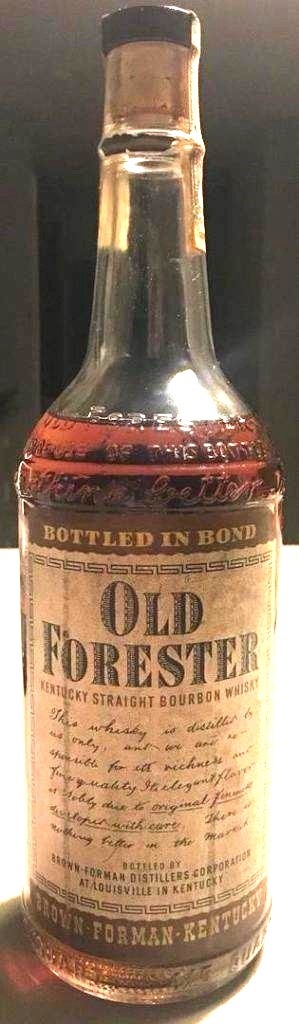
In short, there are all manner of whiskeys that can be collected and enjoyed, not just in the United States, but whiskeys distilled from across the world from Japan to Australia. Each have their own merits and collectability. An unopened 100 proof “Old Forester Kentucky Straight Bourbon Whiskey” bottled in 1948 (image 2) sold in October 2018 for about $5,000 or get started with an EH Taylor single barrel bourbon for $61 (image 1). Just be warned about fakes, though.
A recent report from BBC Scotland found that out of 55 rare Scotch tested, 21 were found to have been distilled later than labelled, including an Ardbeg 1885 and a Thorne’s Heritage 20th Century blended whiskey. How did they know? Carbon-14 dating. Everything organic, including us, carries a very small bit of radioactive carbon-14 derived from the atmosphere that has a half-life of 5,370 years, meaning half will decay in that time. That decay can be accurately measured to indicate age.
David Robertson, cofounder of whiskey broker Rare Whiskey 101 who commissioned the report, said “’The vast majority of vendors were not knowingly selling fake Scotch, but every purported rare whisky bottle ‘should be assumed to be fake until proven genuine’, especially if it claimed to be a single malt,” according to the BBC story.
Johnny McCormick of Whiskey Advocate also cautions that there are “5 Myths About Collecting Whisky.” The first is that prices are only going up. “Not necessarily,” he writes. New release whiskeys start high at auction but then fall back. “Grab the bargains when whiskey flippers miscalculate the market,” he says.
He also writes that many think that the market is only for the rich, but most whiskeys can be bought for less than $100 such as the example of EH Taylor above. He goes on to write that the golden age of whiskey is here and now, meaning that older whiskey is not the be all and end all of collecting. Also, there is no shame to enjoying whiskey whenever you care to. Put aside some keepsake whiskey, as he calls it, to enjoy at a much later date if you want to.
In short, collecting whiskey may have its economic upside, as many collectibles like fine art do, but whiskey also has a more personal connection. With this collectible, you collect what you like – to drink.
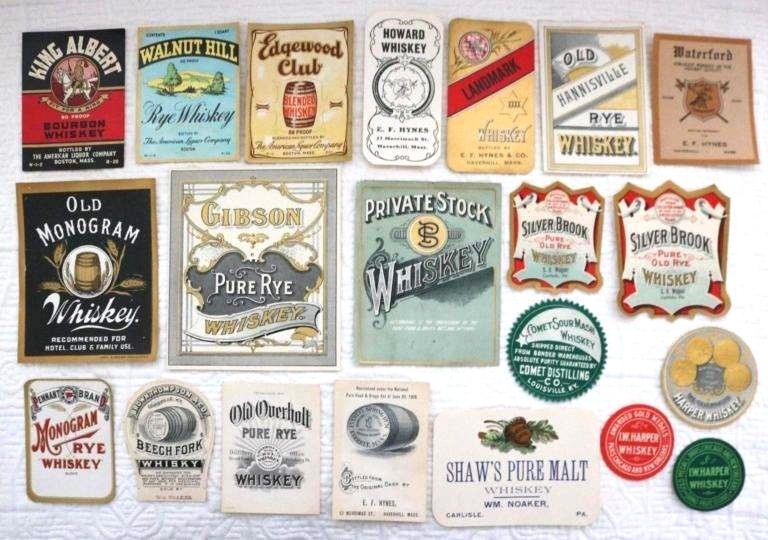
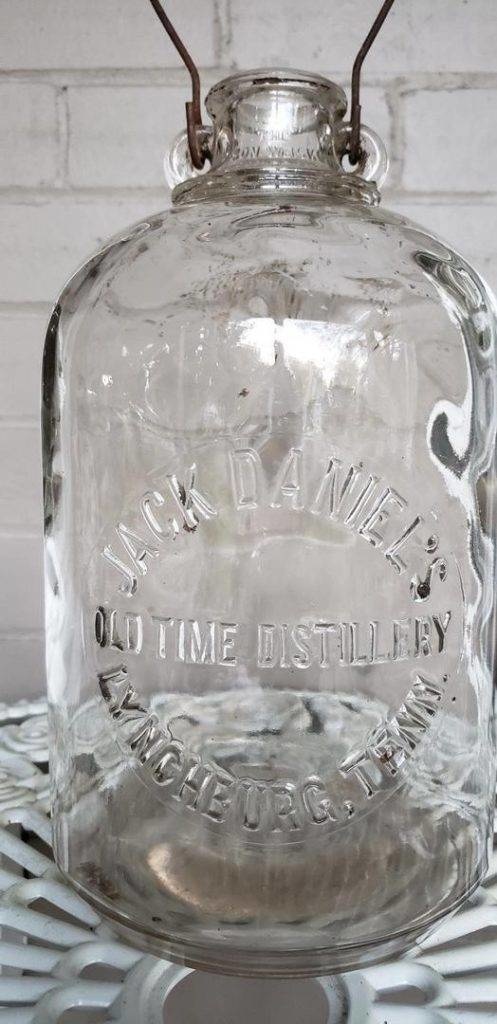
You can also enhance your collection by displaying historical whiskeys through early bottle styles. An empty glass Jack Daniels gallon whiskey decanter from about 1900 recently sold for $4,650 (image 4) or a Grandpa’s Blended Whiskey bottle c. 1904 sold for $158 in 2013. Even whiskey labels are collectible such as this set of 21 pre-Prohibition labels that sold easily for $61 (image 3).
Learning more about collecting whiskey is easier with friends. Step up to the bar and order your membership neat or on ice with the American Bourbon Association, the Scotch Malt Whiskey Society, and, not surprisingly, through its own advocacy group called the Distilled Spirits Council.
Buying alcohol online or at auction is easier than it used to be, too. However, there are restrictions by state such as having to sign for the package when delivered by someone over the age of 21, and being sure that the bottle being auctioned has not been opened, is listed as a collectible, and is intended to be consumed for personal use. There are cases where a wine collection, for example, was seized for violating state law.
In short, whiskey is a great enjoyable collection. So, drink your collection responsibly. Salud!
From an article originally published at WorthPoint.com



Patriotica, Cool. :-)
"Wine, it seems, can go bad after a while; whiskey never does." Dunno about an unopened bottle, but once you open one, the contents do change over time:
https://thewhiskeywash.com/bourbon/how-long-does-whiskey-keep-opened/
I had occasion to be passing through Kentucky some years back, and decided to visit the Maker's Mark distillery.
I had to drive down a whole series of very narrow and rough secondary and tertiary highways to get there, but that last section of road was smooth as silk, maintained no doubt by the distillery.
I bought a bottle of one of their wood finishing series as a gift, and when I got back home, we got together to try it. Beautiful.
Considering how infrequently I drink liquor these days, I'm probably better off buying the miniature bottles.
Whiskey and other alcohols do lose a bit of their potency the longer they are opened and used, but its not significant over the long term so its safe to say, according to the experts, that they remain generally the same.