



Posted 23 days ago
Agus
(1 item)
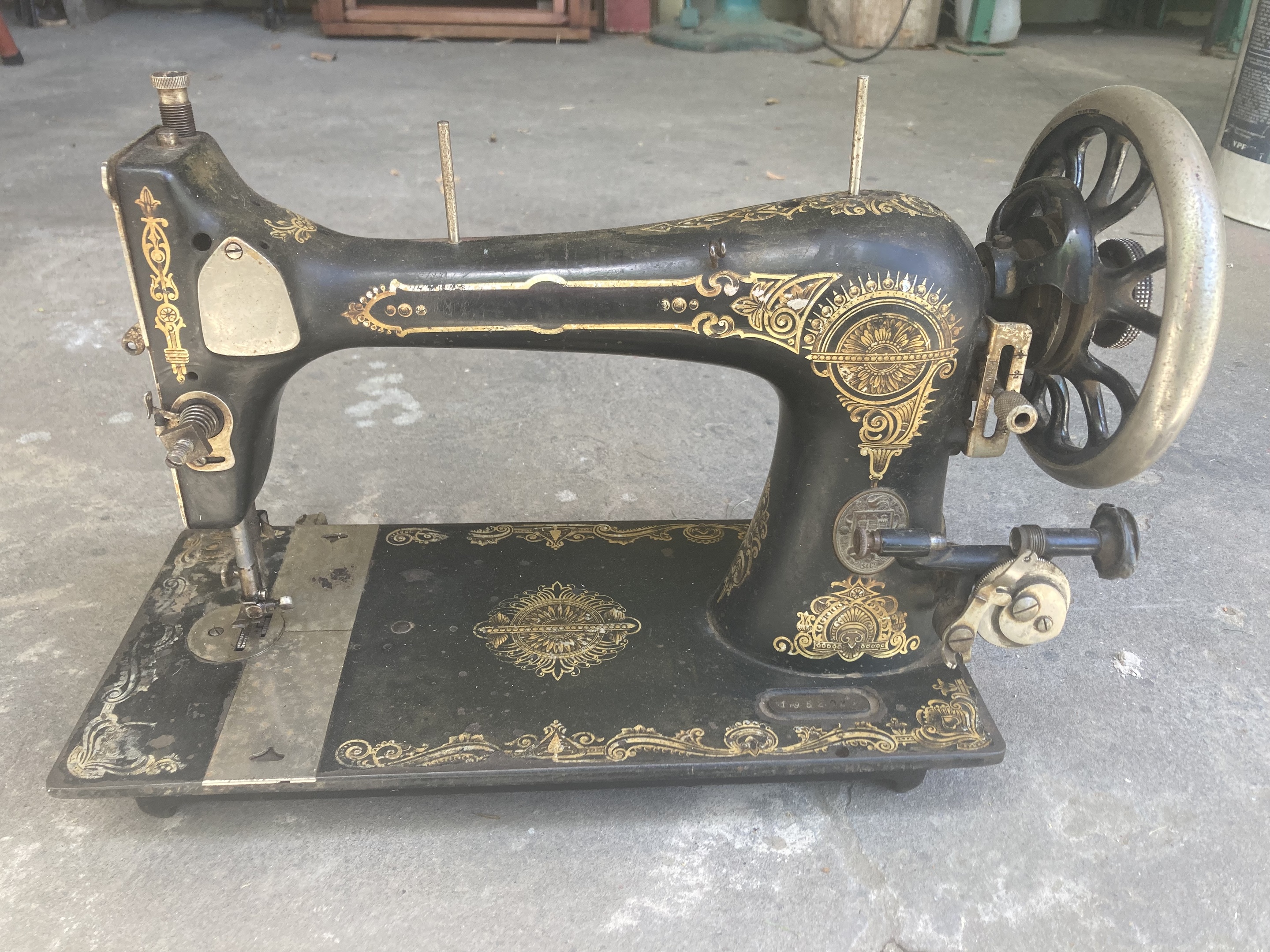
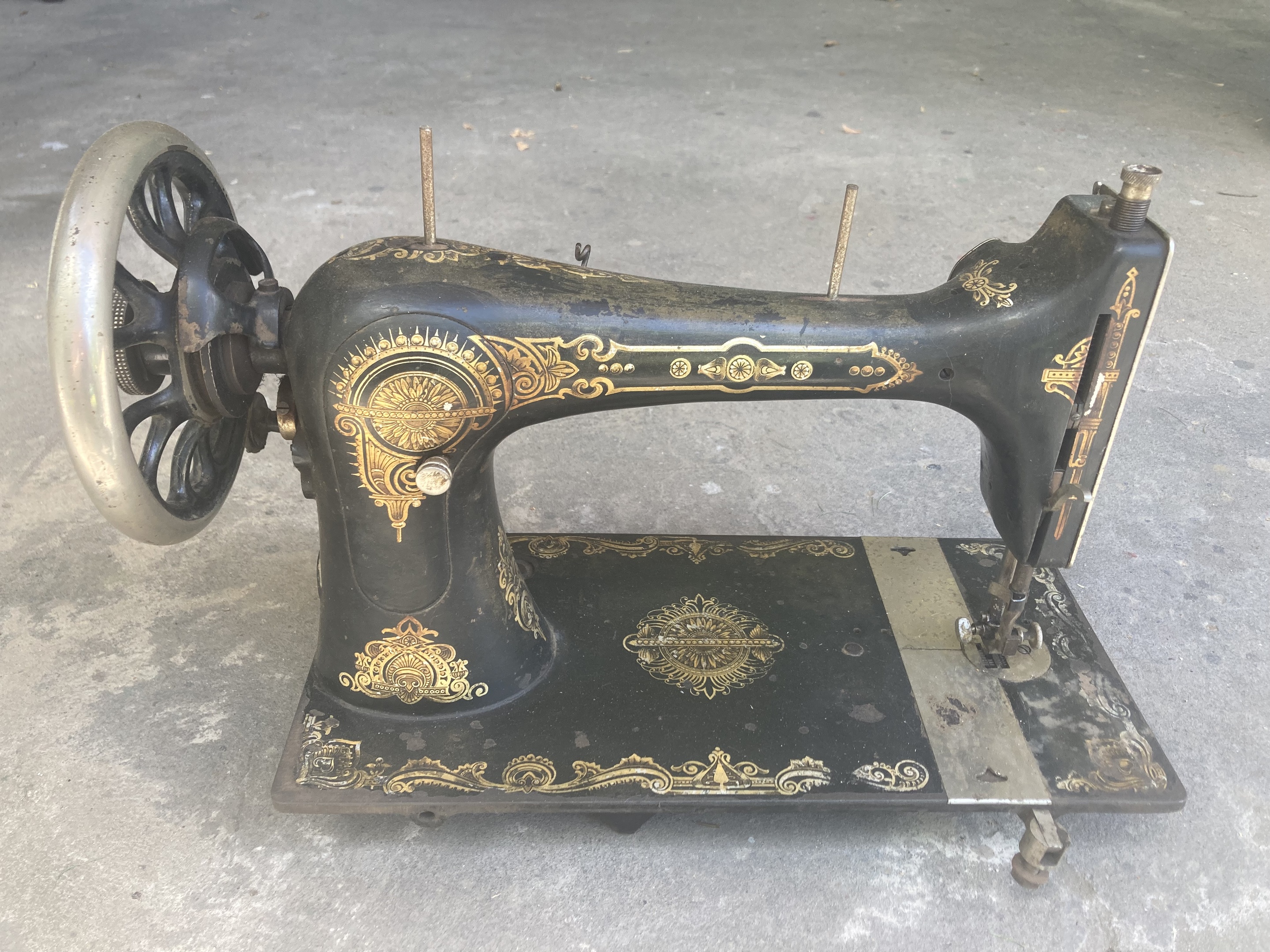
Hi everyone! I found this antique sewing machine at my grandma’s house and was wondering if anyone knows anything about it. I have no idea what brand it is or what year it’s from. Any help would be appreciated!




I don’t know anything about it but
there is a person on this site
KERAMIKOS she is the
sewing machine Queen and
searcher of knowledge
in the first degree
Hi, Agus. :-)
Whoops, I missed seeing this earlier.
So, your grandmother's vintage sewing machine. Cool.
It's great to discover something like that once belonged to one's ancestors.
What I can tell you right off the top of my head is that this is a vintage vibrating shuttle sewing machine (as opposed to a transverse shuttle or rotating shuttle sewing machine):
https://en.wikipedia.org/wiki/Vibrating_shuttle
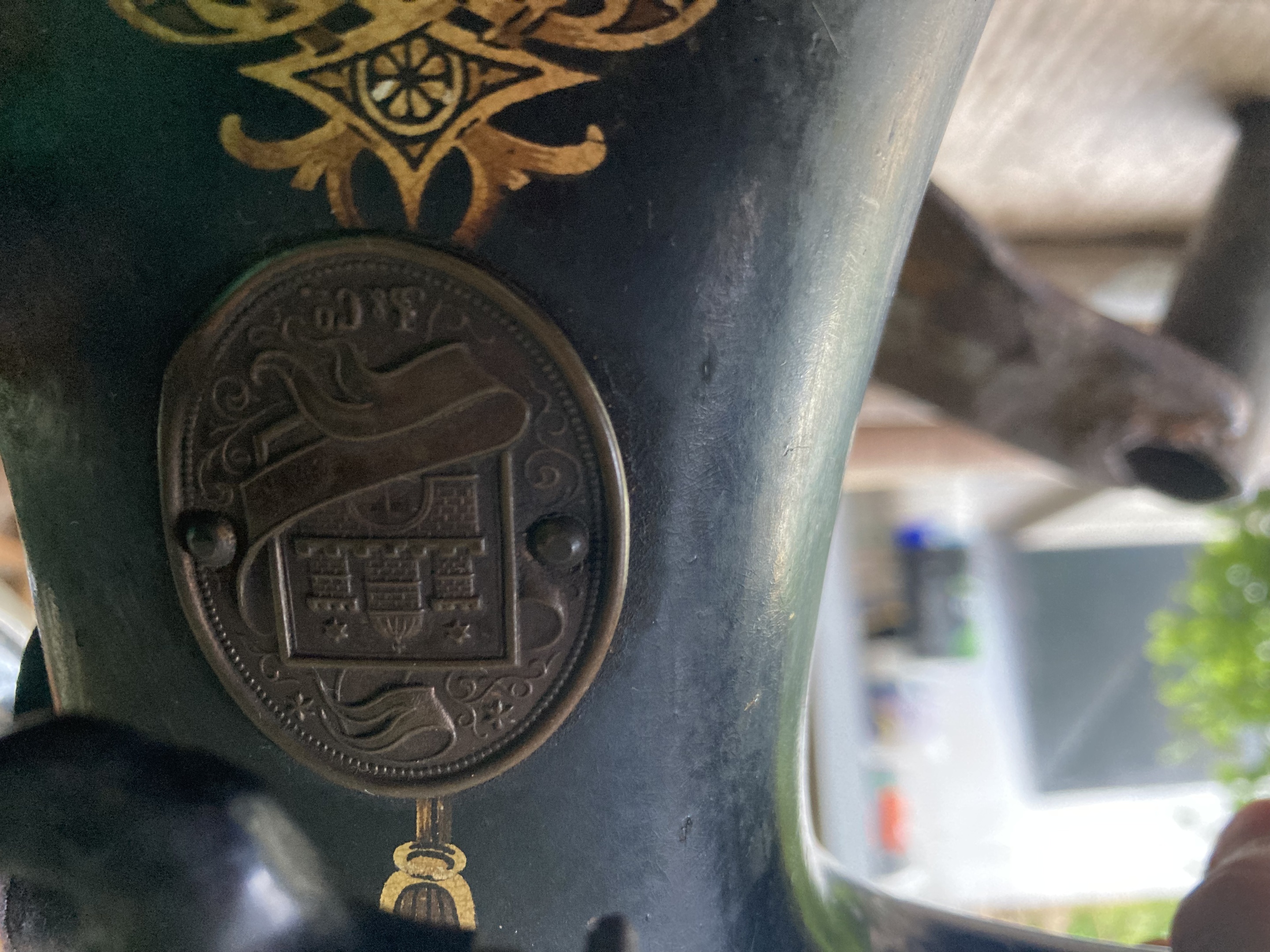
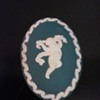
The medallion badge on the pillar with the image of a castle is the logo of J. Silberberg & Co., which was a distributor.
J. Silberberg & Co. didn't actually manufacture any sewing machines, although they did perform some sewing machine assembly before they became a distributor.
That 'empty' spot in the decal in the middle of the arm is where the retailer's chosen badge name would normally go, so possibly this was a leftover from a batch of sewing machines made by the manufacturer.
Badging was a practice common in the sewing machine industry of the 19th and 20th centuries which entailed a retailer contracting with a manufacturer to make sewing machines with a badge name put on them chosen by the retailer.
One of the most well-known examples of this badging practice is Sears Kenmore. Sears contracted with many manufacturers to make sewing machines and other appliances with the Kenmore name on them.
That little slot with a nickel-plated surround on the outside edge of the pillar is a stitch length mechanism, and on one side, it appears to have "RÜCK VOR" (German for "BACK FORWARDS" stamped or engraved on it. German sewing machines had a reverse function long before U.S. ones did.
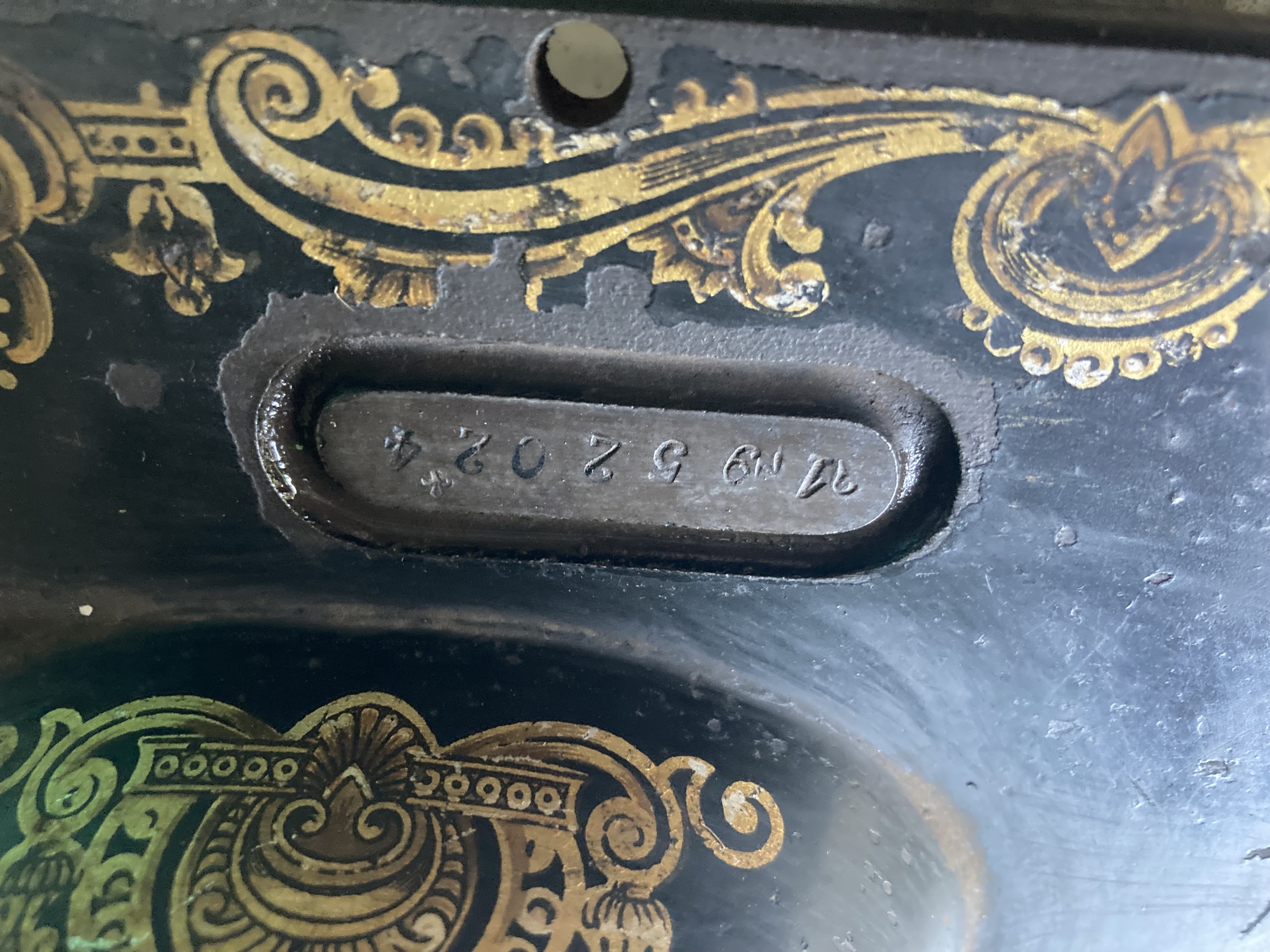
The serial number cartouche on the bed in front of the pillar looks like it has "1952024" stamped on it.
That's about all I can tell you about it right now. I think I might post a link to this CW S&T post over on the Victorian Sweatshop forum, because there are a number of members there who are well-versed in vintage German sewing machines.
https://www.victoriansweatshop.com/post/j-silberberg-co-unknown-german-vibrating-shuttle-13781293
Hi again, Agus. :-)
I don't know if you've returned to check for answers, but if you look at the link in my second comment, I did post a link over on the Victorian Sweatshop, and asked the members for assistance.
Victorian Sweatshop member Olaf responded, and opined that your machine looks to him like a Gritzner (see VSS link).
About Gritzner:
https://www.fiddlebase.com/german-machines/gritzner/
Per Peter Wilhelm in his book, "Alte Nähmaschinen," J. Silberberg & Co. became a distributor in 1879 (information courtesy of Victorian Sweatshop member Unknown Artist who has a copy of the book).
From what I've gleaned from noodling around the Net, it looks like the owner of J. Silberberg & Co. may have set up business in Amsterdam, dissolved the Hamburg one in 1937, and survived WWII.
Unfortunately, the serial number on your machine (1952024) won't necessarily be a reliable guide to the age, because while Gritzner, like many German sewing machine manufacturers, would assign serial numbers to their machines, apparently J. Silberberg was also known to do this:
https://www.reddit.com/r/vintagesewing/comments/1d1sl42/need_help_identifing_a_vintage_hand_crank_sewing/
Neither is the fact that your machine is a vibrating shuttle (as opposed to a rotating shuttle) necessarily a clue to its age, because vibrating shuttles were popular, and were made from the mid-19th century (although the design wasn't perfected until 1885) to the 1960s:
https://www.fiddlebase.com/vibrating-shuttle-sewing-machines-history/
https://en.wikipedia.org/wiki/Singer_Model_27_and_127
Having said that (about the serial number not necessarily being a reliable indication of age), here are some assorted vintage Gritzner sewing machines and serial numbers in a timeline at fiddlebase dot com (if your machine's serial number was assigned by Gritzner, then the vintage might be 1908/1909):
https://www.fiddlebase.com/german-machines/gritzner/dating-gritzner/
Another physical clue to the age could be the stitch length mechanism.
Per that same commenter on reddit, the presence of a reverse function on a stitch length mechanism might indicate post WWI vintage (although it's unclear whether that pertains just to Winselmann vibrating shuttles, or German vibrating shuttles in general).
I'm sorry that I haven't been able to narrow down the age of your machine, but if anybody at the Victorian Sweatshop opines on it, I'll update here.
Hey again. :-)
I did a bit more digging, and another commenter on a reddit VSM thread opined that most European makers of vibrating shuttle sewing machines (including Gritzner) had already implemented a reverse function before WWI:
https://www.reddit.com/r/VintageSewingMachines/comments/1o86cie/vibrating_long_shuttle_machine_with_reverse/
Then I read this interesting Gritzner document full of tidbits at sewmuse dot com:
http://www.sewmuse.co.uk/gritzner.pdf
Among other things, it contains excerpts from a post-1903 (OP's deduction) Gritzner catalogue. They were offering transverse, vibrating, and rotary shuttles.
Of the vibrating shuttle offerings:
*snip*
Vibrating Shuttle machines were available in the form of the
Selecta R for family use and the Selecta S a High Arm machine
for tailors and manufacturers.
Both machines were produced in the following forms:
No. 1 R or S without cover
No. 2 R or S IV with ornamental bent cover
No. 4 R or S IV for hand and foot with ornamental bent cover
No. 5a R or S on wood base without cover
No. 6 R or S IV on wood base with ornamental bent cover
No. 7 R or S with 4 drawers and ornamental bent cover.
Again reversible feed was an optional extra.
*snip*
Notice that last line: reversible feed was available, but it was an optional extra.
One more interesting tidbit from the OP:
*snip*
Despite being made in huge quantities we do not come across
Gritzner machines that often and it maybe many were sold as
labelled machines.
*snip*
Hello everyone,
I apologize for the delay in responding. I recently had to empty my grandparents’ house in order to sell it, a process filled with memories and little treasures, but also with a bittersweet feeling.
I’m truly amazed by all the information I’ve been learning from you. I honestly had no prior knowledge about any of this, so I’m incredibly grateful for your help. I’ll continue researching using all the details you’ve shared, although it’s clear that many of you have far more experience and know exactly where to look.
When I have some free time, I’m planning to carefully take the piece apart, as the mechanism is currently stuck—most likely due to accumulated dirt—with the hope of getting it working again. I don’t actually plan to use it, since I already own her Singer sewing machine from 1924–1936, which is beautiful and works perfectly. Still, it feels sad to see this one unable to function.
Do you happen to know if there might be any internal components with factory markings or inscriptions that could give us additional clues? If so, I’ll be sure to update the post.
Once again, thank you all so much for your help. It’s always a pleasure to learn new things, even when we don’t manage to uncover every detail.
Agus:
"I apologize for the delay in responding. I recently had to empty my grandparents’ house in order to sell it, a process filled with memories and little treasures, but also with a bittersweet feeling."
No apology necessary.
First of all, it hasn't even been a week. };-)
Secondly, I had to go through a similar process (cleaning out an ancestor's house) some years back, so I get it.
You're very welcome to any information I've given you. I'm afraid that I'm a bit of a vintage sewing machine dilettante, and I largely act as a 'conductor,' pointing the way to Internet resources for VSMs.
There could be markings on the various parts of your grandmother's Gritzner that could supply additional information, although some of them might require disassembly to see.
I don't know if you've read (or reread) the Victorian Sweatshop post I linked, but Olaf is of the opinion that J. Silberberg & Co. didn't issue any serial numbers, so that "1952024" number stamped in the little 'cartouche' on the bed is likely to be a Gritzner serial number, which would mean that per the fiddlebase website Gritzner timeline it's of 1908-1909 vintage.
Your grandmother's Gritzner might well only need a good cleaning to get it working again. Those old sewing machines were built before the planned obsolescence era, and they're remarkably tough.
I don't know how much you know about your grandmother's old Singer, but here is a handy tool that identifies a lot of the most popular old Singer domestic models:
https://web.archive.org/web/20250820174513/https://www.sandman-collectibles.com/id-singer-machines.htm
Here's some basic VSM cleaning advice from a pro:
https://pungolivinghome.com/home-2/topics-tips-and-tricks/cleaning-a-vintage-black-singer-sewing-machine-what-to-use-and-not-use/
You might consider joining the Victorian Sweatshop forum, because between the various members, there is an amazing breadth and depth of vintage sewing machine knowledge.
However, feel free to ask question here.
Agus, just a few more tidbits.
I was noodling around for more Gritzner pictures, and tripped on this entry at the well-known German VSM site:
https://www.naehmaschinenverzeichnis.de/verzeichnis-der-naehmaschinen/gritzner/
The specific machine is a Gritzner model R, serial number "2457123," so it's a bit newer than yours, but the OP's text description goes on at length, and provided some interesting information not necessarily limited to these excerpts:
*snip*
First of all, the machine presented poses a mystery as to its origin. Instead of a well-known manufacturer's trademark, there is a plaque with the Hamburg city coat of arms, around which an uninscribed banner wraps. Above the lotus decoration known from Gritzner machines, a portrait of Isaak Merrit Singer with the Dutch text „UITVINDER DER NAAIMACHNES“ (inventor of the sewing machine) in the sans serif Antiqua typeface introduced in Singer advertising since 1900 is emblazoned on the right.
*snip*
The company J. Silberberg & Co. in Hamburg, to which the shield with the coat of arms belongs, traded sewing machines from various German manufacturers, especially Hengstenberg machines (anchors) to England_and overseas to New Zealand. But what's the point of honoring Singer?
*snip*
With a serial number of 2457123 from Gritzner, the machine was manufactured well after 1910, when the 2 million mark was exceeded and Gritzner had become Germany's largest sewing machine manufacturer. With annual production increasing from 130,000 in 1910 to 150,000 machines in 1914 from the Gritzner factory, the likely production year is 1913.
According to Peter Wilhelm in the book „Old Sewing Machines“, Gritzner had already had the Model R Selecta swing boat machine in his range since 1898. The machine has always been developed further. Even after 1945 until the Fimenbrand in 1956 and subsequent takeover by Pfaff, it was given a completely new exterior, but had almost identical technology (as evidenced by the company brochure from 1956). This makes the Gritzner Model R one of the longest (almost 70 years) sewing machine models produced, alongside the Singer Improved or Type 15 with their successor models. The Gritzner Model R is probably also one of the most frequently built machines of a type in Germany.
*snip*
I also tried finding a free manual for a Gritzner model R, and the closest I've found is this on Scribd:
https://www.scribd.com/document/394918602/GRITZNER-type-R
You'd need a scribd account to download it, and it seems a little bit like a buying a pig in a poke (if you don't already have a scribd account, that is), because they just show a one page excerpt, and that excerpt shows a model model D (a transverse shuttle) and a model T (a hand-crank vibrating shuttle).
Cyndy Kitt (generally well-regarded in VSM enthusiast circles) is selling a reproduction of a Gritzner Selecta manual:
https://cyndykitt.com.au/manuals/MAN-SGVS.htm