



Posted 1 month ago
 Patriotica
(55 items)
National Geographic is everywhere, as it should be. Informative, colorful, instructive, full of surprises, and, after nearly 140 years since its founding, still quite collectible.
And why not? With an annual circulation of about 1.5 million, not including digital editions, the National Geographic magazine can still make you wonder about time, space, oceans, history, people, places, and the world in general – without ever leaving home. All in living color.
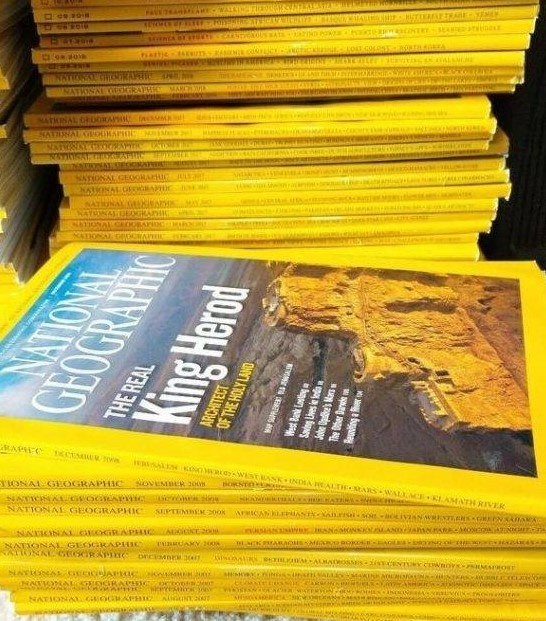
It’s true that National Geographic magazines can almost be bought by the pound (image 1). In his WorthPoint article Unloved Antiques: National Geographic Magazines, Mike Wilcox points out that “Large Supply + Minimal Demand = Low Value.” That does fit National Geographic magazines because, since at least 1945, the magazine has been printed in the millions each year (6 million just in 2019). Wilcox points out some exceptions such as ones printed before 1945 and the ones signed by an astronaut or explorer; however, there are other exceptions that suggest a rethinking of which magazines are considered valuable to collectors.
The Magazine
In January 1888, the original 33 members of the National Geographic Society (all men, of course) met in Washington, D.C. They were mostly explorers, geographers, cartographers, and professionals in law, business, and the military. The intent was “the increase and diffusion of geographical knowledge.” A journal of sorts followed in September, which was what we now know as the National Geographic magazine but without the familiar yellow border or photographs.
The first eight years of the magazine, 36 issues in total, had scholarly and scientific articles with no photographs at all. Each magazine had a dark reddish cover with a double black line around the edge for decoration. It wasn’t until a printer asked the journal’s editor to fill up 11 extra pages to even out the printing in late 1904 that photographs were even considered. Without having any other articles available, the editor simply tipped in some photos from the Russian Geographical Society that included images of the Tibetan capital, Lhasa, for the January 1905 issue. It jazzed up the journal and excited the subscribers, about 10,000 of them, and photographs became an integral part of the magazine from then on.
These “red brick” issues, as they are called in the trade, are the most difficult to find and the most valuable of all National Geographic issues with auction values up to $6,000 for the initial September 1888 issue. The January 1905 issue with the first photographs and most issues before 1920 are the most difficult to find in any condition. The July 1959 issue was the first with a photograph on the cover featuring the new 49-star flag of the United States.
The Color Plates
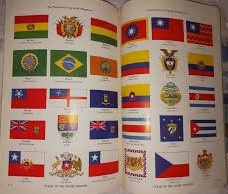
As a collector and dealer of Americana, I can attest that the color plates in a National Geographic are important to collectors (image 2). The October 1917 issue features flags of the world, for example, and highlights the flags of all nations at the time. Within a year, World War I would end, changing national borders and creating new countries with their own new flags. The old flag chart would be outdated but become nostalgic for geographers, vexillologists, and expats.
Through the years, colorful plates of birds, flowers, mammals, and all manner of early autochrome images of people, places, and things were created. These colorful issues, such as the April 1916 fold out of the Sequoia trees or the July 1925 issue of Hawaiian bird plates, all have collector value (image 4).
The Maps
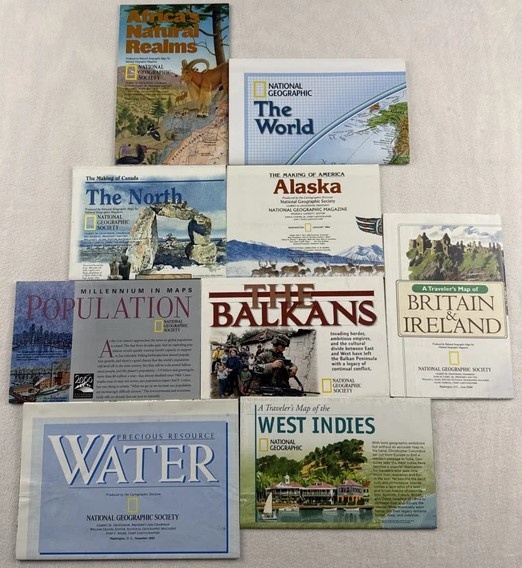
The first map published in a National Geographic was the area in and around Asheville, North Carolina, in 1889. In May 1918, the first map supplement was titled The Western Theatre of War and sold for $15. On average there were about five maps issued per year until 2000, and they are eclectic both in content and type. There are historical maps such as Shakespeare’s England from the May 1964 issue to maps outlining combat areas during World War I, World War II, Korea, and Vietnam.
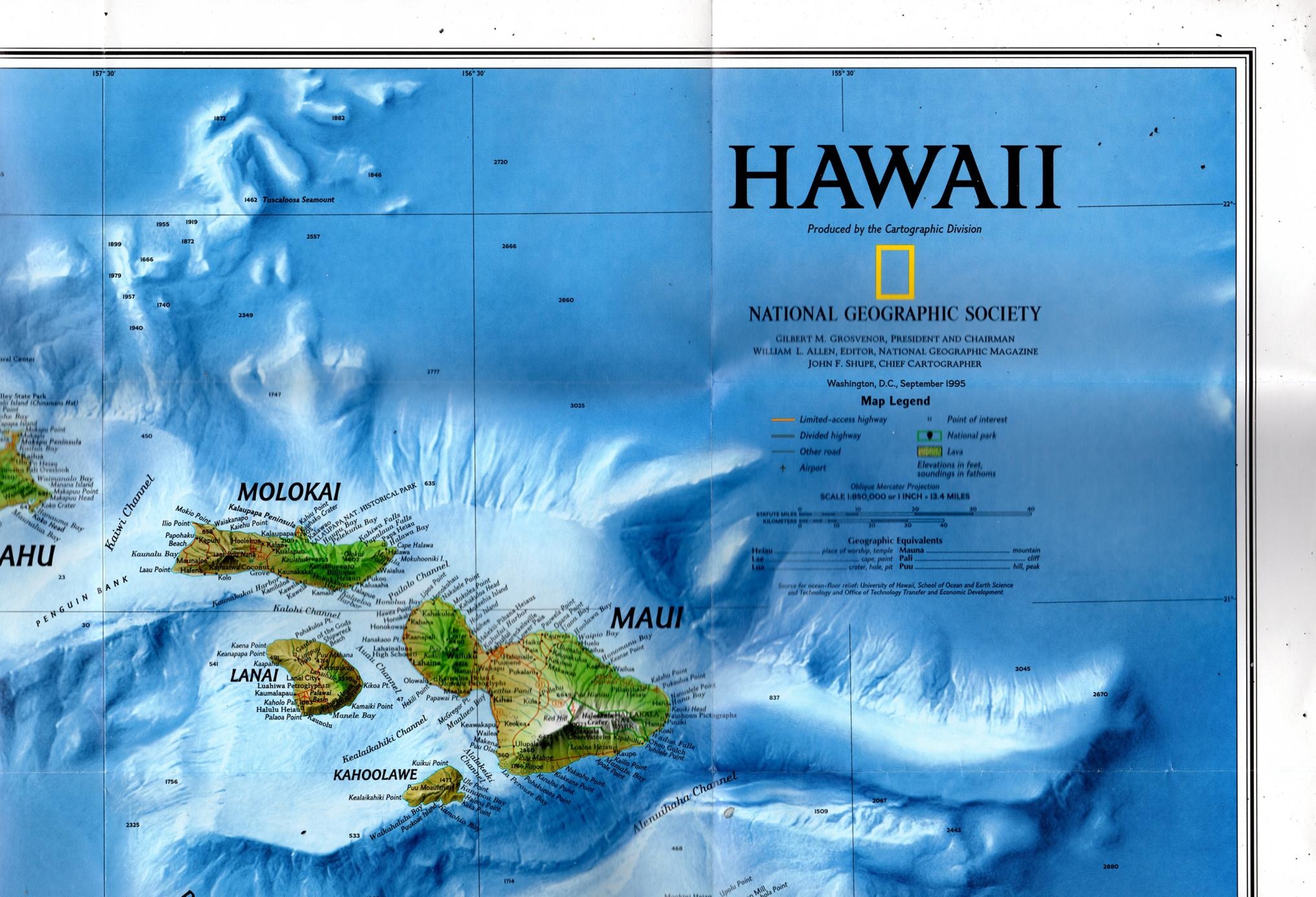
Most maps are easily available for less than $5, but maps of vanished countries, borders that have changed, names of countries that are different (Burma is now Myanmar) all add to their collectibility or the map of Hawaii in stunning color (image 30. Now the maps are in digital form or available on CDs and are more accessible, sure, but not as much fun as folding it out.
Special Issues
Recently, National Geographic produced special issues that focused on only one topic complete with images, illustrations, and photographs specific to that topic. The Guide to the Night Sky, the 100 Events that Changed the World, and the Best of Europe: 100 Must-See Destinations are just a few examples of complete issues that can auction for $10 to $20 depending on condition and completeness to the right collector.
International Issues
To add to the collectibility of National Geographic are the international and local editions, some 65 in all. Beginning in 1995 with its first magazine in Japanese, others were published in Arabic, Turkish, Hebrew, Russian, Spanish, among others. Magazines in Farsi, Greek, Mongolian, Azerbaijani, Latvian, Ukrainian, and Portuguese had small runs and have since been discontinued, but are still collectible. All have sold in the $10 to $20 range at auction.
The Specialty Publications
National Geographic has also issued compilations, coffee table books, the National Geo Traveler, History, National Geographic Kids, bound editions, and reprints of the “red brick” series beginning with the 1888 first edition in 1964 and 1972 (be careful to look for the reprint date inside). The specialty issues represent just another facet of collecting National Geographic publications.
Finally
Yes, you can easily buy a full lot of National Geographic magazines by the boxful at your local library and your neighborhood garage sale and its encouraged. With so many collecting categories from dogs to cats, trains to balloons, Native Americans to neighbors next door, from trees to marijuana, and everything in between, specialty issues still appeal to individual collecting categories.
Just be sure of a few things. First, the magazine must be complete with everything it was issued when first published. If it had a map, insert, CD, or any special gift, it must be included to get the higher auction value. No covers, pages, or advertising can be missing, and condition overall does matter. The binding, especially in the earlier editions, must be readable and intact.
To get a better sense of collecting National Geographic magazines go to ngcollector.com or to ngscollectors.ning.com to better understand auction values for complete magazines by year, whether individual or bound.
If you don’t want to sell…
For those with boxes and bookshelves full of National Geographic magazines who don’t have the time or inclination to sort, catalog, or sell individually at auction, consider donating to local libraries, hospital wards, police/fire stations, elementary schools, military bases, senior living, community centers, nonprofit thrift shops, or give them to a young teen with the ambitions of an entrepreneur. As a last resort, go green and recycle.
Traveling the world has never been easier than with National Geographic publications. The “…increase and diffusion of geographical knowledge” has been a staple of family life from journal to computer bytes around the world for almost 140 years. Just collecting the knowledge has been valuable, too. Pass it on.
This article was originally published at WorthPoint.com.





I threw 30 years away from my parents. No one wanted them.
how many you want--I have a trunk full!