






Posted 6 days ago
 Steptoe1
(2682 items)
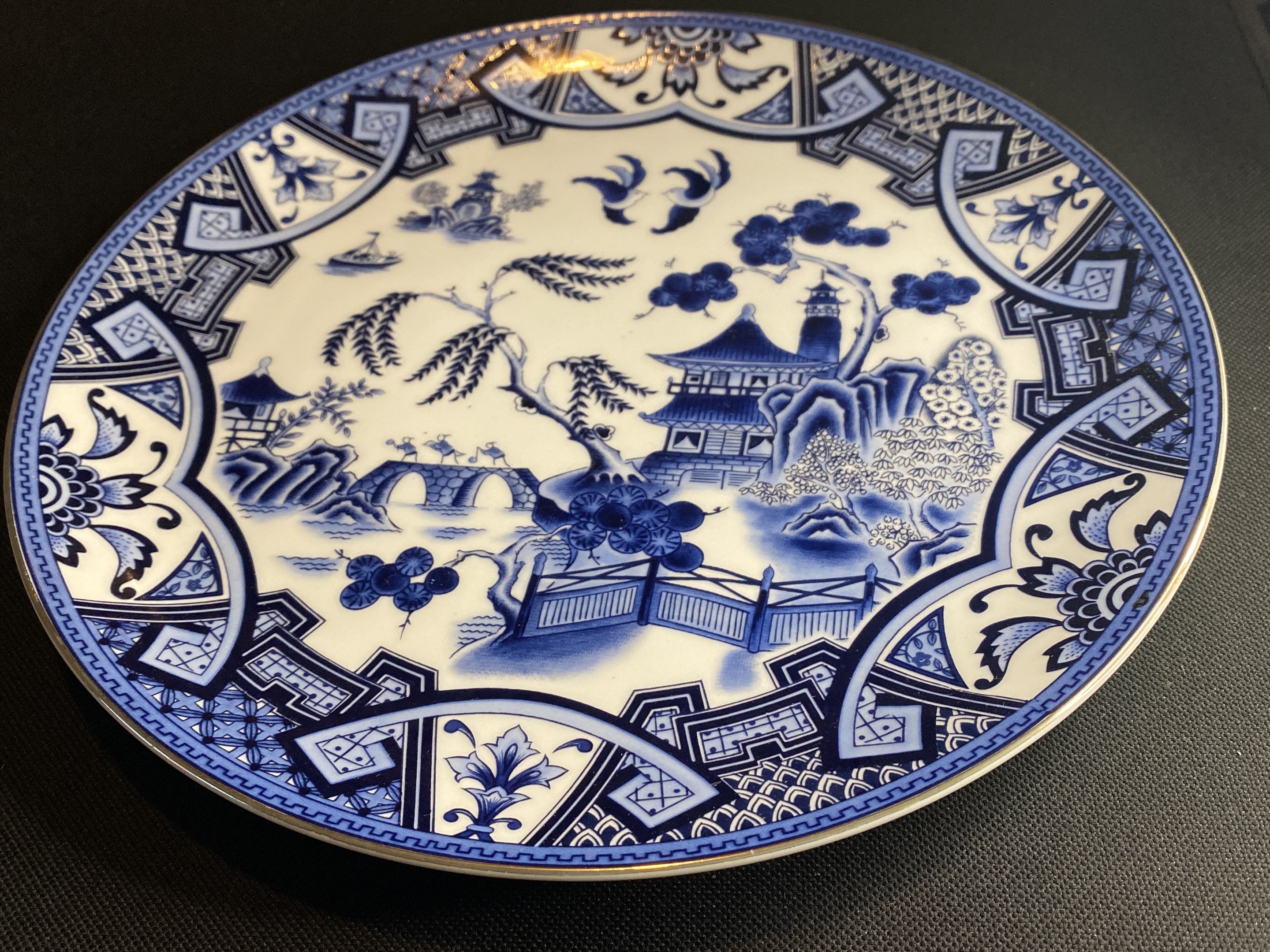
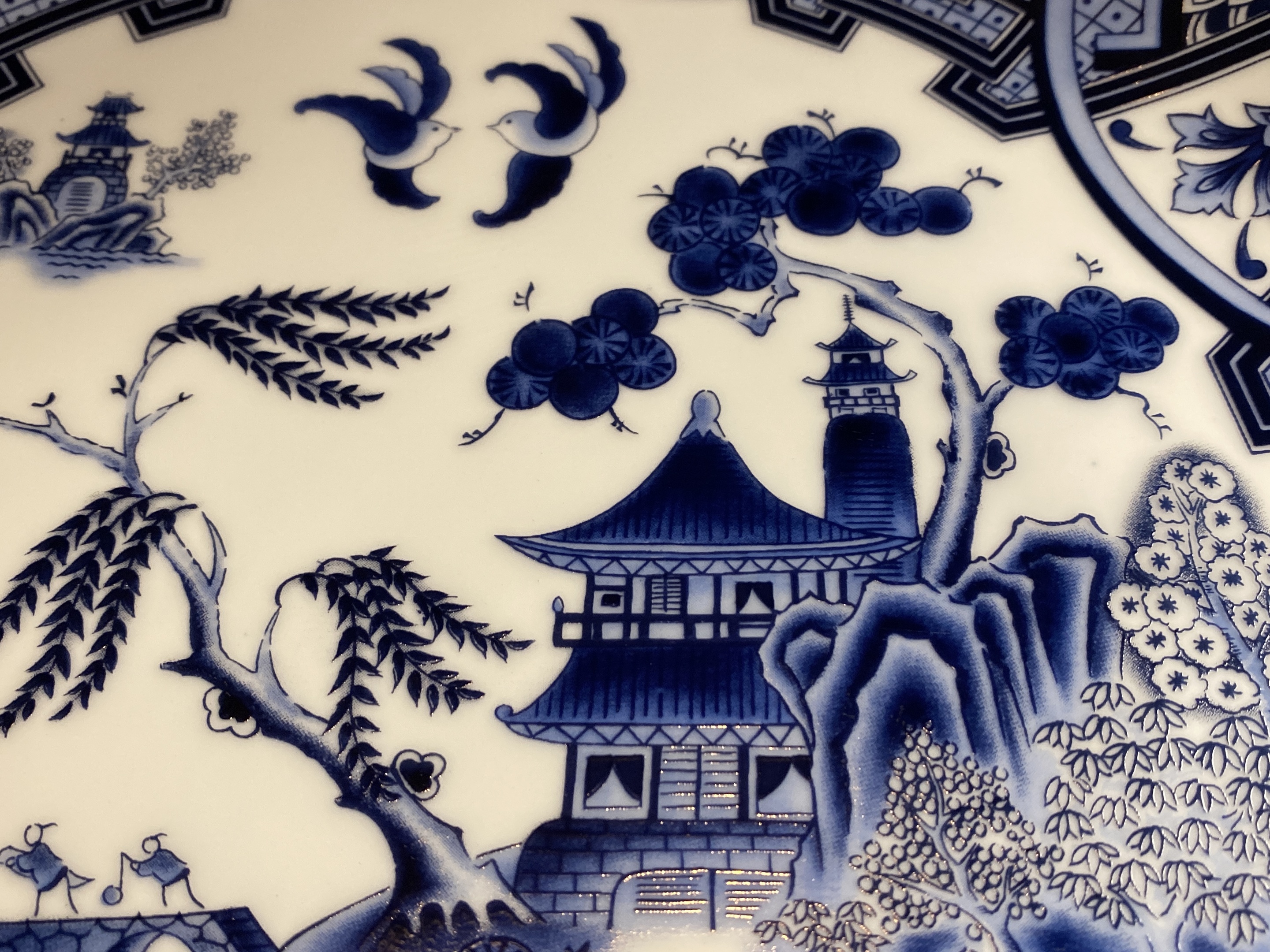
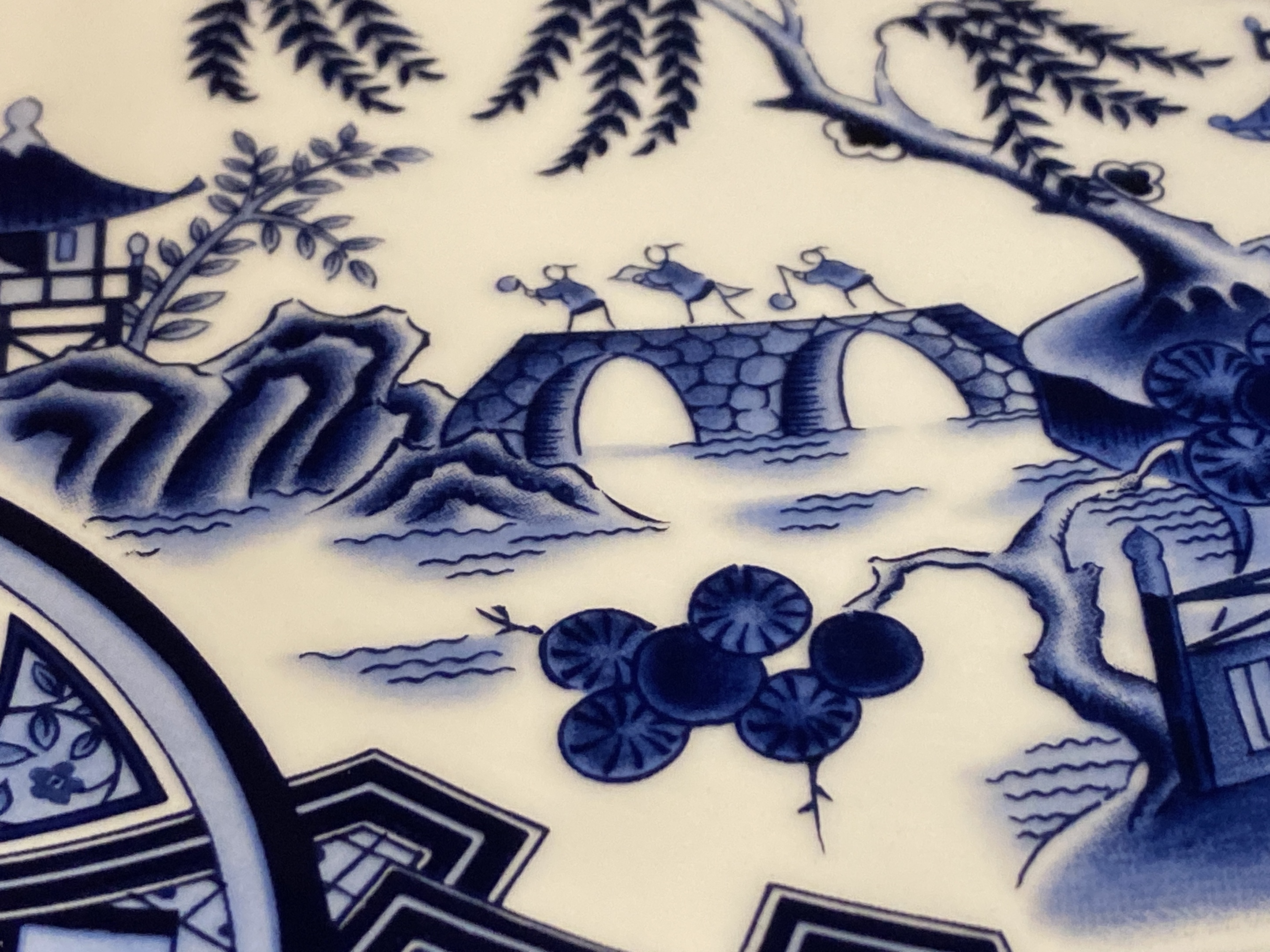
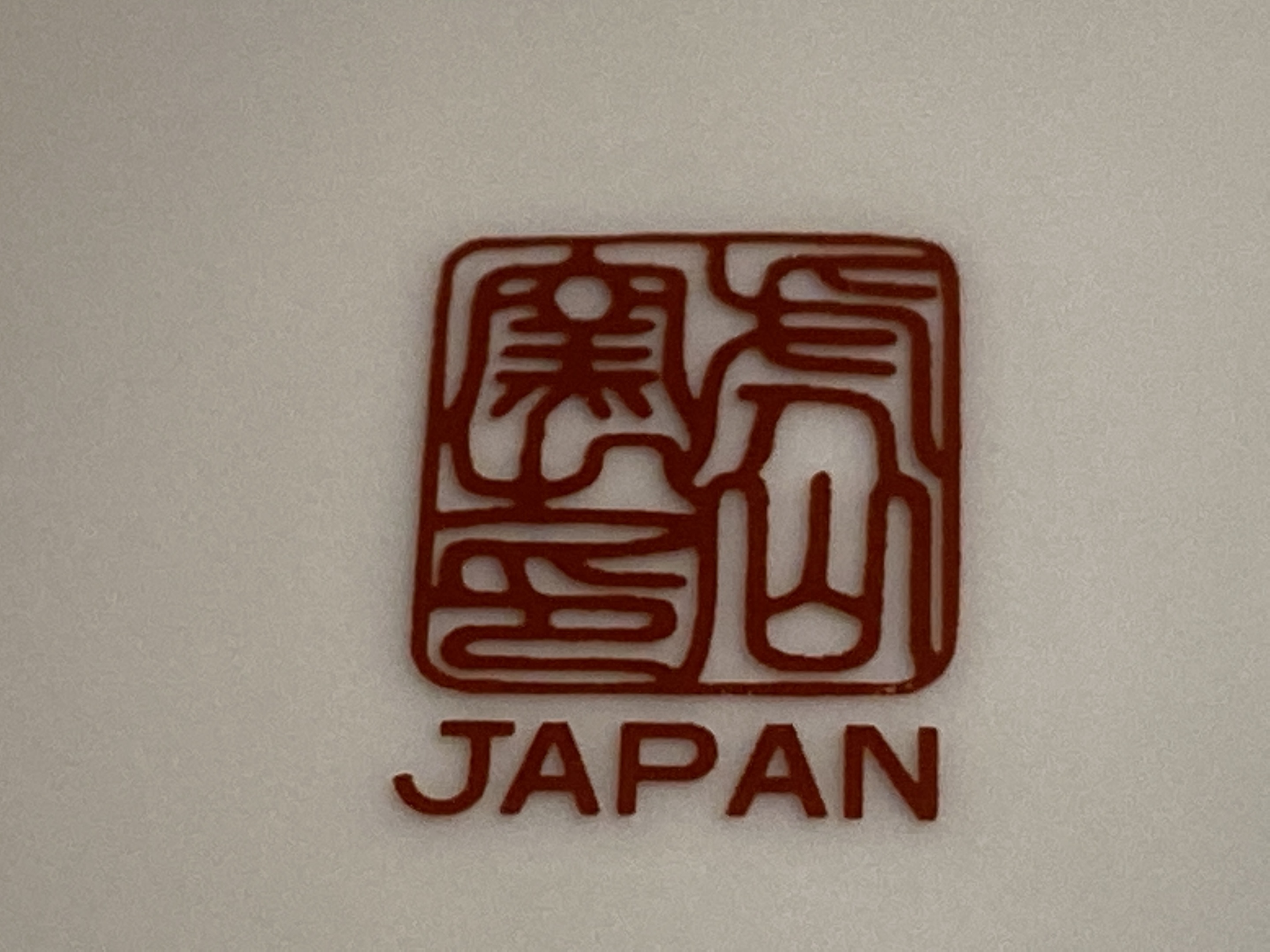
Hello I’ve just rediscovered this lovely big plate, it’s a willow pattern, I seem to have found various versions off this design, some English ones and I think a few Japanese, hopefully someone can identify the maker as mark is so clear, i found it well over 10 years ago but looks in great condition still. Things as pretty as this shouldn’t be stuck in a box. I’ve most probably posted this at some point before



i am not a magician !! a type of gama mark ( kiln ) related to by means of the seal of SEIHO
is my best guess because the stylising of the mark is very atrocius
The willow pattern is English. It was drawn in Staffordshire around 1780, and the Chinese love story was written onto it afterwards. Chinese and Japanese potters copied it for export for a century, so the pattern tells you what your plate is quoting, not when it was made.
Your date sits in the line under the seal. JAPAN in capitals, printed: that is an origin mark, put there for the American market. From 1891 a US tariff rule required the country name in English on imports, and in 1921 the wording was tightened to Made in Japan. So a plain JAPAN fits 1891 to 1921 most naturally. It returns after 1952, so the mark gives you two windows, and the body and the print decide between them.
The square seal above it is not evidence on its own. Japanese export potters used seals shaped like Chinese reign marks, and an unreadable one is decoration. Seal plus JAPAN is a common export pairing for that same 1891 to 1921 stretch.
The foot ring will settle more than the front. Post the whole base and the foot: a clean glazed ring, a light body, crisp printing from an engraved plate point one way; a gritty rim and softer, blotchy printing point the other. All four of your photos are of the face, and the face is the copy. The base is the document.
Correction to my own comment above, and it matters.
I put a plain JAPAN mark at 1891 to 1921. That is backwards. The 1891 tariff required the country of origin in English, and Japanese exporters wrote NIPPON. In 1921 the US ruled that the word had to be JAPAN. So JAPAN, and Made in Japan after it, belong to the period after 1921, not before it. Nippon is the word that marks the 1891 to 1921 window.
Which moves this plate later: roughly 1921 to 1941, or 1945 into the 1950s. OCCUPIED JAPAN, 1947 to 1952, is the one mark that fills the gap between those.
The rest stands. The willow pattern is English, drawn in Staffordshire around 1780 and copied for export for a century. The base is the document. The foot ring is still what separates a 1920s plate from a 1950s one: a clean glazed ring and a light, hard body tend one way, a heavier body and a softer print the other.
i know my legislation but ty, next time you do the kanji and the dating and the substantiationt of stating of the peribellum
waki
i am out you do the heavy lifting next time