


Posted 10 years ago
cjohnson80…
(1 item)
These two dishes have been in our family for generations. Very little is known about them. They are each about 2 feet in diameter, made of medal (bronze?). Please tell me whatever you can about them.
2 Asian Bronze Large Bowls | ||
| Cloisonne113 of 227 |  |  |


Create a Show & TellReport as inappropriate
Posted 10 years ago
cjohnson80…
(1 item)
These two dishes have been in our family for generations. Very little is known about them. They are each about 2 feet in diameter, made of medal (bronze?). Please tell me whatever you can about them.

Help us close this case. Add your knowledge below.
Create an account or login in order to post a comment.


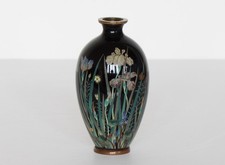


thank you for any help
Really beautiful pieces
i am out of my leaque , not skilled enough
i got an far fetched assumption , i think this is japanese , the round catouches an form of ogee , but not alone ogee but also decapitated ruyi form
what is a ruyi =Ruyi literally means, “as you wish” in Chinese. The shape of a scepter is said to carry religious significance as a reminder of a lotus, the sacred flower in Buddhism. Some other scholars attribute its origin to the backscratcher in ancient China. The head of a scepter is usually an imitation of a lingzhi fugus, a traditional symbol of longevity in China. Ruyi scepters were often given as gifts because of the auspicious meanings they implied and were displayed either horizontally on stands or vertically in vases.
why does,not it look as a chinese decapited ruyi ( an french lily or heart design).
Well this is the japanese equivalent called NYOI, can,t date i think it is old duck design ( not oshidori ) piece is complety in balance no overflow in the enameling , good piece , i think it,is old , but lack the skills
no this is good enough late meijji around 1880 probaly the reverse got a wave or scrolling design