



Posted 15 days ago
 ChineseBro…
(3 items)
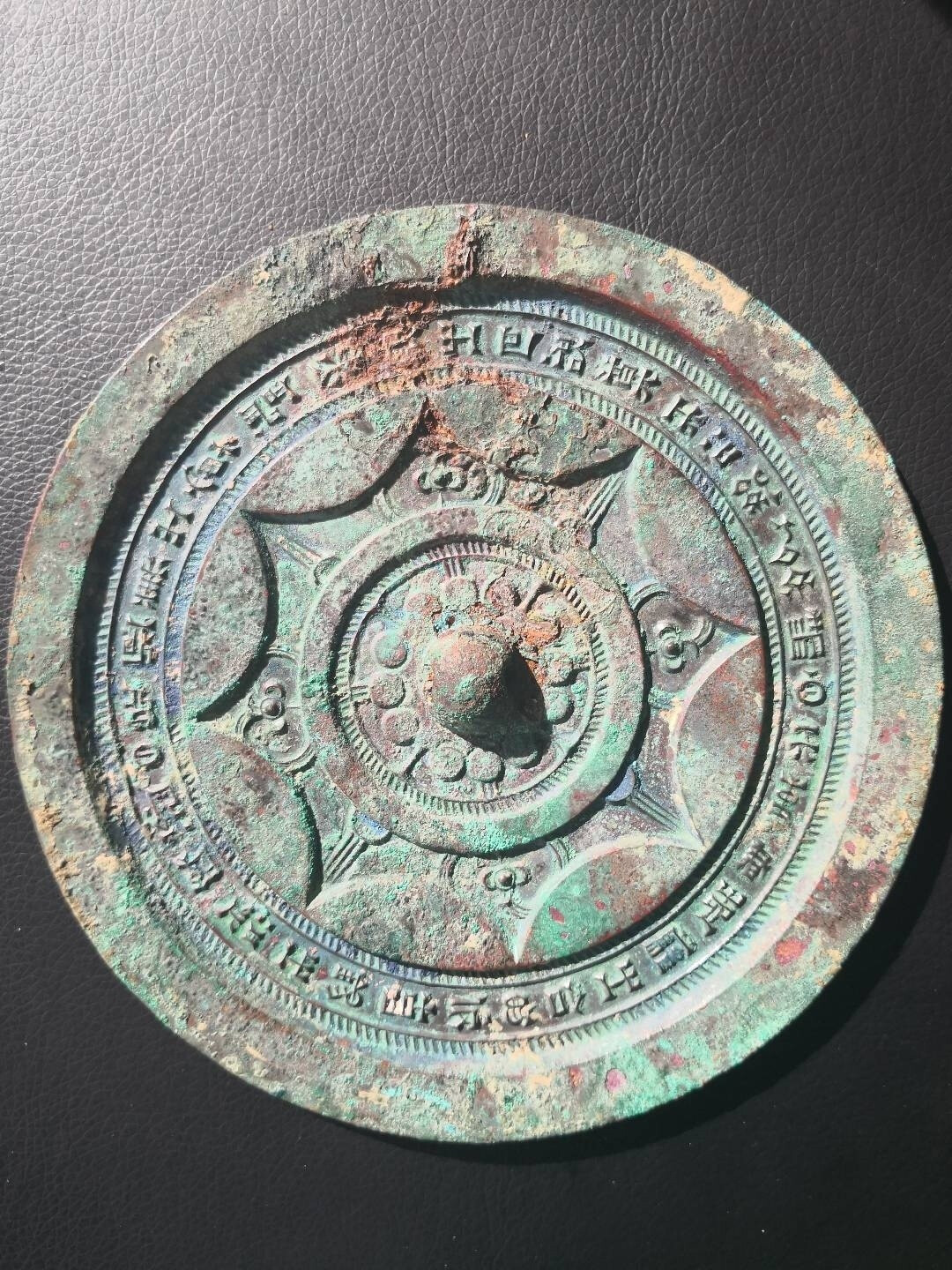
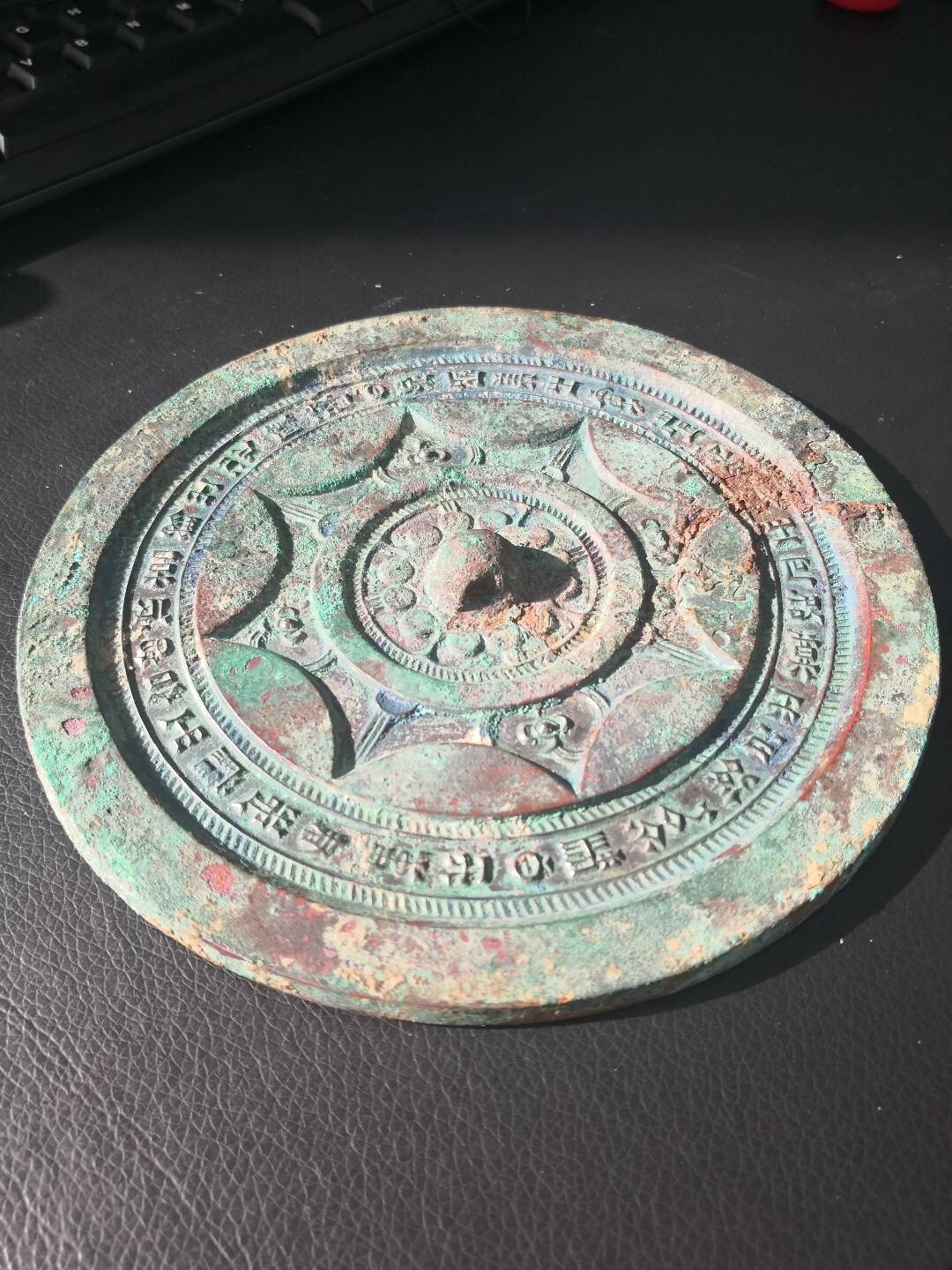
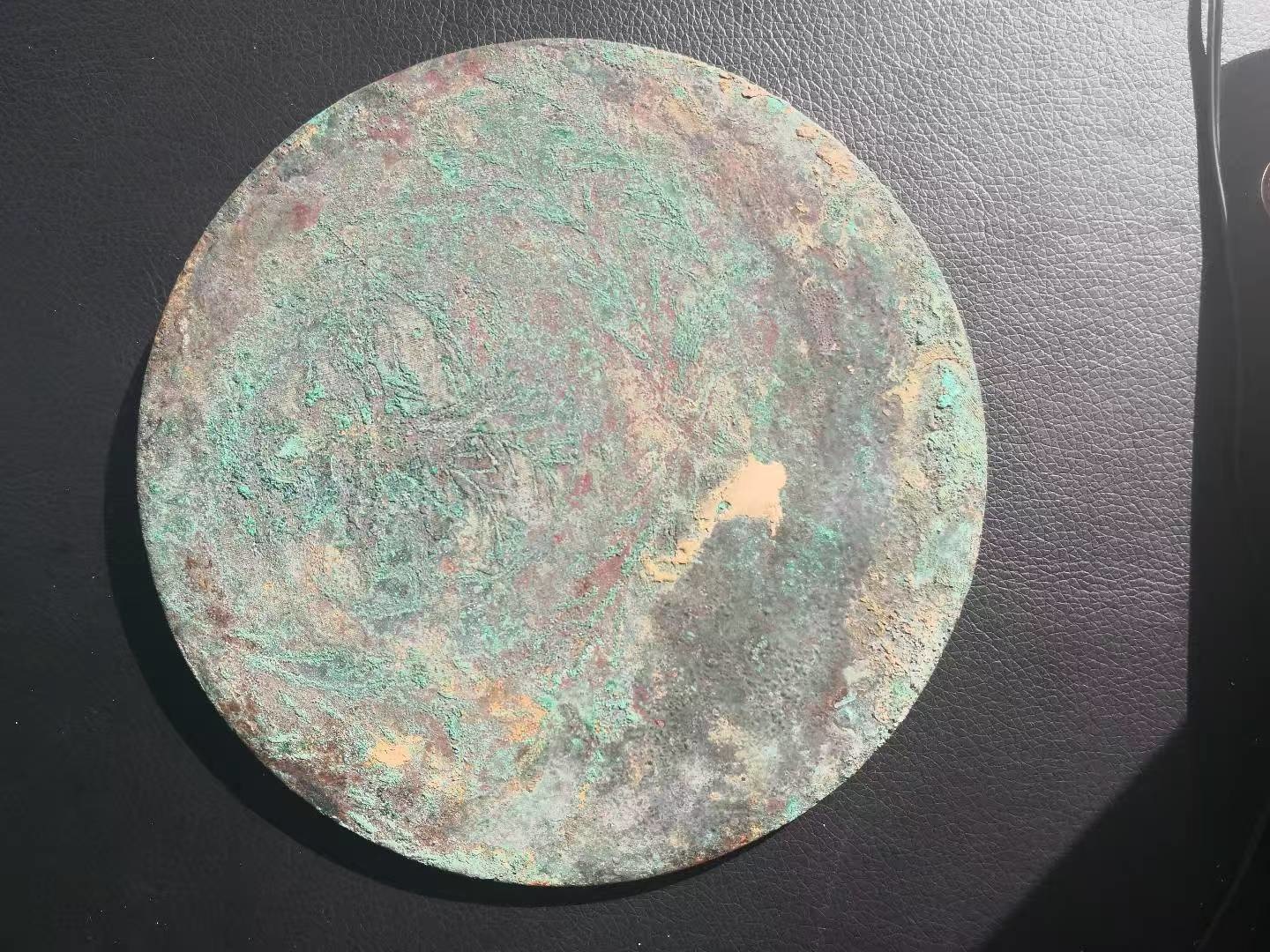
This is an authentic mid-Western Han Dynasty (1st Century BCE) bronze mirror, belonging to the classic "Jian Ri Zhi Guang" (Seeing the Light of the Sun) inscribed type, with typical and well-defined typological features of the period.
In terms of morphological characteristics, it fully conforms to the casting standards of the mid-Western Han Dynasty: it has a sturdy and moderate body thickness, distinct from the relatively thin wares of the early Western Han; the hemispherical knob is robust and well-proportioned, with a standard shape; the inner arc-shaped patterns are neatly arranged, and the outer circumferential inscription is crisply cast with sharp strokes.
This mirror is unearthed from the northern Chinese dry pit environment, and remains in its original uncleaned, fresh shengkeng (raw unearthed) state without any later restoration or alteration.
Key Authenticity Identification Points for This Dry Pit Specimen
The surface is attached with hard, pure earthy deposits consistent with the burial characteristics of arid northern regions, with no traces of artificial patina, chemical dyeing or sprayed aging;
Crystalline corrosion only exists in the recesses of the inscriptions and patterns, which is a natural formation formed by thousands of years of underground burial, rather than man-made;
The original casting texture is completely preserved, without modern grinding, carving or tool modification marks;
The inscription strokes are deep and straight, with natural casting flow marks unique to ancient bronze wares, which is completely different from modern mechanical carving.
Complete Inscription (Pinyin & Translation):
Jian Ri Zhi Guang, Tian Xia Da Ming.
Chang Wu Xiang Wang, Chang Le Wei Yang.
"By the radiance of the sun, all under heaven shines brightly; May we never forget each other, and may eternal joy never end."
This is a well-preserved typical mid-Western Han bronze mirror with intact original unearthed state, and I am glad to communicate and discuss related bronze mirror identification, dating and collection knowledge with fellow collectors.
#ChineseBronzeMirror #MidWesternHanBronzeMirror #AncientChineseArt #BronzeMirrorCollection



ChineseBronzeMirror, Very cool.
I knew nothing about the subject, so I had go noodling around the Net to educate myself a bit:
https://australian.museum/learn/cultures/international-collection/chinese/chinese-bronze-mirrors/
Apparently, mirrors were at one time made of obsidian:
https://www.cabinetmagazine.org/issues/14/mcelheny.php
Thank you so much for the kind words and the great resources! Those are excellent reads on early Chinese mirror culture—obsidian mirrors are a fascinating pre-bronze tradition.
For bronze mirrors, the patina and casting details are still the best way to tell authenticity and age. I’m working on a follow-up post comparing real vs fake examples from eBay, so stay tuned!
Thank you again for sharing these fantastic resources! I’ve just read through the Australian Museum page and really enjoyed the overview of Chinese mirror culture.
One small correction: while rectangular mirrors became widely popular in the Song-Yuan period, they actually appeared as early as the Warring States period (475–221 BCE). These early rectangular mirrors were smaller and rarer, but they predate the Song-Yuan examples by over a thousand years. It’s a fascinating detail about how Chinese bronze mirror shapes evolved gradually!
Obsidian mirrors are such a cool pre-bronze tradition too—thanks for introducing me to that article!
ChineseBronzeMirror, You're very welcome; I just stumbled on them.