




Posted 12 years ago
Odds-and-E…
(2 items)
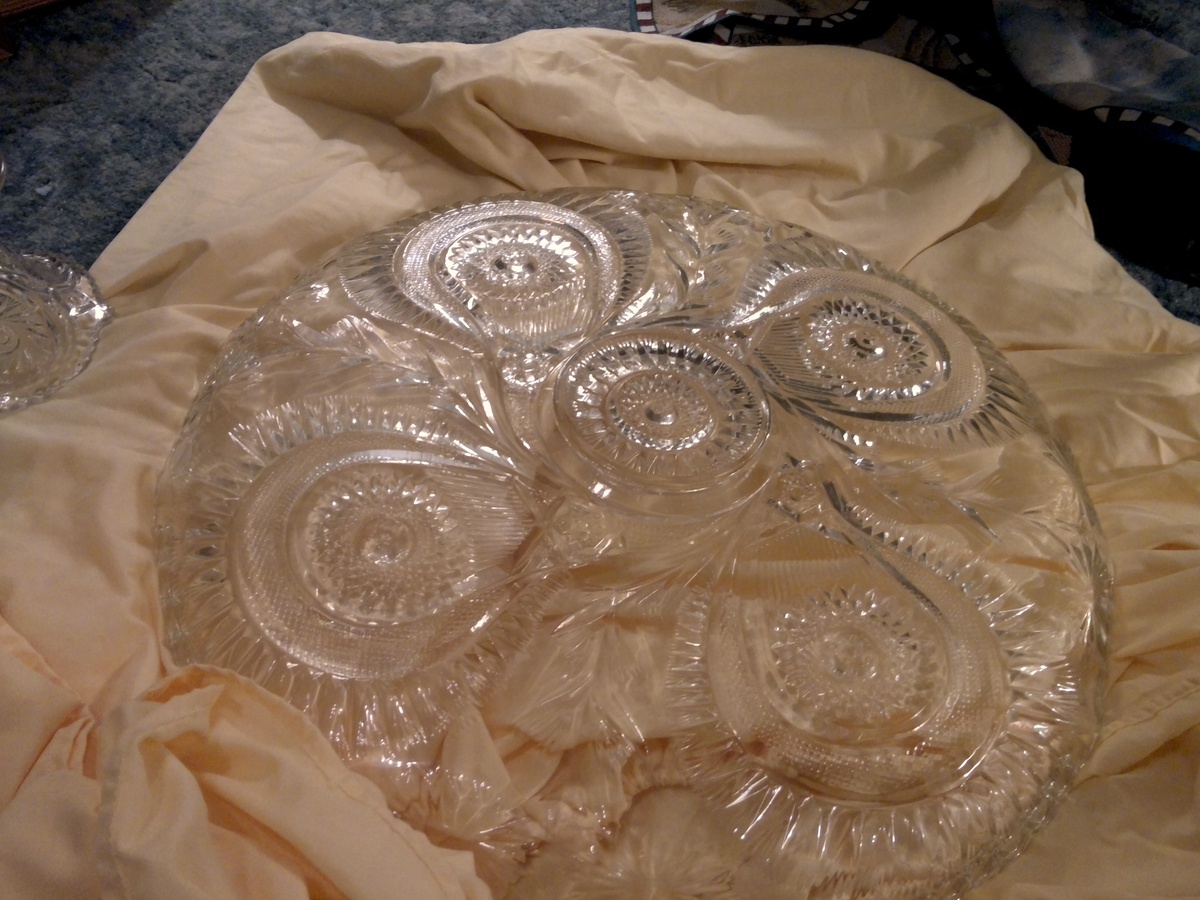
I purchased this at a estate sale the owner had passed away the niece was not sure what it was called she knew it had come from an estate sale and it was in the center of a dining table for decoration there was another dish with it but the patterns are different. I thought it was beautiful so I purchased it many people have inquired as to what it is.




the EAPG pattern was originally made by United States Glass as their pattern #15111 Peacock around 1908. The pattern is often seen titled by the AKA: Slewed Horseshoe and sometimes by the AKA: Radiant Star. This pattern has been widely reproduced, especially punch bowl sets. What you have is a punch bowl underplate that is most likely by Smith Glass, which is a recent reproduction. Smith markets the pattern as Pinwheel & Stars.
your other piece is a punch bowl stand (it is upside down in the pic) that was another EAPG pattern originally by McKee Glass in their Aztec pattern from around 1894. This punch sets (and other pieces) of this pattern have been widely reproduced; not sure who may have made this stand.
McKee's Aztec was the first of many patterns in their Pres cut series. It was introduced in 1903. Reviews in the trade journal Crockery and Glass Journal from this year confirm this. This particular size punch bowl/stand was not reproduced. The largest size with plain (non serrated rim) bottom has been widely reproduced. Pretty easy to tell those repros because the glass is grayish and lacks the clarity of the originals.