






Posted 7 months ago
Emsien
(9 items)
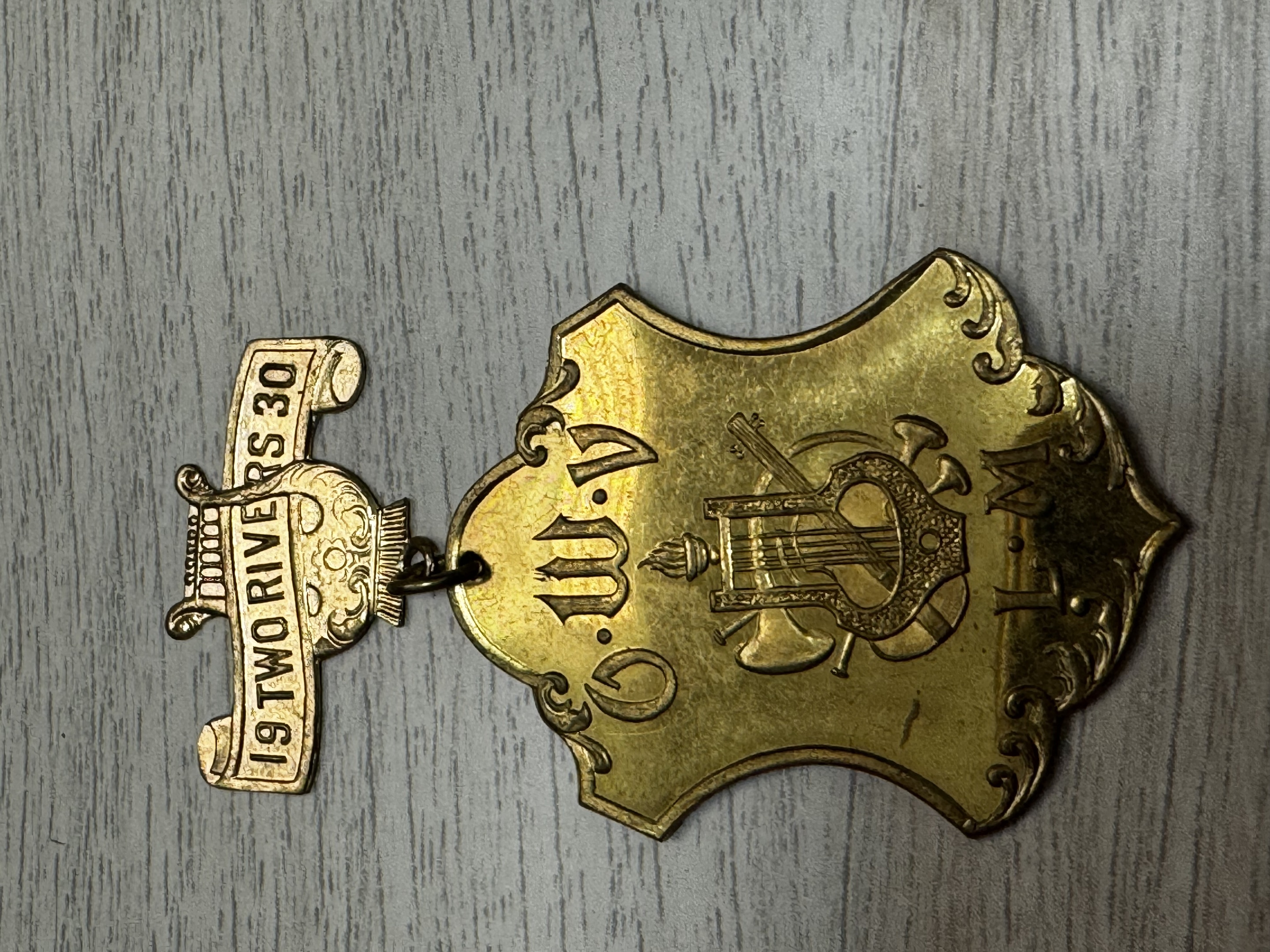
Ok I got this from a lot of miscellaneous items in an estate sale
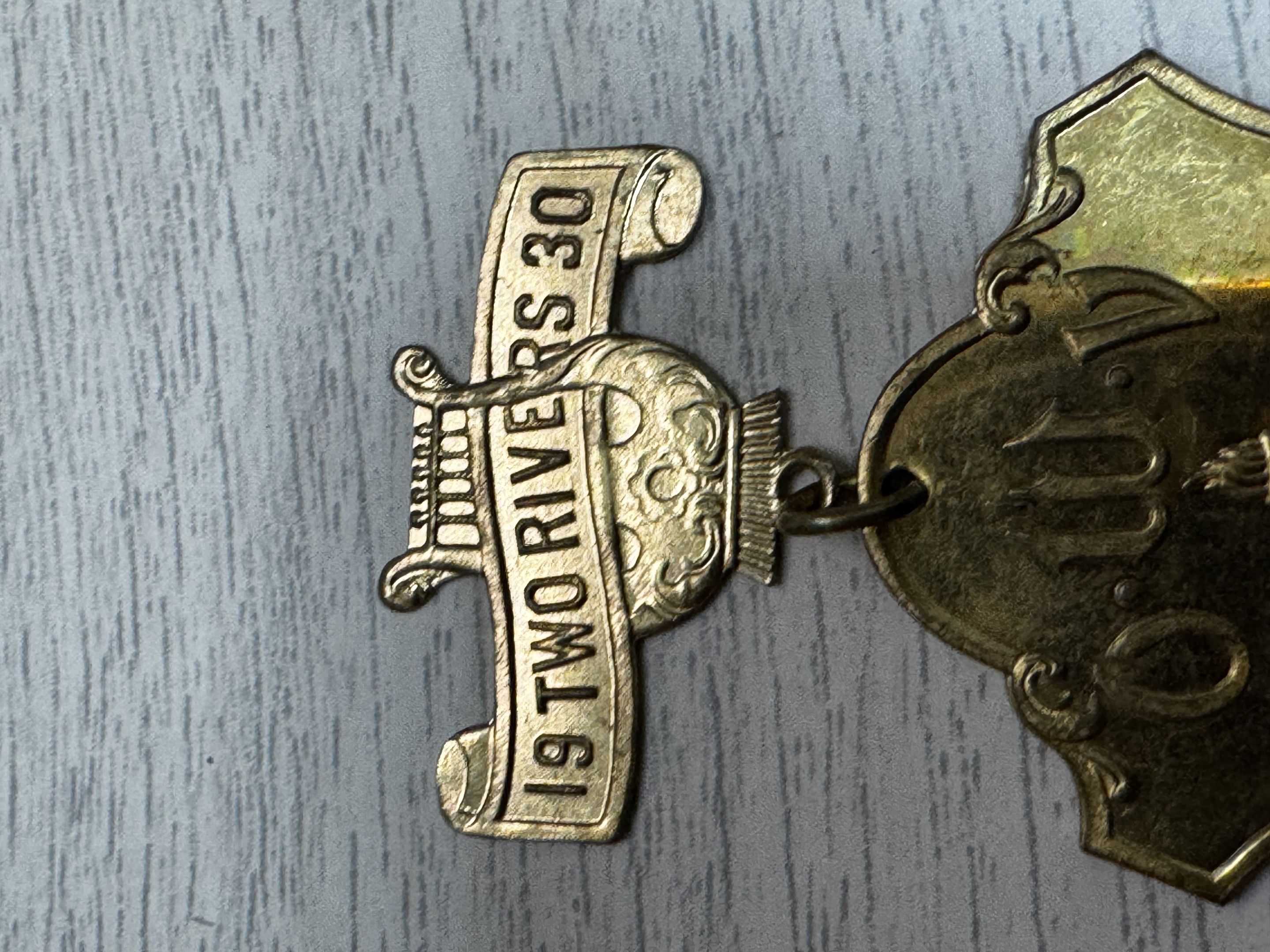
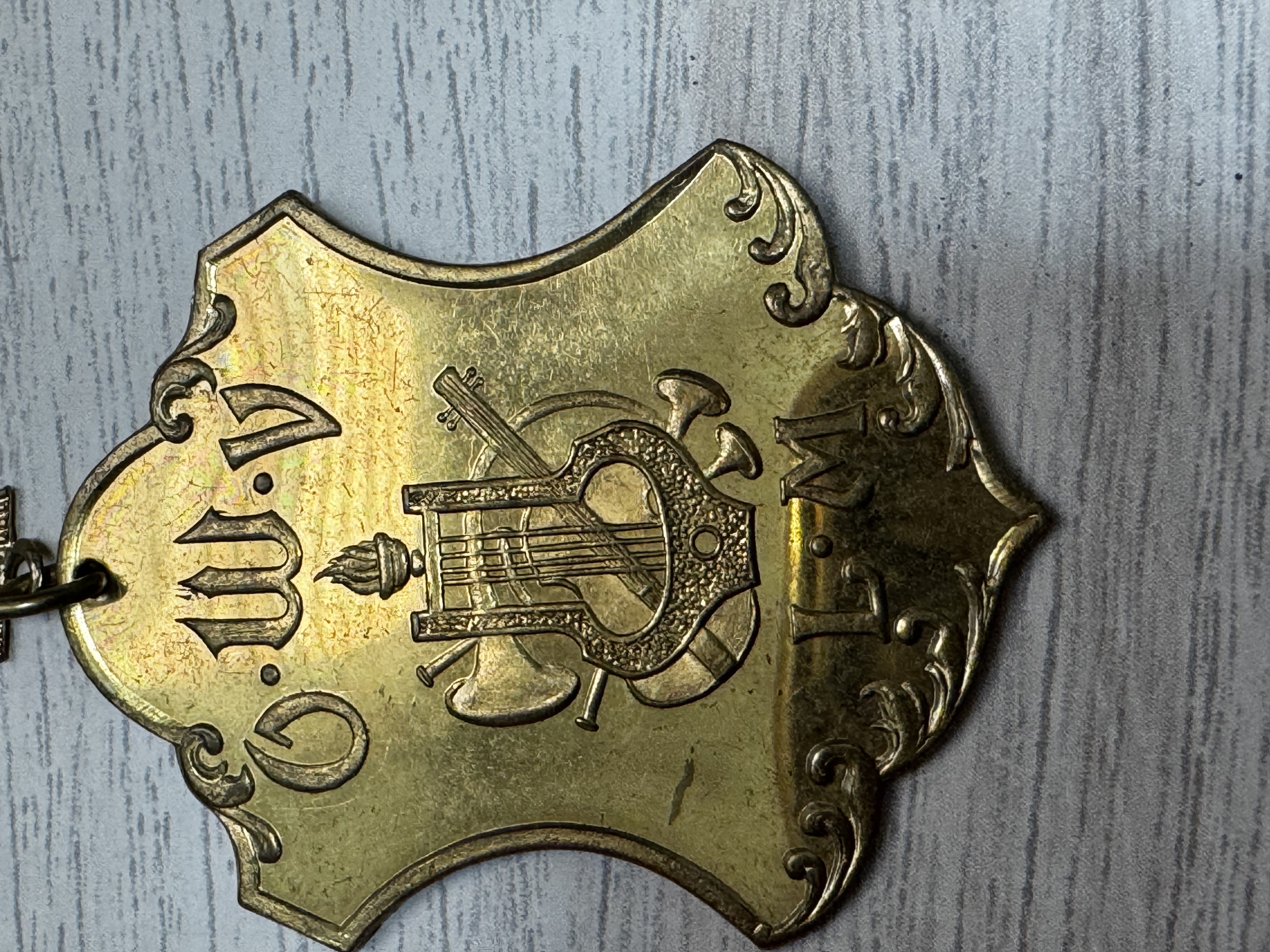
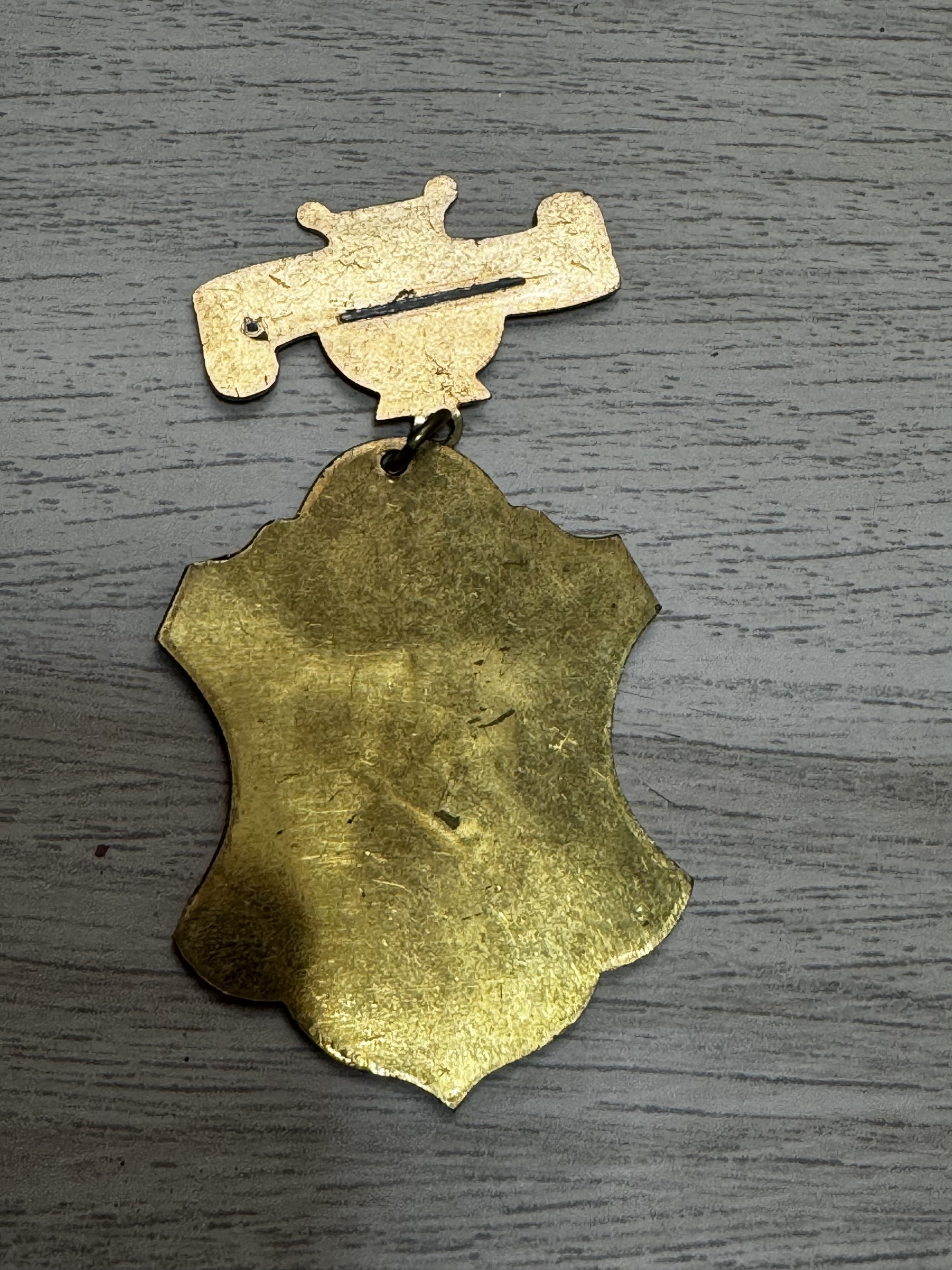
This one has me stumped - obviously it was a medal - the pin part is gone
The banner at top says 1930 Two Rivers - there's a Two Rivers Wisconsin - not sure if that is what it refers too or if it's some other place
The metal part - obviously it's musical related not sure what OWVLM
Anybody have any clue what this is and what it was given for - any help would be appreciated
I'm assuming it's brass but that's just a guess




Maybe contact the historical society for that area? A quick search revealed nothing but I just briefly looked
Internet search for OMVLM brings up simular medal from Grafton
Yeah I found a Grafton one too in the lot - slightly different - I wrote to bot the Two Rivers Historical Society and the Grafton Historical Society but haven't heard back
I think I have found your organization. O.W.V.L.M. is Ost-Wisconsin Verband Lutherische Maennerchore. Translation: Eastern Wisconsin Association of Lutheran Men's Choirs.
Hi flashlarue - WOW where did you come up with that - I have done multiple search's on Goggle and came up absolutely empty - but seems right - thank you very much
The Choir
January 4, 2025 / M. J. McKinley
One of the treasures I have from my Maternal side of the family is a group photograph labeled “Maennerchor Immanuel—1915.” This photo hangs in my living room. I always wondered what the story was behind it.
One thing I did know was that my Great Grandfather, Herman Beiersdorf (1895-1983) was in the photo. Looking closer, I also found his older brothers, Fred (1882-1963) and August (1884-1974) in the group. Herman is on the bottom row, 2nd from left. August is on the same row, far right. Fred is on the fifth row, far left.
photo of Herman Beiersdorf clipped from "Maennerchor Immanuel 1915" group photophoto of August Beiersdorf clipped from "Maennerchor Immanuel 1915" group photophoto of Fred Beiersdorf clipped from "Maennerchor Immanuel 1915" group photo
But what was the group that the three brothers were a part of? I recognized the name “Immanuel” as the church the Beiersdorf family attended in Sheboygan, WI. The word “Maennerchor” translated to “men’s choir.” So the brothers were part of the Immanuel Lutheran Church men’s choir.
I wanted more information about the choir, and I was hoping to find a list of all of the men in the picture, so I contacted Immanuel Lutheran Church in Sheboygan, WI. I was put in touch with a woman who keeps the archives for the church and she sent me a wealth of information about the Maennerchor.
From the church’s 25th anniversary booklet (translated from German): “This choral society was founded on November 27, 1911. The purpose of the men’s choir is to cultivate spiritual and secular singing and to promote close cooperation within the community.” In essence, it was a men’s club focused on singing and fellowship. Choir rehearsals were held at 8 p.m. in order for members to have “time to work in their gardens.” They had to pay an entrance fee of $1.00 and monthly dues of 15¢. Fifty men were part of the original choir. The choir sang during the church services and community events. They joined an association of male choirs of Lutheran churches in Wisconsin and participated in many Saengerfests or “singing festivals” through this organization. During the flu epidemic in 1918, choir members sang at funerals, giving solace to families who had lost loved ones during that terrible time. Another reference from the church indicated that the Men’s choir would join with the Mixed choir and the church band for a special Christmas concert for the children of the Immanuel Lutheran school & would give special gift bags to the children.
I also received the full list of members in the photograph:
Seventh Row: Emil Klewin, Herman Erdmann, Herman Bendler, William Guether, Erwin Nack, Emil Marquardt, Ernst Oberheu
Sixth Row: Hugo Kaems, Paul Mahnke, Charles Grimmer, Elmer Doege, Arthur Kaems, William Schild, Herman Wesener, Robert Perl
Fifth Row: Fred Beiersdorf, August Lutze, Fred Schoening, Nels Nelson, Otto Marquardt, Louis Falk, Frank Becker, Barney Schneidewind
Fourth Row: Albert Falk, William Daehnert, Ernst Leikip, Fred Schoen, William Steffen, Sr., Herman Kohls, Herman Daehnert, Edgar Reinholz
Third Row: Gustave Littman, Charles Pantel, Albert Nack, Carl Bendler, Oswald Wolfgram, Charles Lutze, Otto Daehnert, Richard Klatt, William Busse
Second Row: Hugo Overbeck, George Gauger, Henry Zinkann, Erich Gauger, Theodore Burger, E.W. Fremder, Director, Oscar Uttech, Carl Vorphal, John Stengel, Adolph Littman
First Row (Bottom): Alfred Kowert, Herman Beiersdorf, William Zamzow, Rev. Theo. Laetsch, Sr., William Kolbe, Valentine Drews, Emil Erdman, August Beiersdorf
This confirmed that I was correct in the identification of the Beiersdorf brothers in the photo. But I also saw some other familiar family names on the list. William Kolbe could be a cousin to the Beiersdorfs—son of Herman & Minnie Juergen Kolb. And perhaps there is a typo in the list—4th row, Herman Kolbs—is this actually Herman Kolbe? If so, this would be the brother of William. Brothers Carl Bendler and Herman Bendler were brothers-in-law of August Beiersdorf—brothers of Helen Bendler Beiersdorf (1888-1962).
Regarding the Beiersdorf brothers tenure in the choir: Herman sang Second Tenor and was in the choir from 1913 to 1917. He married Amanda Steinhaus (1894-1973) in 1916 and started attending her family church, Bethlehem Lutheran after that. Fred sang First Bass and was in the choir from 1915 to 1923. August sang Second Bass and was a part of the choir from 1915 to 1926.
Of course I still wanted to find out more about the choir. As I usually do when I’m looking for a story, I went to Newspapers.com and searched for any information about the choir, particularly in the Sheboygan Press. I found an article from April 9, 1915 announcing a concert on April 11 with the Philharmonic Orchestra.
Then in November, there was another announcement for a concert with the Philharmonic Orchestra to be held November 21 at the “new” Bethlehem (Lutheran) Church hall. The announcement included the exact same photograph of the choir that I had! The group was to sing two numbers with the orchestra and there would also be “several amusing selections, such as solos trios & dialogues.” On Saturday, November 20, there was a notice that the concert had sold out so they would repeat the program again on Monday the 22nd. I guess the choir was a hit.
There were several more articles and announcements in the Sheboygan Press about choir programs through the years. There were also mentions of the choir participating in “Saengerfests.” The official translation of Saengerfest is “singer festival.” In essence, choirs would come together for a day of singing, with competitions and parades & picnics.
I had also received from the Immanual Lutheran Church archives two pictures referencing the July 11, 1920 Saengerfest of the O.W.V.L.M. (Ost-Wisconsin Verband Lutherische Maennerchore) or Eastern Wisconsin Association of Lutheran Men’s Choirs. The festival was held at Sheboygan, WI.
According to an article in the Sheboygan Press on July 6, 1920, a chartered special excursion train would bring “500 singers & guests from Two Rivers, Maintowoc and Newton” on the morning of the festival. The choirs and bands from Sheboygan would meet the train at the depot. There would then be a parade from the depot to the Immanual hall on S Seventeenth Street and Illinois Avenue. The mass choir of over 200 voices would rehearse before marching to the Lake Front Shooting park for the festival. A stage was constructed just for this event. They expected “several thousand people” to attend and were prepared to serve meals to everyone.
The program for the festival was also published in German in the article from July 6. The first part would start at 10:30a.m. with a worship service with community singing, Scripture reading, a selection by the mass choir, a sermon given by Pastor Theo Laetsch, a special collection for missions, and prayer and blessing. The second part of the festival would start at 2:00p.m. with a singer’s march, a welcoming speech from Sheboygan’s mayor, Herman Albrecht, and songs by the different choirs as well as the mass choir. The last musical number was to be a medley of “The Best-Loved Southern Melodies” which seemed out of place with all of the German music listed in the program.
Being a part of the Association of Men’s choirs gave the choir the opportunity to sing at many venues and events.The choir continued to participate in several more Saengerfests through the years. The Immanuel Choir is said to have manned the “Beer stand” at the festivals—this was their means of raising money.
An article in the Sheboygan Press from November 23, 1946 announced the 35th anniversary celebration for the choir. At that time the choir consisted of 16 men with two members of the original choir still singing, Albert Nack & Louis Falk. The choir would sing at both the German and English worship services on November 24. The 16 men in the choir would be joined by 10 former members for that day.
Due to declining membership, the choir was disbanded on November 9, 1982. The organization had served the congregation and community well for 71 years. From what I gather, the choir was more than just a “church choir,” it was an organization that celebrated good music performances & good fellowship for the men involved.
©2025 MJM
Share this:
X Facebook
Beiersdorf
Post navigation
? Dear Cousin Mattie…Did You Hear the Story?… ?
Leave a comment
The Choir
January 4, 2025 / M. J. McKinley
One of the treasures I have from my Maternal side of the family is a group photograph labeled “Maennerchor Immanuel—1915.” This photo hangs in my living room. I always wondered what the story was behind it.
One thing I did know was that my Great Grandfather, Herman Beiersdorf (1895-1983) was in the photo. Looking closer, I also found his older brothers, Fred (1882-1963) and August (1884-1974) in the group. Herman is on the bottom row, 2nd from left. August is on the same row, far right. Fred is on the fifth row, far left.
photo of Herman Beiersdorf clipped from "Maennerchor Immanuel 1915" group photophoto of August Beiersdorf clipped from "Maennerchor Immanuel 1915" group photophoto of Fred Beiersdorf clipped from "Maennerchor Immanuel 1915" group photo
But what was the group that the three brothers were a part of? I recognized the name “Immanuel” as the church the Beiersdorf family attended in Sheboygan, WI. The word “Maennerchor” translated to “men’s choir.” So the brothers were part of the Immanuel Lutheran Church men’s choir.
I wanted more information about the choir, and I was hoping to find a list of all of the men in the picture, so I contacted Immanuel Lutheran Church in Sheboygan, WI. I was put in touch with a woman who keeps the archives for the church and she sent me a wealth of information about the Maennerchor.
From the church’s 25th anniversary booklet (translated from German): “This choral society was founded on November 27, 1911. The purpose of the men’s choir is to cultivate spiritual and secular singing and to promote close cooperation within the community.” In essence, it was a men’s club focused on singing and fellowship. Choir rehearsals were held at 8 p.m. in order for members to have “time to work in their gardens.” They had to pay an entrance fee of $1.00 and monthly dues of 15¢. Fifty men were part of the original choir. The choir sang during the church services and community events. They joined an association of male choirs of Lutheran churches in Wisconsin and participated in many Saengerfests or “singing festivals” through this organization. During the flu epidemic in 1918, choir members sang at funerals, giving solace to families who had lost loved ones during that terrible time. Another reference from the church indicated that the Men’s choir would join with the Mixed choir and the church band for a special Christmas concert for the children of the Immanuel Lutheran school & would give special gift bags to the children.
I also received the full list of members in the photograph:
Seventh Row: Emil Klewin, Herman Erdmann, Herman Bendler, William Guether, Erwin Nack, Emil Marquardt, Ernst Oberheu
Sixth Row: Hugo Kaems, Paul Mahnke, Charles Grimmer, Elmer Doege, Arthur Kaems, William Schild, Herman Wesener, Robert Perl
Fifth Row: Fred Beiersdorf, August Lutze, Fred Schoening, Nels Nelson, Otto Marquardt, Louis Falk, Frank Becker, Barney Schneidewind
Fourth Row: Albert Falk, William Daehnert, Ernst Leikip, Fred Schoen, William Steffen, Sr., Herman Kohls, Herman Daehnert, Edgar Reinholz
Third Row: Gustave Littman, Charles Pantel, Albert Nack, Carl Bendler, Oswald Wolfgram, Charles Lutze, Otto Daehnert, Richard Klatt, William Busse
Second Row: Hugo Overbeck, George Gauger, Henry Zinkann, Erich Gauger, Theodore Burger, E.W. Fremder, Director, Oscar Uttech, Carl Vorphal, John Stengel, Adolph Littman
First Row (Bottom): Alfred Kowert, Herman Beiersdorf, William Zamzow, Rev. Theo. Laetsch, Sr., William Kolbe, Valentine Drews, Emil Erdman, August Beiersdorf
This confirmed that I was correct in the identification of the Beiersdorf brothers in the photo. But I also saw some other familiar family names on the list. William Kolbe could be a cousin to the Beiersdorfs—son of Herman & Minnie Juergen Kolb. And perhaps there is a typo in the list—4th row, Herman Kolbs—is this actually Herman Kolbe? If so, this would be the brother of William. Brothers Carl Bendler and Herman Bendler were brothers-in-law of August Beiersdorf—brothers of Helen Bendler Beiersdorf (1888-1962).
Regarding the Beiersdorf brothers tenure in the choir: Herman sang Second Tenor and was in the choir from 1913 to 1917. He married Amanda Steinhaus (1894-1973) in 1916 and started attending her family church, Bethlehem Lutheran after that. Fred sang First Bass and was in the choir from 1915 to 1923. August sang Second Bass and was a part of the choir from 1915 to 1926.
Of course I still wanted to find out more about the choir. As I usually do when I’m looking for a story, I went to Newspapers.com and searched for any information about the choir, particularly in the Sheboygan Press. I found an article from April 9, 1915 announcing a concert on April 11 with the Philharmonic Orchestra.
Then in November, there was another announcement for a concert with the Philharmonic Orchestra to be held November 21 at the “new” Bethlehem (Lutheran) Church hall. The announcement included the exact same photograph of the choir that I had! The group was to sing two numbers with the orchestra and there would also be “several amusing selections, such as solos trios & dialogues.” On Saturday, November 20, there was a notice that the concert had sold out so they would repeat the program again on Monday the 22nd. I guess the choir was a hit.
There were several more articles and announcements in the Sheboygan Press about choir programs through the years. There were also mentions of the choir participating in “Saengerfests.” The official translation of Saengerfest is “singer festival.” In essence, choirs would come together for a day of singing, with competitions and parades & picnics.
I had also received from the Immanual Lutheran Church archives two pictures referencing the July 11, 1920 Saengerfest of the O.W.V.L.M. (Ost-Wisconsin Verband Lutherische Maennerchore) or Eastern Wisconsin Association of Lutheran Men’s Choirs. The festival was held at Sheboygan, WI.
According to an article in the Sheboygan Press on July 6, 1920, a chartered special excursion train would bring “500 singers & guests from Two Rivers, Maintowoc and Newton” on the morning of the festival. The choirs and bands from Sheboygan would meet the train at the depot. There would then be a parade from the depot to the Immanual hall on S Seventeenth Street and Illinois Avenue. The mass choir of over 200 voices would rehearse before marching to the Lake Front Shooting park for the festival. A stage was constructed just for this event. They expected “several thousand people” to attend and were prepared to serve meals to everyone.
The program for the festival was also published in German in the article from July 6. The first part would start at 10:30a.m. with a worship service with community singing, Scripture reading, a selection by the mass choir, a sermon given by Pastor Theo Laetsch, a special collection for missions, and prayer and blessing. The second part of the festival would start at 2:00p.m. with a singer’s march, a welcoming speech from Sheboygan’s mayor, Herman Albrecht, and songs by the different choirs as well as the mass choir. The last musical number was to be a medley of “The Best-Loved Southern Melodies” which seemed out of place with all of the German music listed in the program.
Being a part of the Association of Men’s choirs gave the choir the opportunity to sing at many venues and events.The choir continued to participate in several more Saengerfests through the years. The Immanuel Choir is said to have manned the “Beer stand” at the festivals—this was their means of raising money.
An article in the Sheboygan Press from November 23, 1946 announced the 35th anniversary celebration for the choir. At that time the choir consisted of 16 men with two members of the original choir still singing, Albert Nack & Louis Falk. The choir would sing at both the German and English worship services on November 24. The 16 men in the choir would be joined by 10 former members for that day.
Due to declining membership, the choir was disbanded on November 9, 1982. The organization had served the congregation and community well for 71 years. From what I gather, the choir was more than just a “church choir,” it was an organization that celebrated good music performances & good fellowship for the men involved.
©2025 MJM
Share this:
X Facebook
Beiersdorf
Post navigation
? Dear Cousin Mattie…Did You Hear the Story?… ?
Leave a comment