









Posted 1 month ago
 vintagelamp
(1148 items)
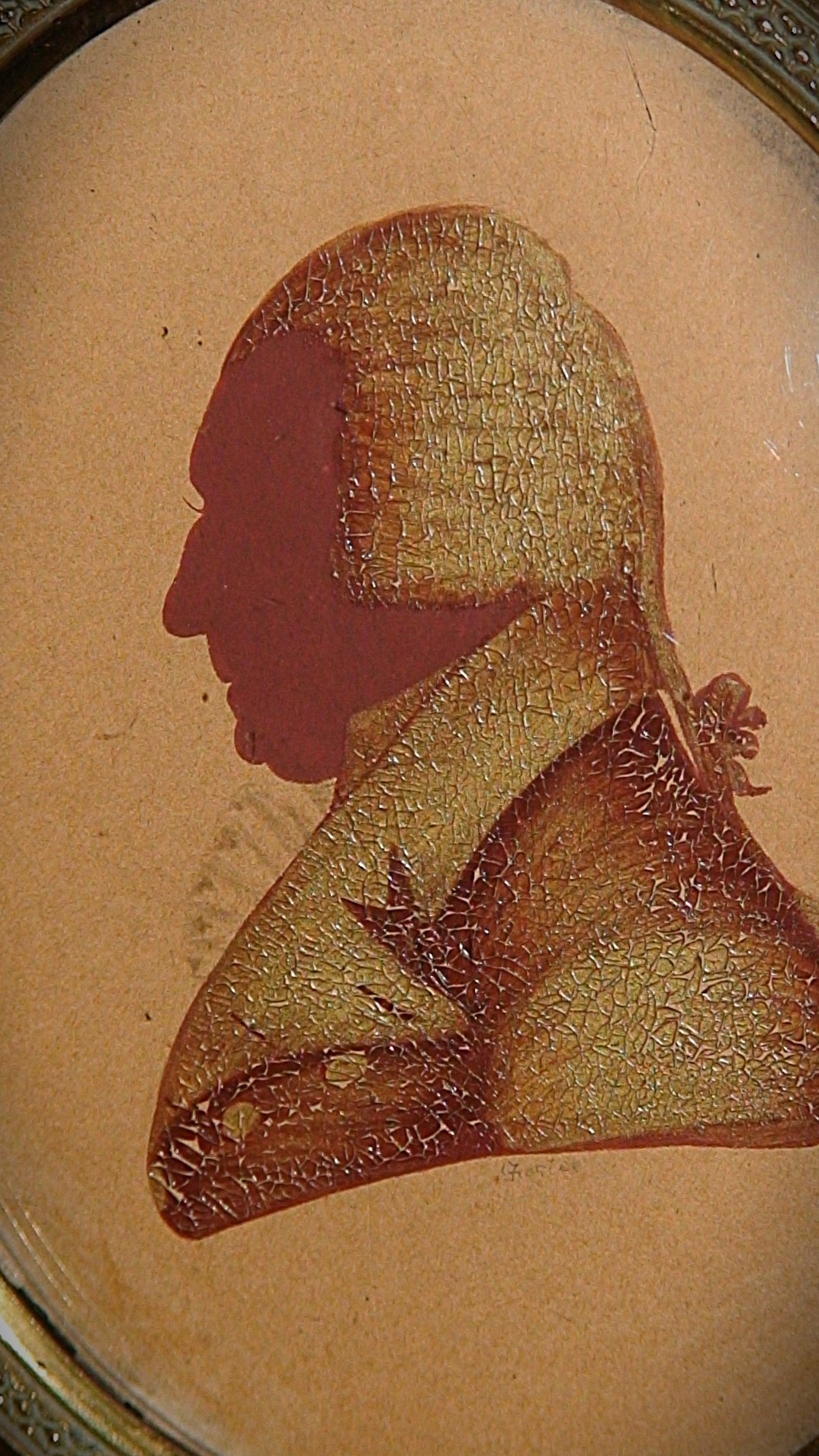
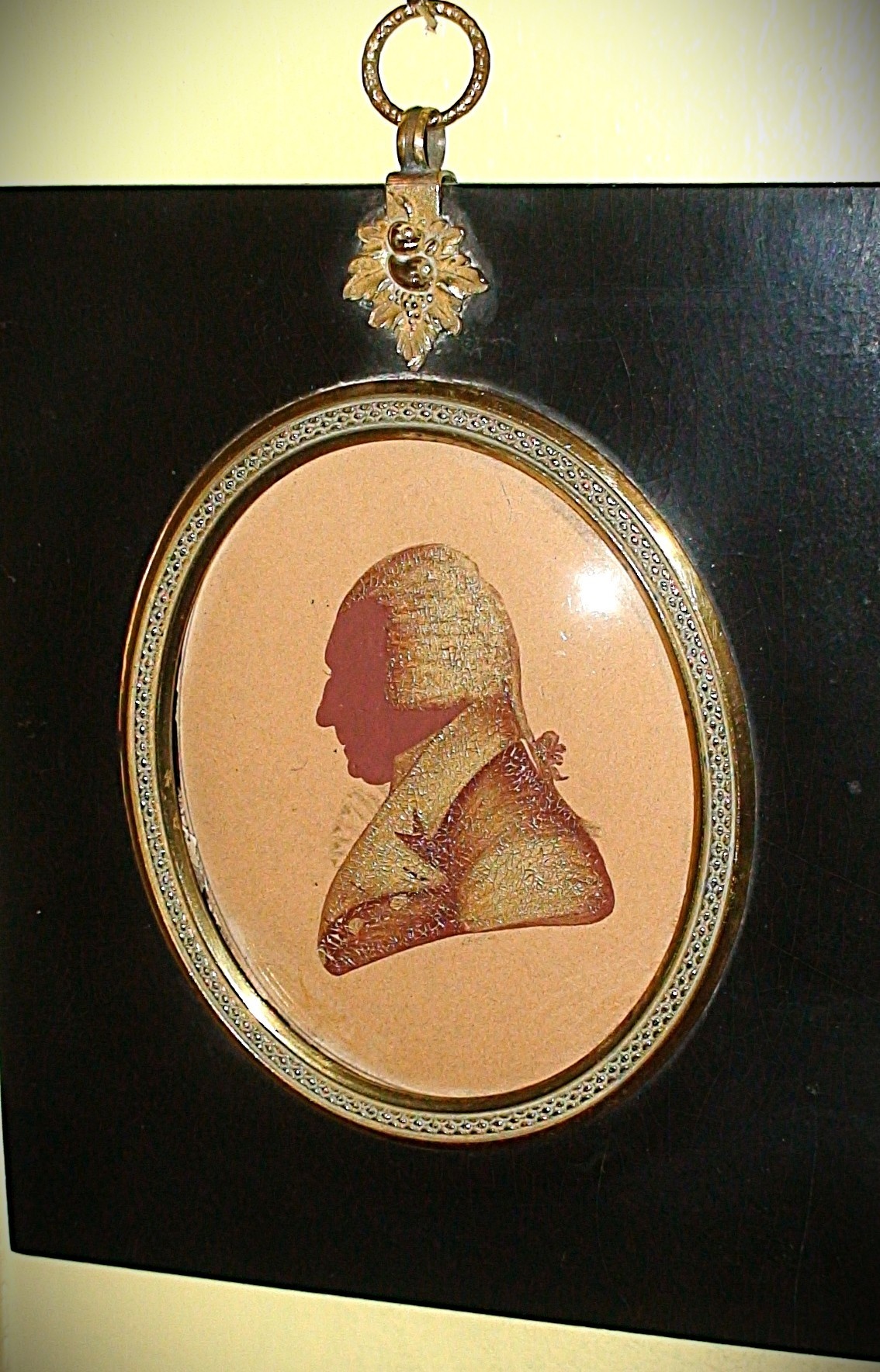
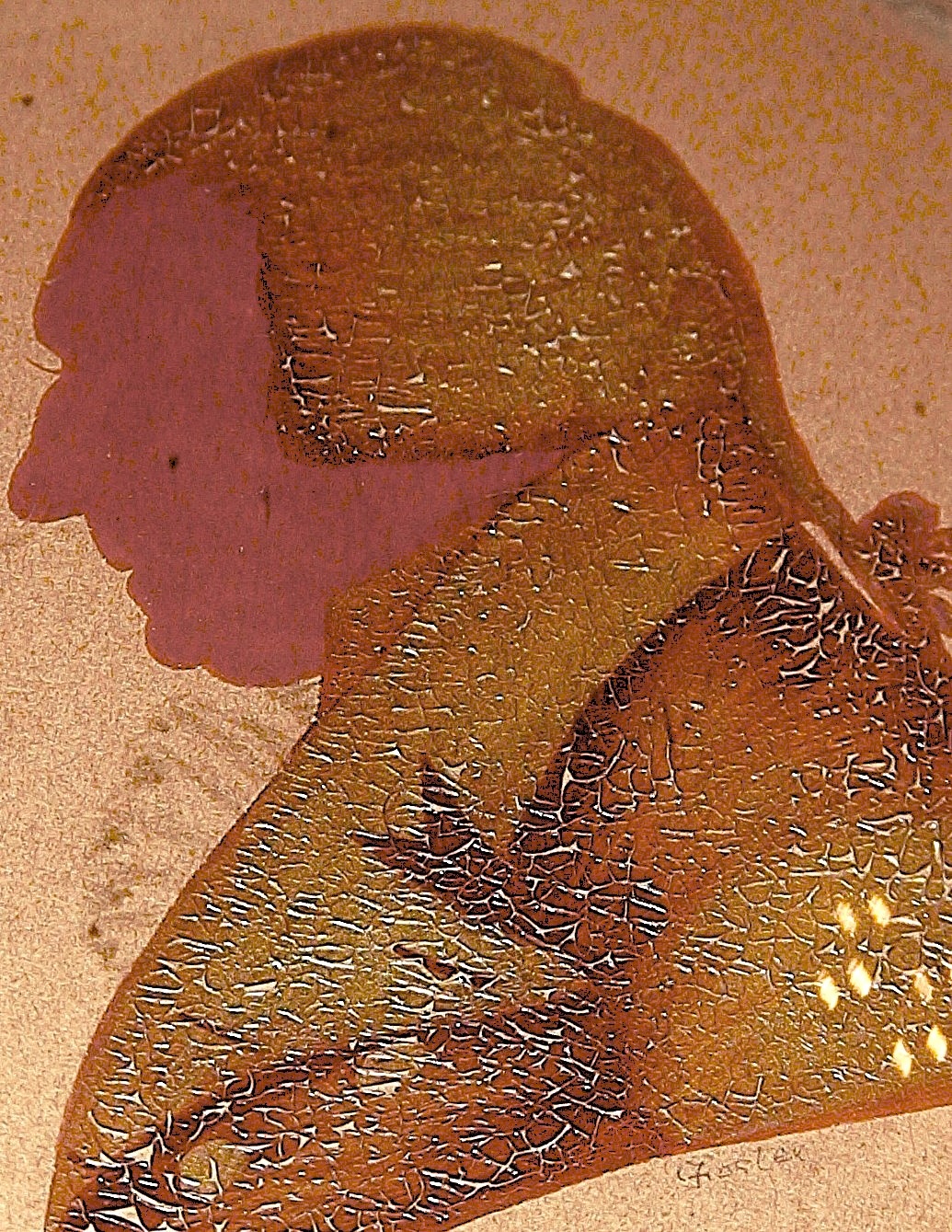
This is a lovely, gilded silhouette of a gentleman signed below the bust by Foster
This silhouette is housed in a larger than normal frame with an engineered brass bezel and detailed hanger with a fancy loop.
These are known as ‘Red Fosters’ as the faces tend to have a slightly red tone.
He is beautifully gilded with very fine detail to the hair and clothes that have a craquelure finish
The frame measures 5.5” by 6.5”
From the internet:
Foster, Edward
Gender:
Male
Date and place of birth:
8 November 1762
Date and place of death:
12 March 1864
Worked:
(fl) 1780-1805
Known places of work:
Derbyshire
Known techniques:
Painted on card
Known materials:
Card
Frames:
Papier-mache & brass
Signature:
Recorded
Introduction:
Described by Desmond Coke ("Confessions of an Incurable Collector") as "The very post-impressionist of silhouettists", Foster was a prolific artist who married five wives, begat 17 children (the last at the age of ninety), and died at over 102 asserting that he was still able to earn his own living. He was and remains renowned for his 'Red' works; profiles painted on red backgrounds of various shades.
At 17 Foster joined the Army and saw action in the last stage of the American War of Independence (served with Cornwallis), Holland and Egypt. He retired at the age of 47. He subsequently lived at Windsor Castle, and it is believed that he was drawing master to the young Princess Amelia – an association which gave rise to him later using the royal crown on frame hangers. His silhouette career is supposed to have begun informally while he was in the army, before flourishing on his retirement. Five trade labels have been found, though given his relatively prolific nature more presumably existed.
Although having done some fine black card profiles, Foster’s trademark was portraits painted in black on vermillion to brownish -red backgrounds, the so-called ‘Red works.' These works were embellished with fine gold and generally featured a layer of gum Arabic covering all except the face and neck of his sitters. He used to fill in the concave space behind framed profiles with pieces of used card, or even with a lock of the sitter's hair. Apart from their backgrounds, work can also be identified through his unique ‘three-dot technique’, used to demonstrate transparency of clothing. Foster was a very distinctive artist, if not the most accomplished, and remains popular today.
Photo #4 shows a newspaper clipping that was found inside the frame. The clipping is from 1821 and mentions the upcoming funeral of Queen Caroline (wife of George IV). Her story in very interesting in itself. Her funeral was in 1821, so this tell us when this silhouette was framed.
The silhouette has a golden cast that my camera does not quite capture.
One wonders if this profile could be Cornwallis or King George III (???)


Terrific antique silhouette & wonderful history
Newfld,
Thank you! I really like this one.