





Posted 1 month ago
kairomalte
(99 items)
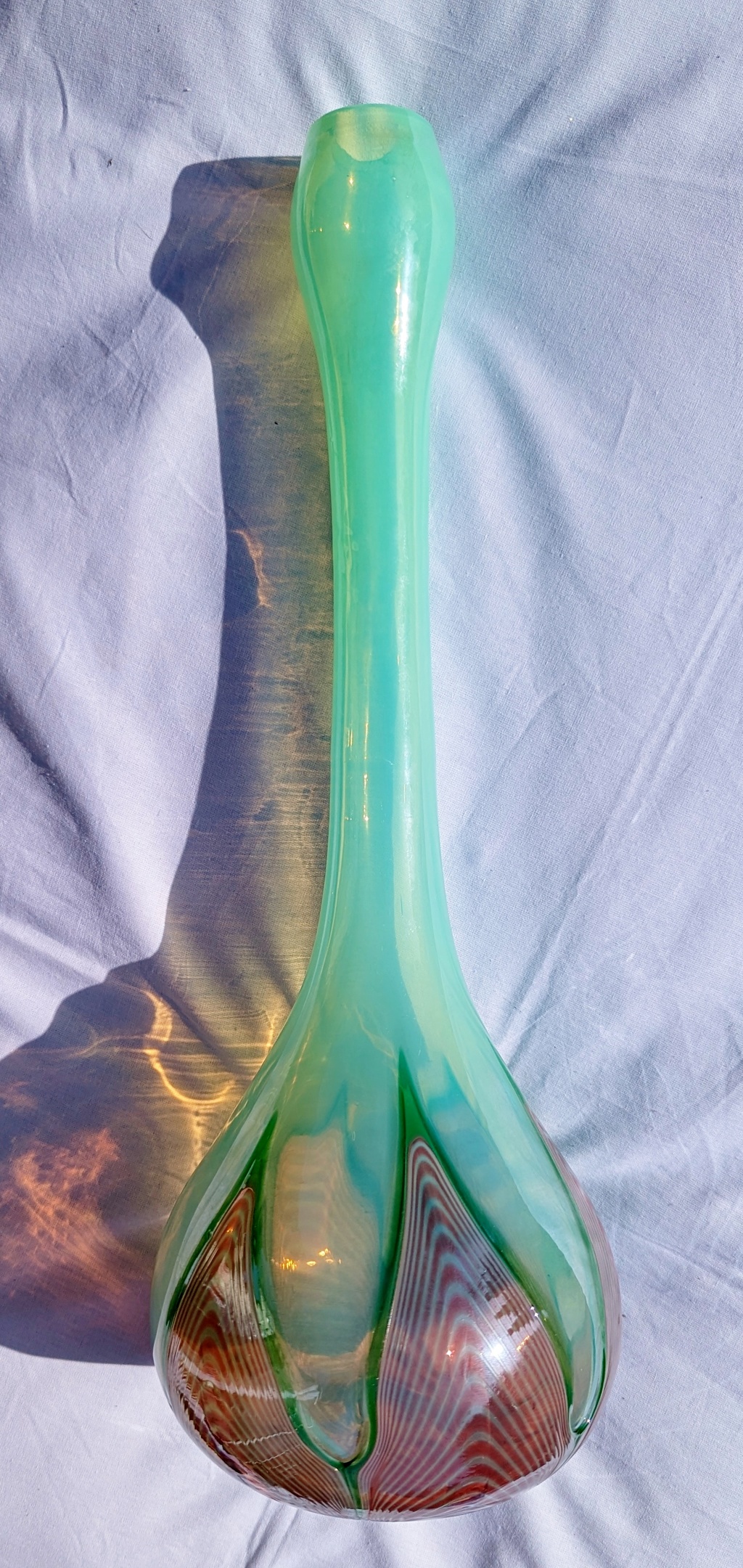
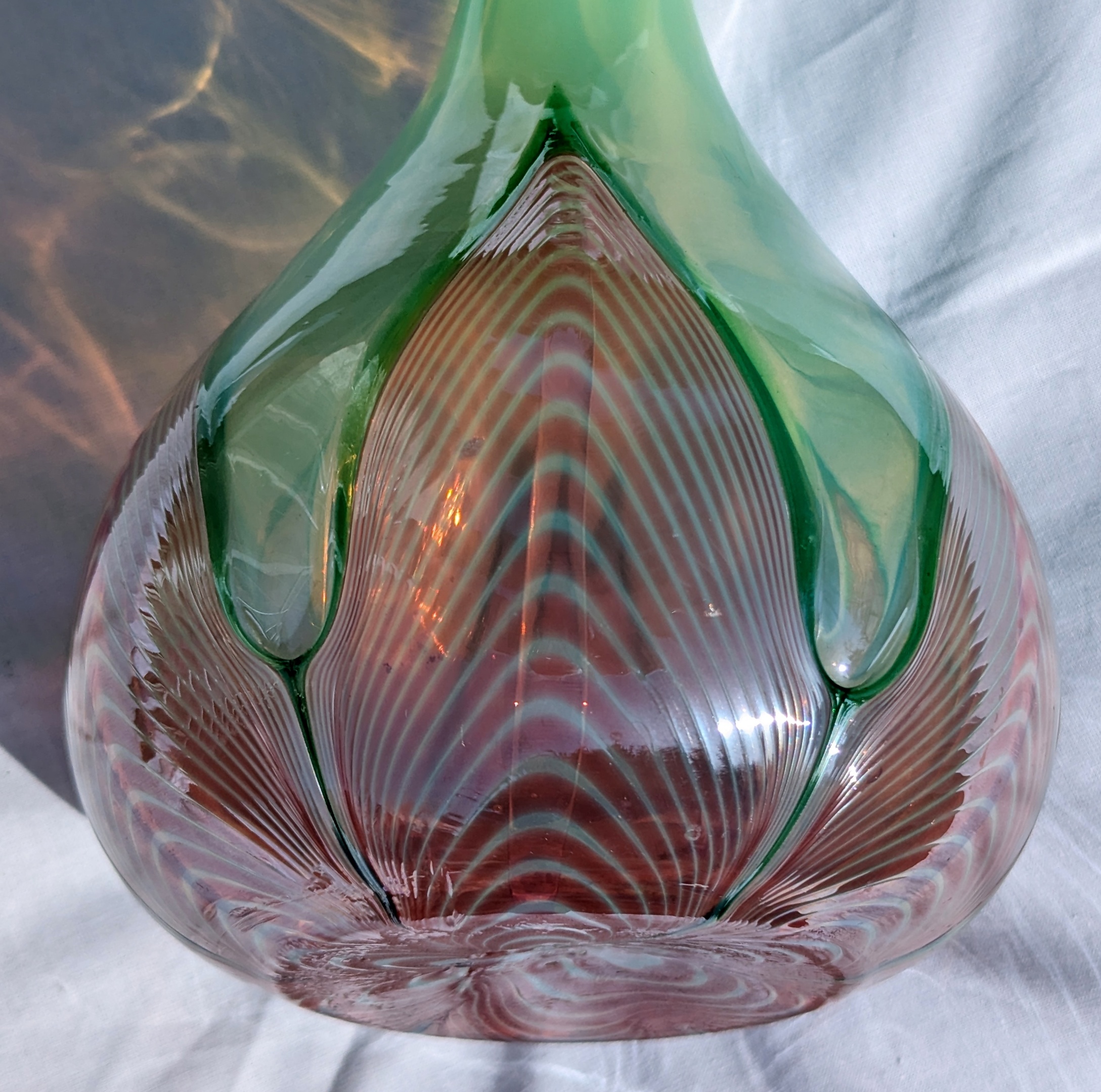
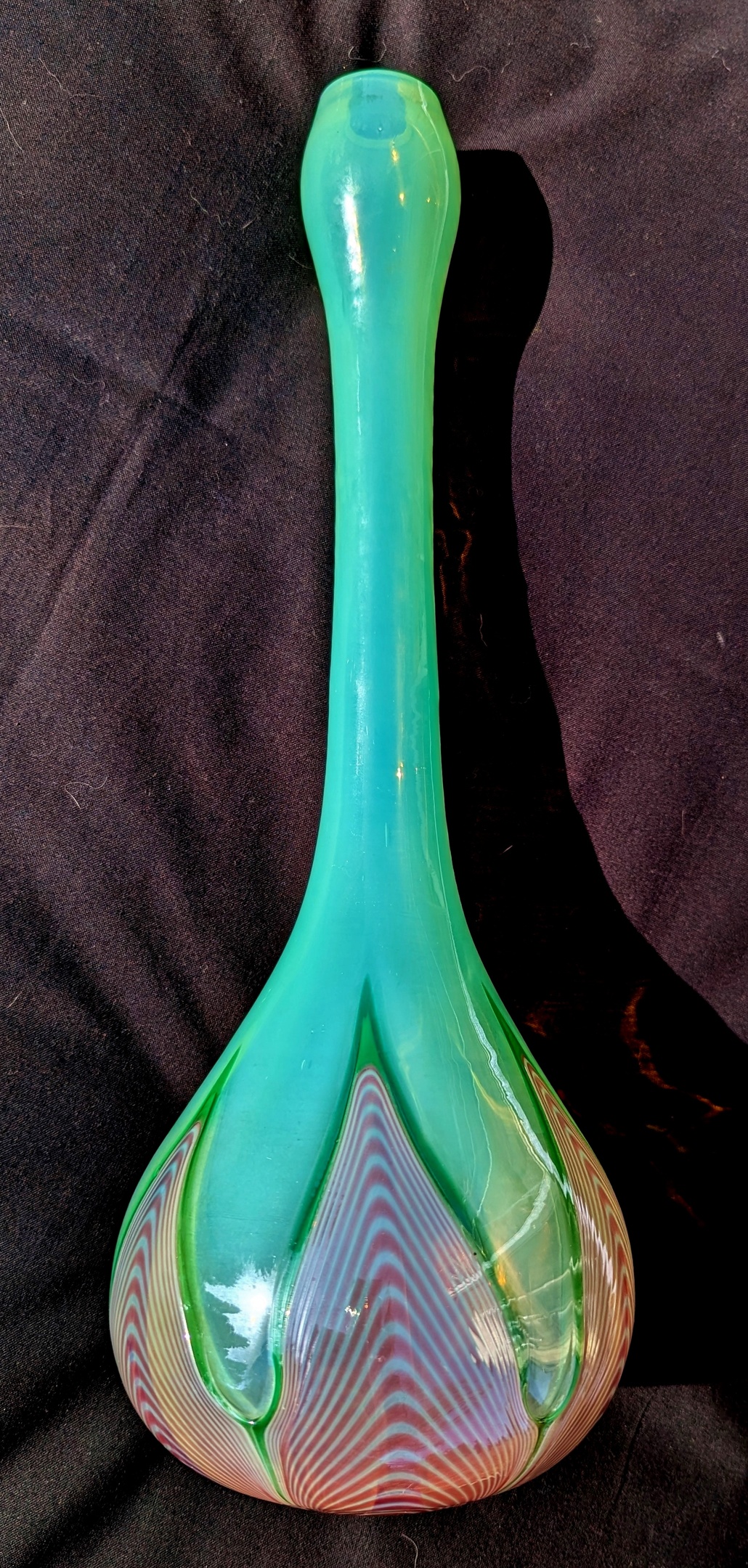
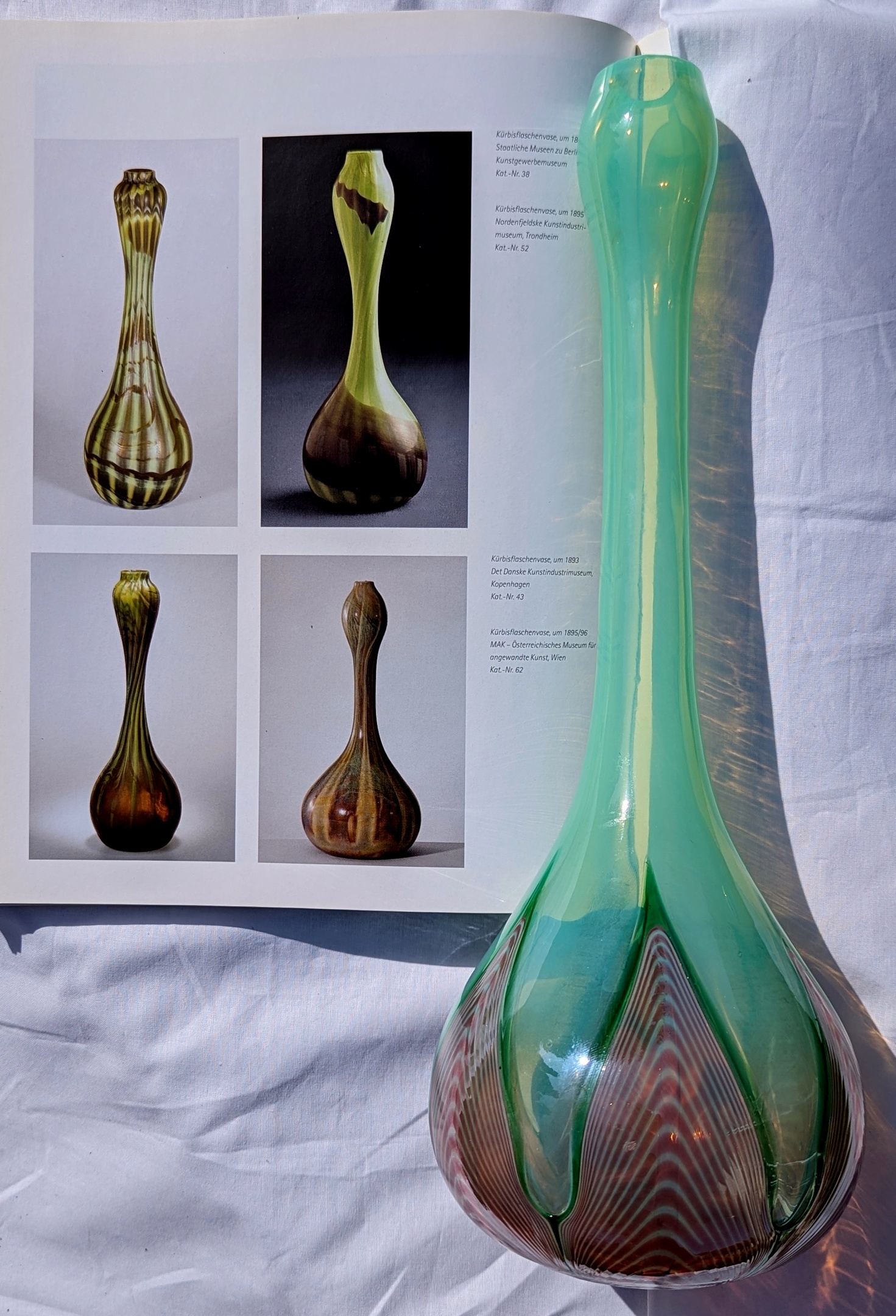
The following story has been handed down by Gustav E. Pazaurek in his standard glass book 'Moderne Glaeser' (1901). In 1897 Siegfried Bing, a German merchant of far eastern art in Paris - he actually was the founder of 'Japonism' since 1880/81 in Europe, pushed forward 1888 by his journal 'Le Japon artistique: documents d'art et d'industry' - started a promotional travelling exhibition of Tiffany 'Favrile' glass through Europe, advertising for his gallery 'La Maison de l'Art Nouveau', which gave this style its name. Owing to Pazaurek, at this time he was working for the Bohemian 'Landesgewerbemuseum Reichenberg', the exhibition started there (today Liberec), went over Vienna and Berlin back to Paris. The most prominent Bohemian glass companies, Harrach and Loetz, were impressed by Tiffany's art seen at Reichenberg. Whereas Maximilian Spaun at Loetz recognized imediately the relevance of the irisation technique, then exploited up to the highest level, Harrach imediately copied the shapes and used his hot glass shaping experience by embedding coloured glass threads and combing them into feathers. In the last foto you see my vase together with page 120 of the catalog to the Hamburg exhibition 'Louis C. Tiffany - Meisterwerke des amerikanischen Jugendstils' (March-June 1999), I had been visiting, too. You may note, the nearly exact copy of the organic double pumpkin vase shape by Harrach. The Tiffany vase shown in the lower row on the right side (H=34.5 cm) was purchased by the MAK Vienna in 1898 directly from Siegfried Bing. These vases, called 'Tiffany Pfau (peacock)', didn't play a major role in Harrach's business, only about ten different shapes, including a Persian 'rosesprinkler', of various sizes were produced. Only few vases survived, most were only known from the production notes in 1898 and the vases are therefore today accordingly rare. Nevertheless this exhibition marked a fundamental shift in the early Bohemian Art Nouveau glass production. Now, all mentioned 'Tiffany Pfau' vases were made out of clear glass with topdown spreading opal white inner case and decorated by spun feathers, but these are quite different looking as compared to the feathers of my vase. My vase is made of light yellow-green uranium containing glass and is completely shaded by a inner white opalescent glass. It is decorated by six feathers, made from a 24-fold embeded pink glass thread, being alternativel pulled up and down, respectively, which are contoured by dark green outlines. For me, this vase reminds onto an opening amaryllis bulb with a growing flower bud. The surface of the vase is shiny brilliant due to the applied irisation, a technique that Harrach used for the refinement of luxury glassware. The vase is, to my knowledge, the only one of this shape yet published.
My vase is blown from top, it stands H=37 cm high, has a maximum diameter of D=13 cm and weights 980 gr.
For further details see Jan Mergl 'From Neuwelt to the whole World, 300 Years of Harrach Glass' (2012), pages 305-308 and
G.E. Pazaurek: Moderne Glaeser' (1901) and G.E. Pazaurek and W. Spiegl 'Glas des 20.Jathrhunderts: Jugendstil - Art Deco' (1983)
on the same issue see Volkmar Schorcht CW/stories 237894 (2018) 'Harrach "Tiffany Pfau" vases.'
and for 'Japonism and Harrach' please see my CW/stories 117171(2014), 310960(2023) and 328351(2026)



Fabulous !!!!
This was fascinating to read - thank you for sharing it. Your vase truly a beauty.