






Posted 1 month ago
 glasfreund
(50 items)
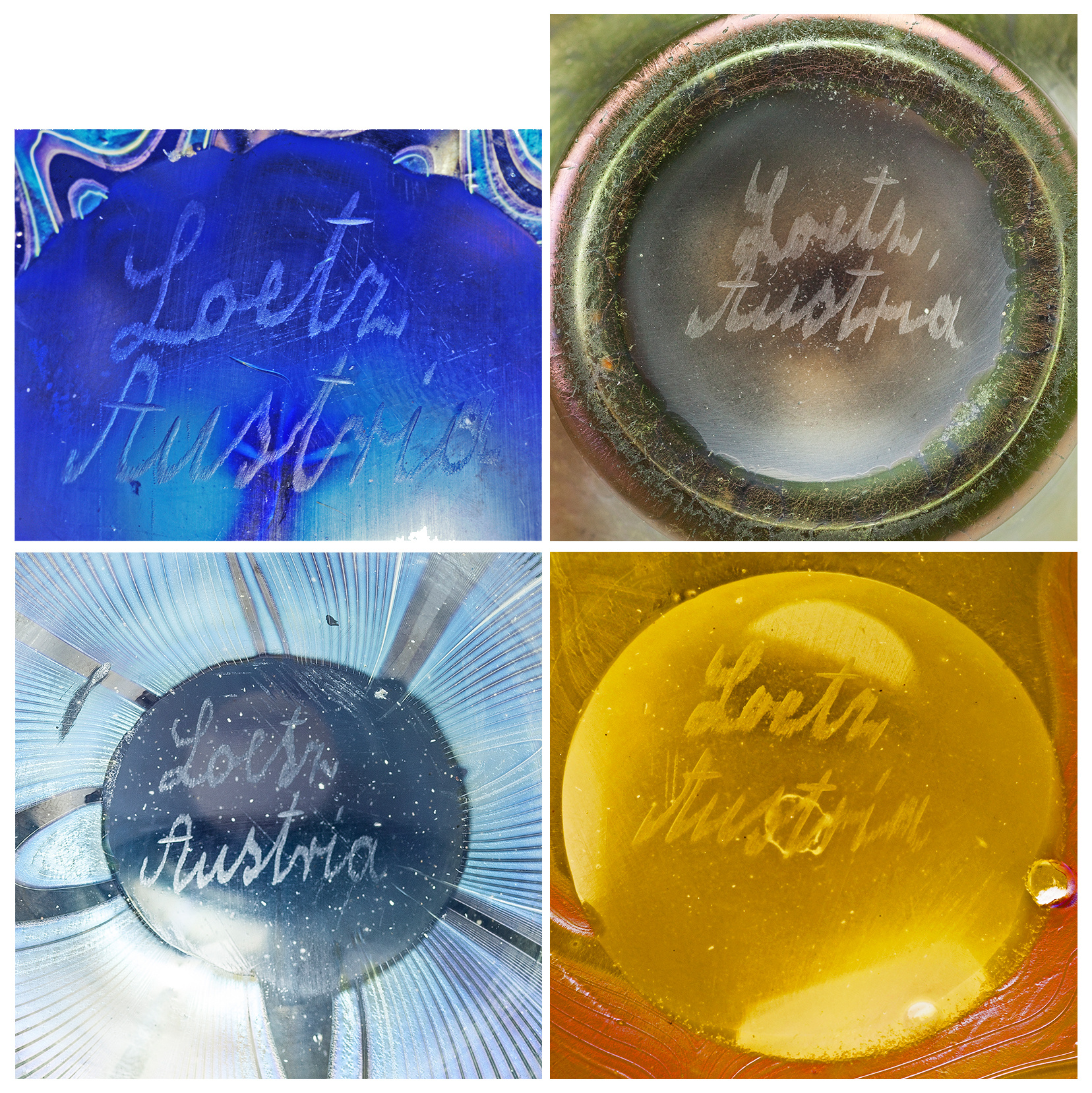
“Loetz Austria” is the most well-known signature on Loetz art glass. The engraving, which always appears in two lines, is located within the polished pontil mark on the underside and is engraved with a wheel. This type of engraving is recognizable by parallel wheel marks in the lettering and the wedge-shaped indentations in the crossbars of the letters A and t. The signature has numerous characteristics comparable to handwriting, all of which must be taken into account when verifying authenticity. If these characteristics are missing, the signature is not authentic.
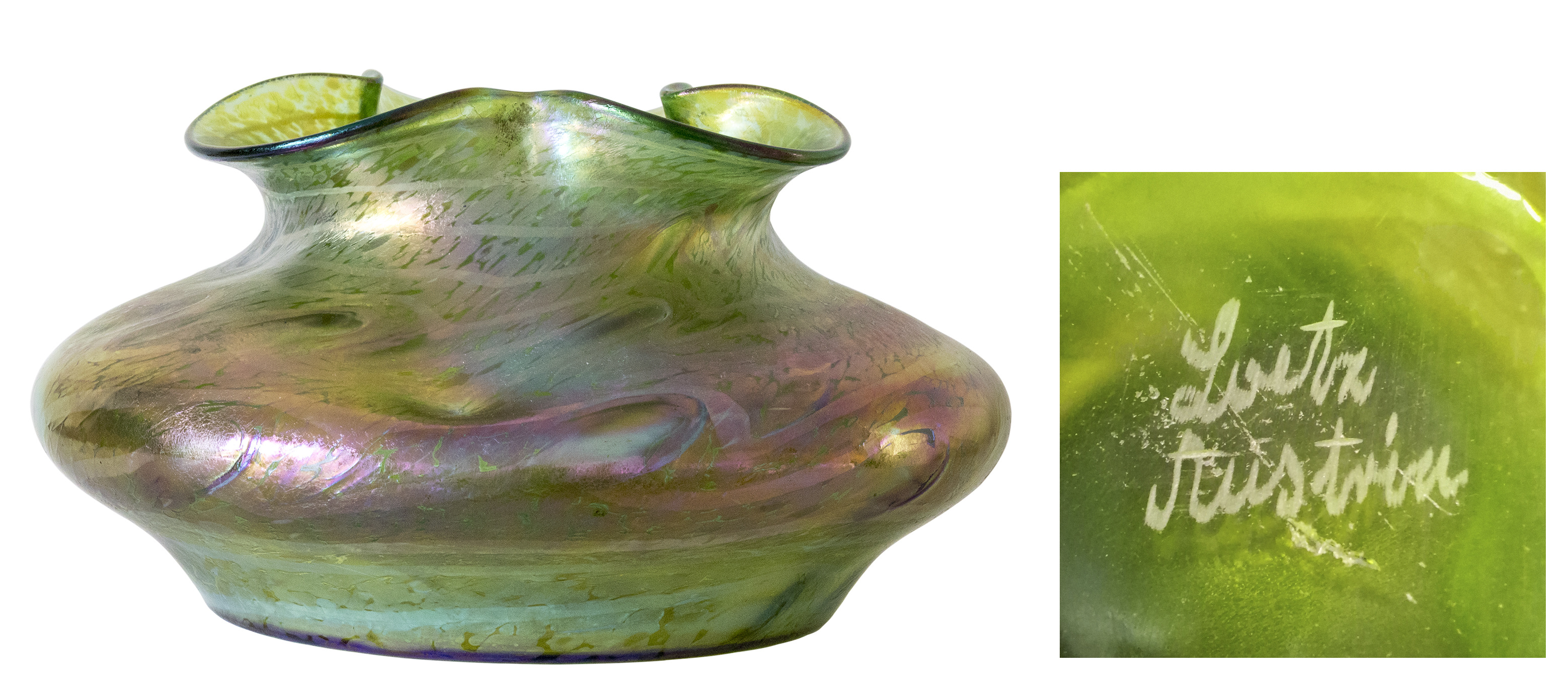
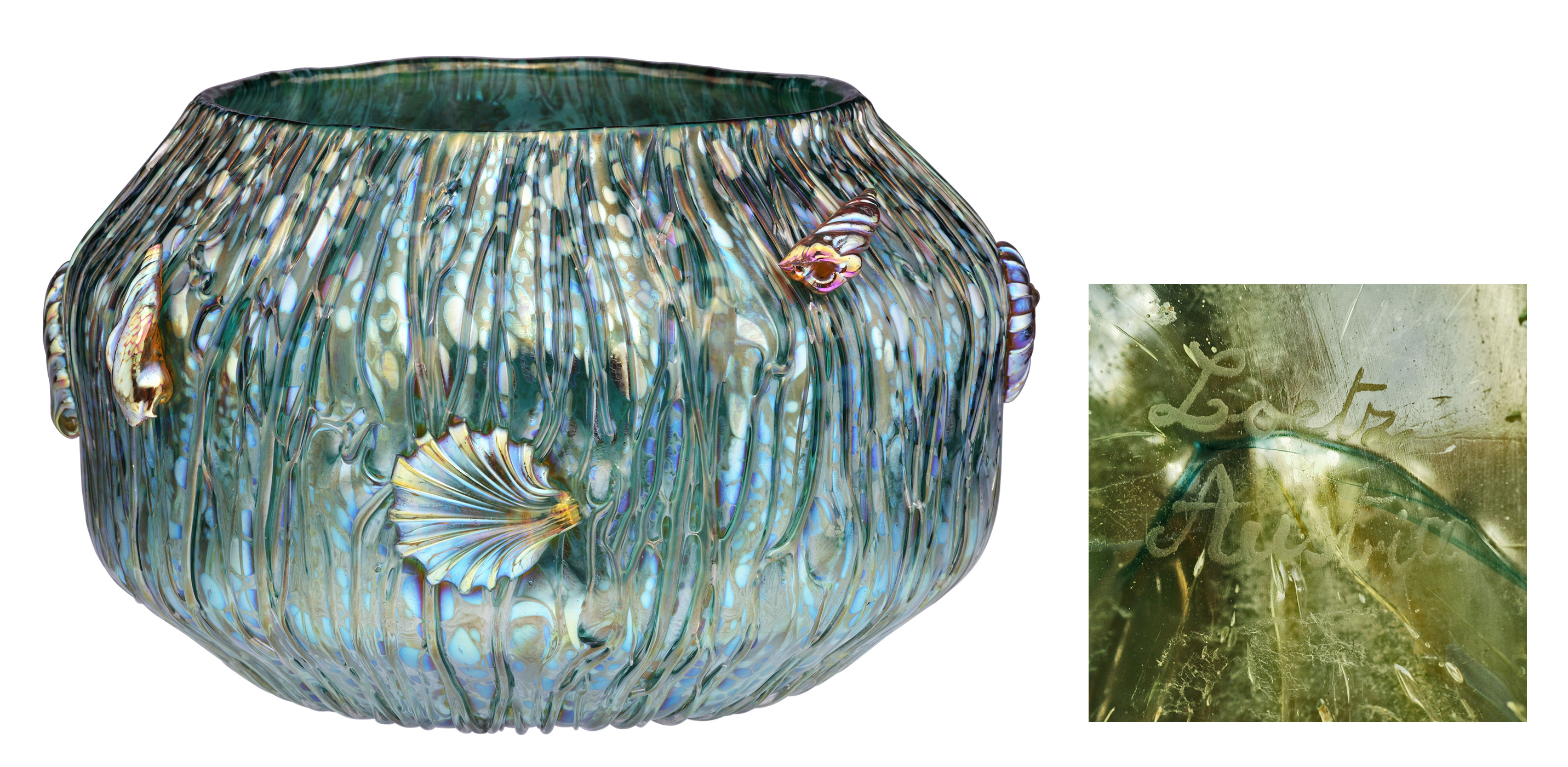
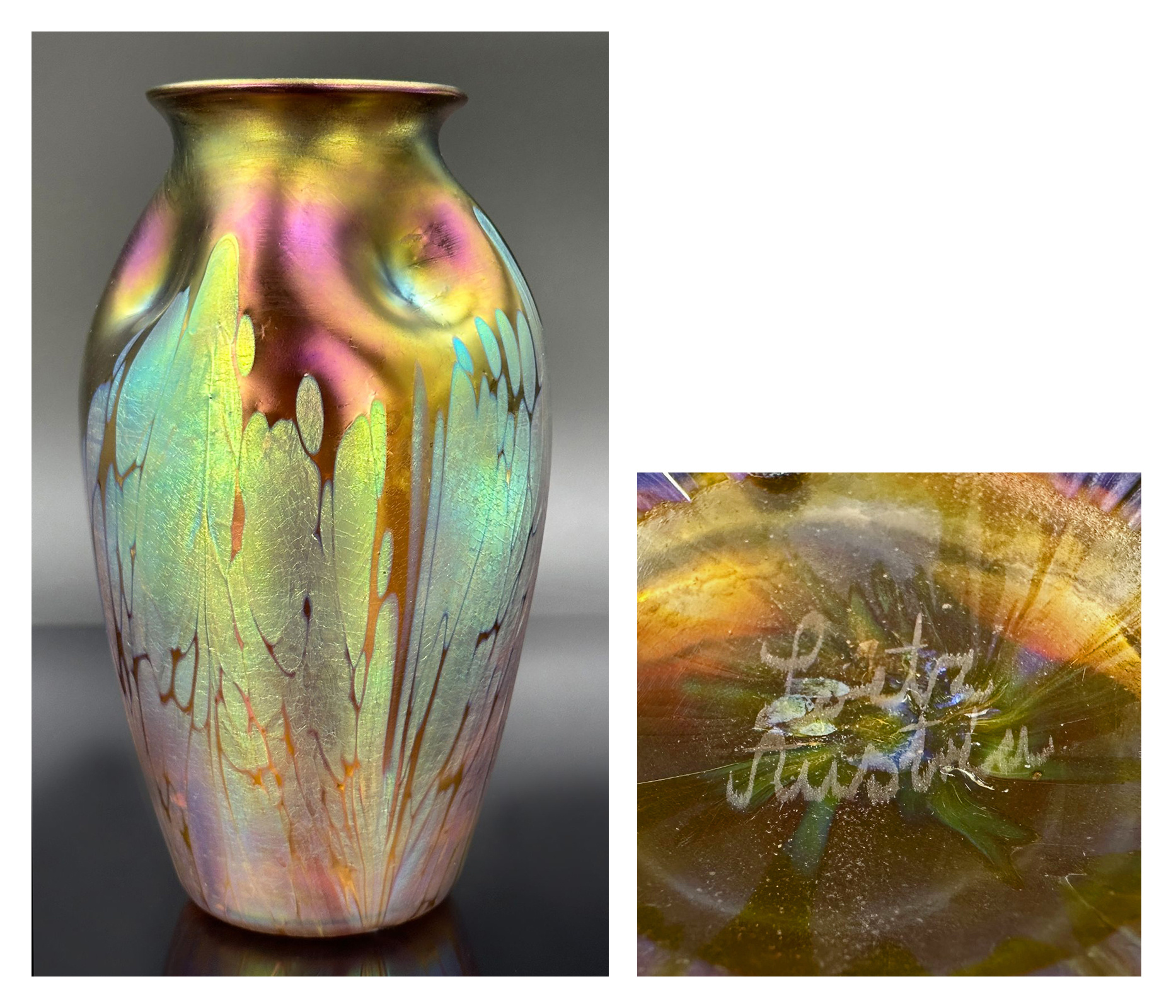
Forgeries of the Loetz-Austria signature are more common than is often assumed. The range extends from crude inscriptions to engravings that appear authentic at first glance. It may come as a surprise that not only glasses from other manufacturers, but often Loetz glasses themselves, were retroactively marked with the Loetz-Austria signature.
The signatures were usually applied at the same time the glass was produced. The Loetz factory manufactured its products to order. The glasses intended for showrooms, trade shows, and exhibitions must also have been produced recently. After all, they always reflected the latest innovations. Signing the glasses was therefore part of the production process based on external and internal orders.
We can now narrow down the use of the Loetz-Austria signature with a high degree of certainty to the period from 1900 to 1903. Glasses whose shape and decor indicate that they were made after 1903 are no longer signed in this way.
It is difficult to determine the exact date based on individual pieces. Loetz-Austria signatures can also be found on pieces with production numbers and decors from 1898 and 1899. Loetz often continued to produce older forms and decors for many years. Therefore, we must assume that some of the glasses with older production numbers were also produced in 1900 and later and then signed “Loetz Austria.”
While the Spaun circle mark was applied only sporadically for specific purposes, the switch to the “Loetz Austria” text signature resulted in a significantly higher proportion of signed glasses. Engraving the circle mark on large quantities would certainly have been too labor-intensive. The text engraving “Loetz Austria” was more efficient and better suited for mass production. It also allowed the glass factory to establish a uniform signature without any additions.
The text “Loetz Austria” simply means “Lötz Österreich” in English. The fact that “Loetz” is spelled with an “oe” instead of the original umlaut is therefore due to the simple fact that the signature was written in English rather than German. With the circular mark and the addition of “Austria,” Loetz had already consciously opted for English, which gives us a clue as to the main sales markets and perhaps also served to distinguish the company from French competitors.
Will be continued.
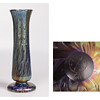
Fig. 12 Authentic Loetz Austria engravings
Fig. 13 A forged Loetz-Austria signature on a vase from the Fritz Heckert Glassworks (Model Th 71)
Fig. 14 A forged Loetz-Austria signature on an authentic bowl from 1910 (“seegrün [sea green] Ausführung 102,” PN II-6952)
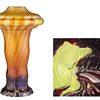
Fig. 15 Authentic vase with a later signature (“maron verl. Gre 2/484 Medici,” PN II-2/468, 1902). Photo courtesy of: Schreiber Auction House, Niedernhausen
Text and images by Volkmar Schorcht unless otherwise noted.
Link to part 1
https://www.collectorsweekly.com/stories/329197-loetz-austria-the-mystery-of-the-signat?in=666-activity
Link to Part 2
https://www.collectorsweekly.com/stories/329219-loetz-austria-the-mystery-of-the-signa?in=441-activity
Link to Part 3
https://www.collectorsweekly.com/stories/329234-loetz-austria-the-mystery-of-the-signat?in=666-activity