







Posted 12 days ago
 ho2cultcha
(5107 items)
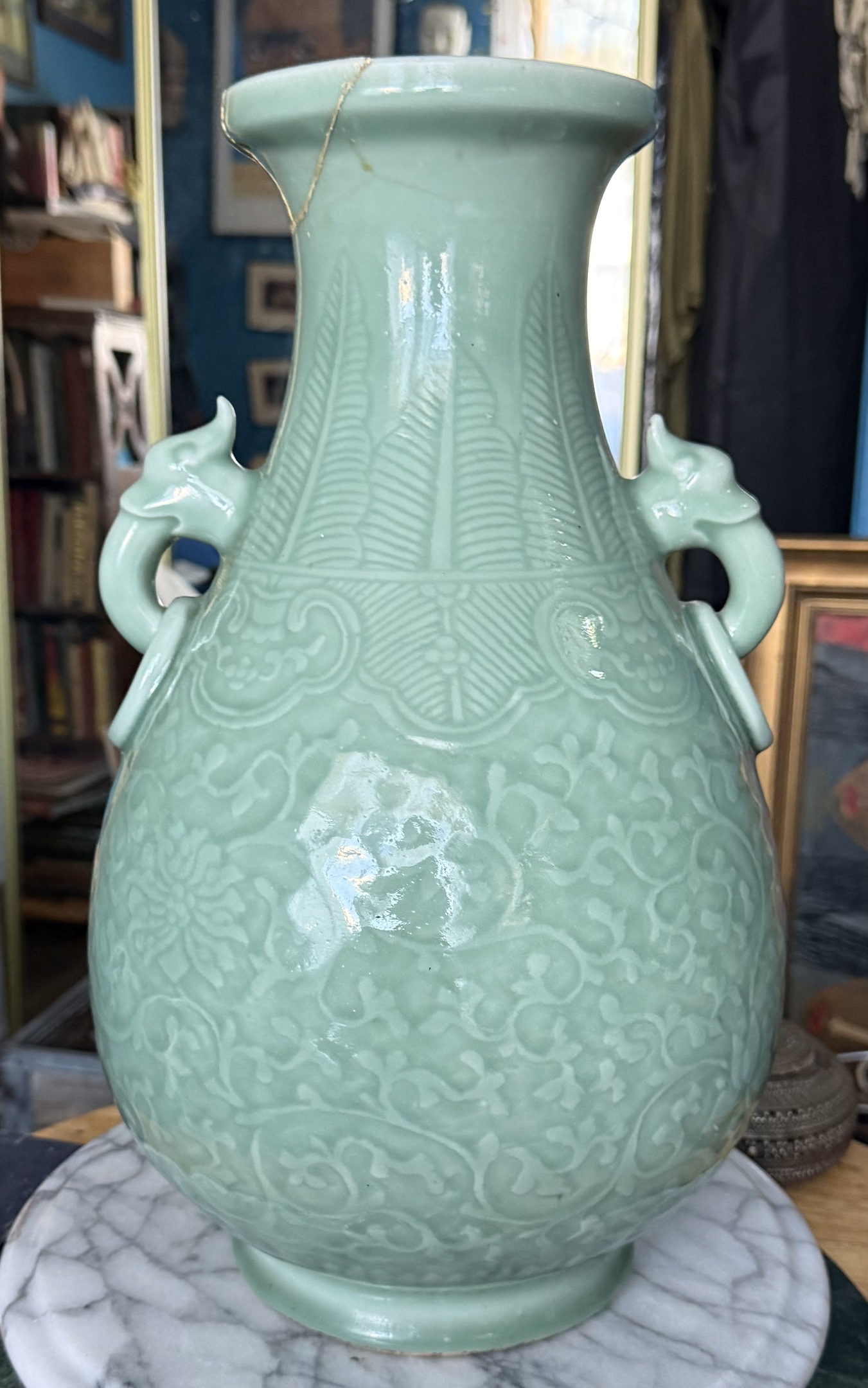
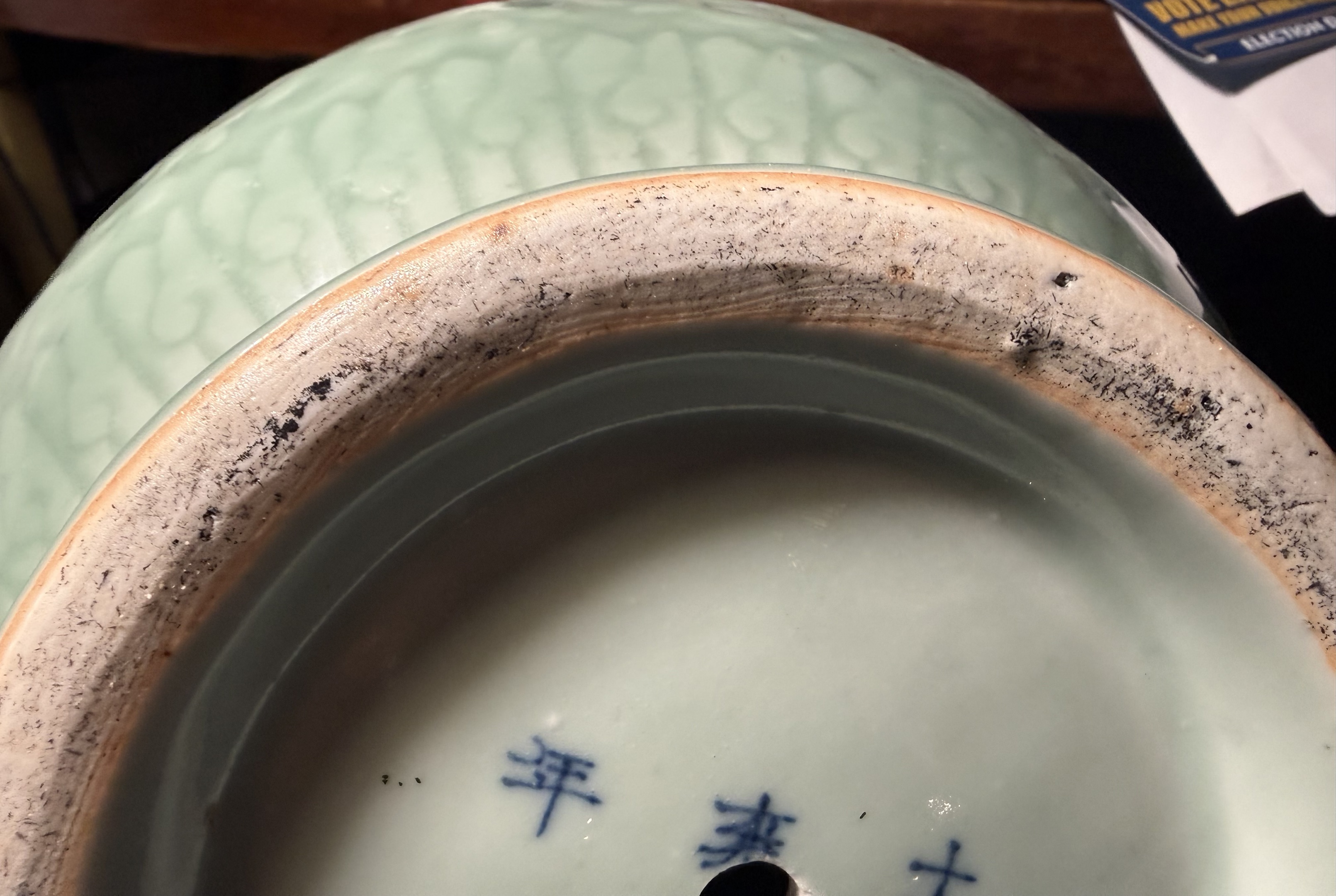
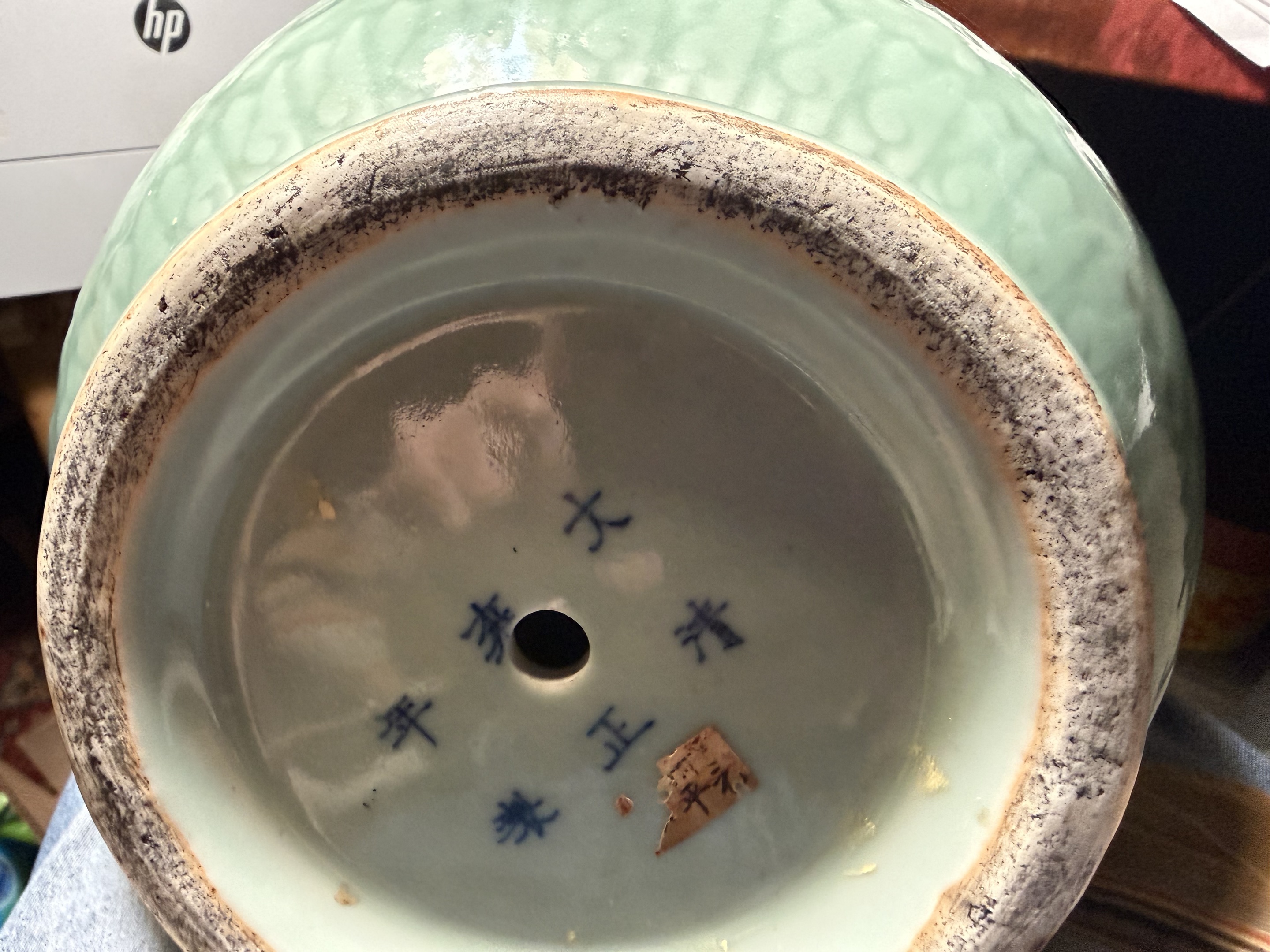
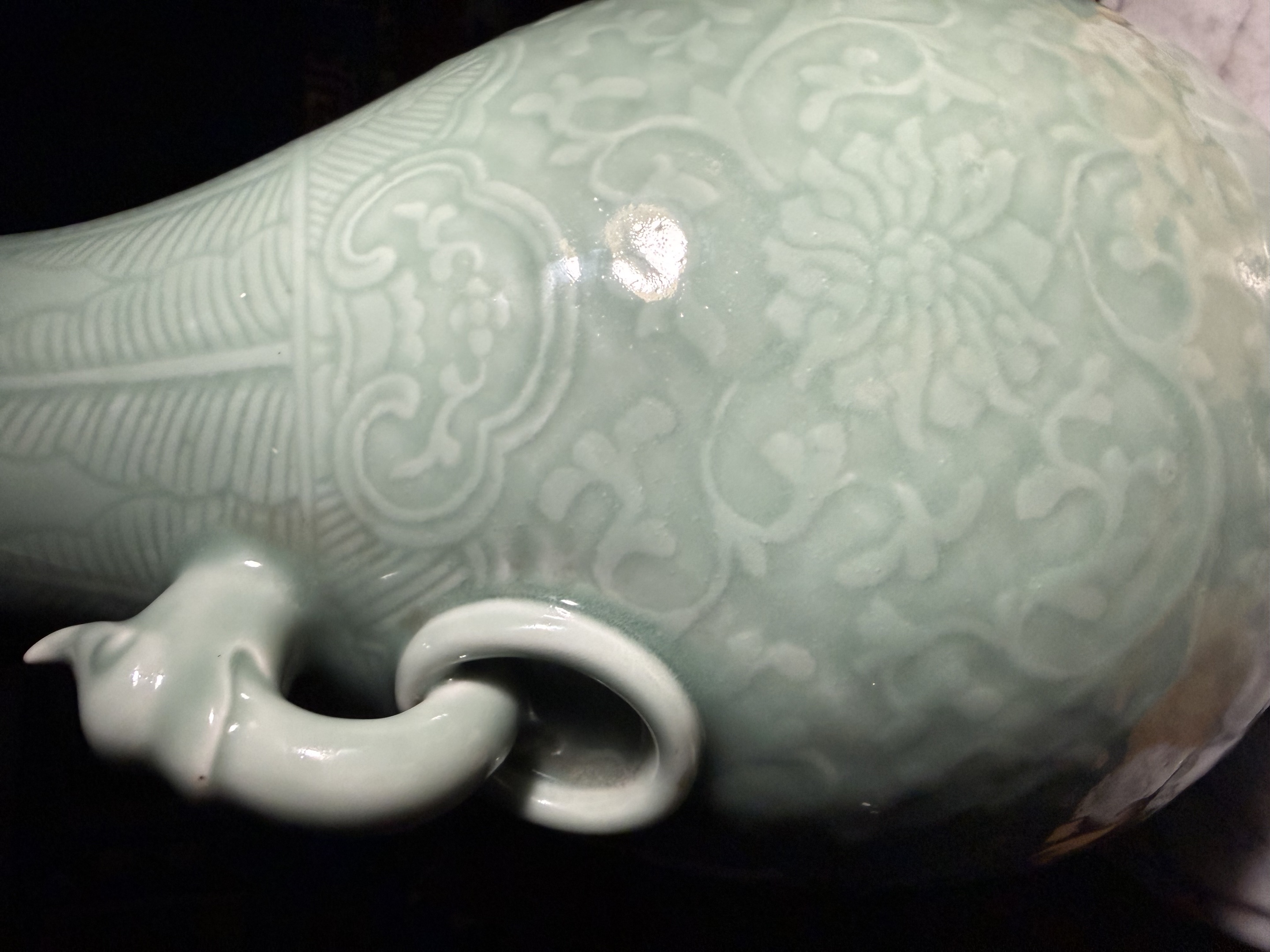
This poor vase has gone through the wringer. It has been lamped and has a poor restoration job on the rim. It has a Yongzheng, 6 character mark on the base. It is about 16 inches tall and very heavy. From the base and the pitting and glaze flaws, I'd say that it is mark and period. But what do i know? There are the remains of a paper with Chinese writing on it on the base. The lamp base has a sticker which says 'Miriam Crocker' with a Georgetown address. I think that she and her husband were collectors back in the 1940s and 1950s, although I couldn't find much info on the collection. Any info appreciated!



Do you think it is worth getting a proper restoration?
do you think that this is made between 1723-1535 ?-
no, but I think it is Qing, probably late Qing. What do you think?
i cleaned the base up some more.
well as usual you did an excellent job, you must be close
i see you are a bit harsh on your self, it is chinese not japanese who got a very long KINTSUGI history and filosofie so it is not unussual
run into a misunderstanding , some peeople thought the outter bottom ring was
the export rim
no it is oxidation of the exposure, look the standrim in it self got DERTRITUS (filth) it is not exposed besause it is not standing on, the inclination part is the exposure
maybe there is some suffix the more round the drilling hole the and the less agglutine in the (tomatoesoap red and the less serration younger it is
for instance drilled chengua nian zhi ( darkbrown abbreviated mark looks looks a blurr
drilling vases was hot during the art nouveau period ( a tremendous mistake bij the way but american,s liked lamps and were rather wealthyduring the depession they did much lesser drilling
this design is something like double chiloing i don,t know all the beast and probably accanthus leaves
i tried to gather information about MIMI, which was awfull difficult , so i stick to hearsay
opulent rich , neighbourhoud endorser , master in something , christ espicapal fan , patriot family, student endorser, very smart, maybe one first well as usual you did an excellent job, you must be close
i see you are a bit harsh on your self, it is chinese not japanese who got a very long KINTSUGI history and filosofie so it is not unussual
run into a misunderstanding , some peeople thought the outter bottom ring was
the export rim
no it is oxidation of the exposure, look the standrim in it self got DERTRITUS (filth) it is not exposed besause it is not standing on, the inclination part is the exposure
maybe there is some suffix the more round the drilling hole the and the less agglutine in the (tomatoesoap red and the less serration younger it is
for instance drilled chengua nian zhi ( darkbrown abbreviated mark looks looks a blurr
drilling vases was hot during the art nouveau period ( a tremendous mistake bij the way but american,s liked lamps and were rather wealthyduring the depession they did much lesser drilling
this design is something like double chiloing i don,t know all the beast and probably accanthus leaves
i tried to gather information about MIMI, which was awfull difficult , so i stick to hearsay
opulent rich , neighbourhoud endorser , master in something , christ espicapal fan , patriot family, student endorser, very smart, maybe one first environmentalist, womangroup endorser, protector culturul heritage of her natieve hamlet
so she has been e hell of a chick, a leave a place in heaven
interludium
i would not not restore het all, drilling is detremintal for value and there is already damage
assesment is very well , personaly i date it a bit later ( see remark drilling hole ) age of maybe the drilling alano could be later, ( tarif act follow up tarif act) and it is american market export niet european export probably
waki
Thank you Waki! I found out a little bit on the leaf motif - called the banana leaf motif. Wikipedia says: Associated with scholarly resilience, renewal, and the Taoist "Eight Treasures" (where the banana fan brings joy). In Chinese history, poor scholars like the Tang monk Huai Su even used massive banana leaves as natural calligraphy practice sheets.
The foot rim appears to have been polished on the surface touching the ground - maybe in order to level it on the stand. I switched out another photo to show more of the relief work - around a flower - not sure which kind but will research it later.
Mimi's husband has a very illustrious past. St. Albans to Princeton to many acclaims.
The handles are phoenix heads, but I couldn't find any that looked much like this one. It looks closest to a Yuan dynasty pitcher I saw.
the leafs are probably from the yuan period also aren,t they in the METRoPOLITON ?? , it is too long ago for me , i thought babanaleafs were bigger, but i believe you
well i used the NANNE OTTEMA EWER IN THE ZHIHU, shaping now i got a problem in chinees because the word ZHIHU is a homophone, and emphasizise the shape and not the leafe, and there is a difference beween a ewer and a pitcher personally i think your point os few is better then mine
I did discover today today that there were loads of celadon pieces which were lamped in the early 1900s. There are many, many for sale at all the usual places. but i do like mine more than most. most appeared to be molded whereas i think this one is carved. i guess we always like our own versions better... 'Finders eyes'!
i am total mess , how can i define this is an acantus, i must get out, you are right how can i miss i have seen tyhousand of them, bummer
but why is this carved