





Posted 9 days ago
 IronLace
(1012 items)
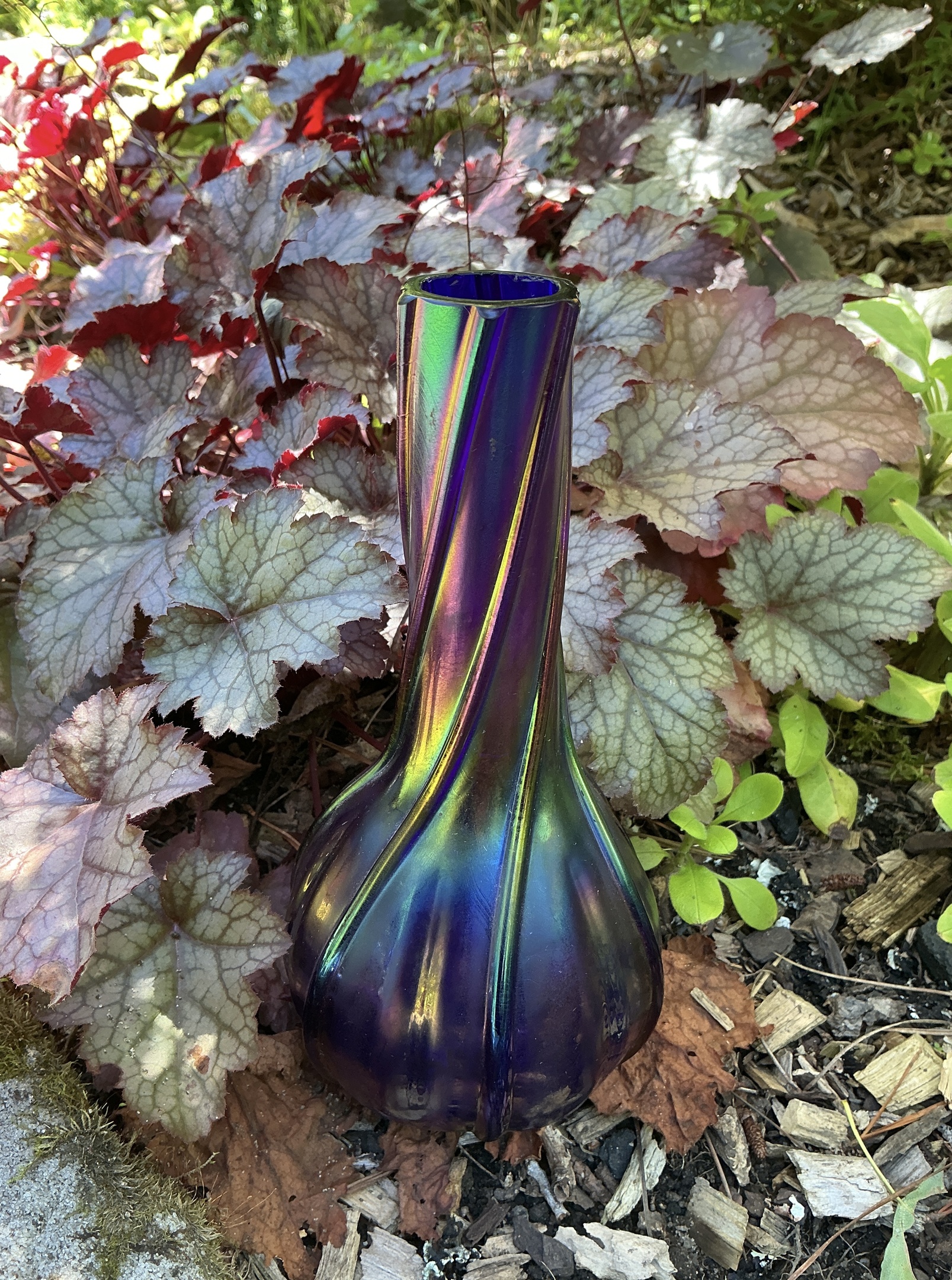
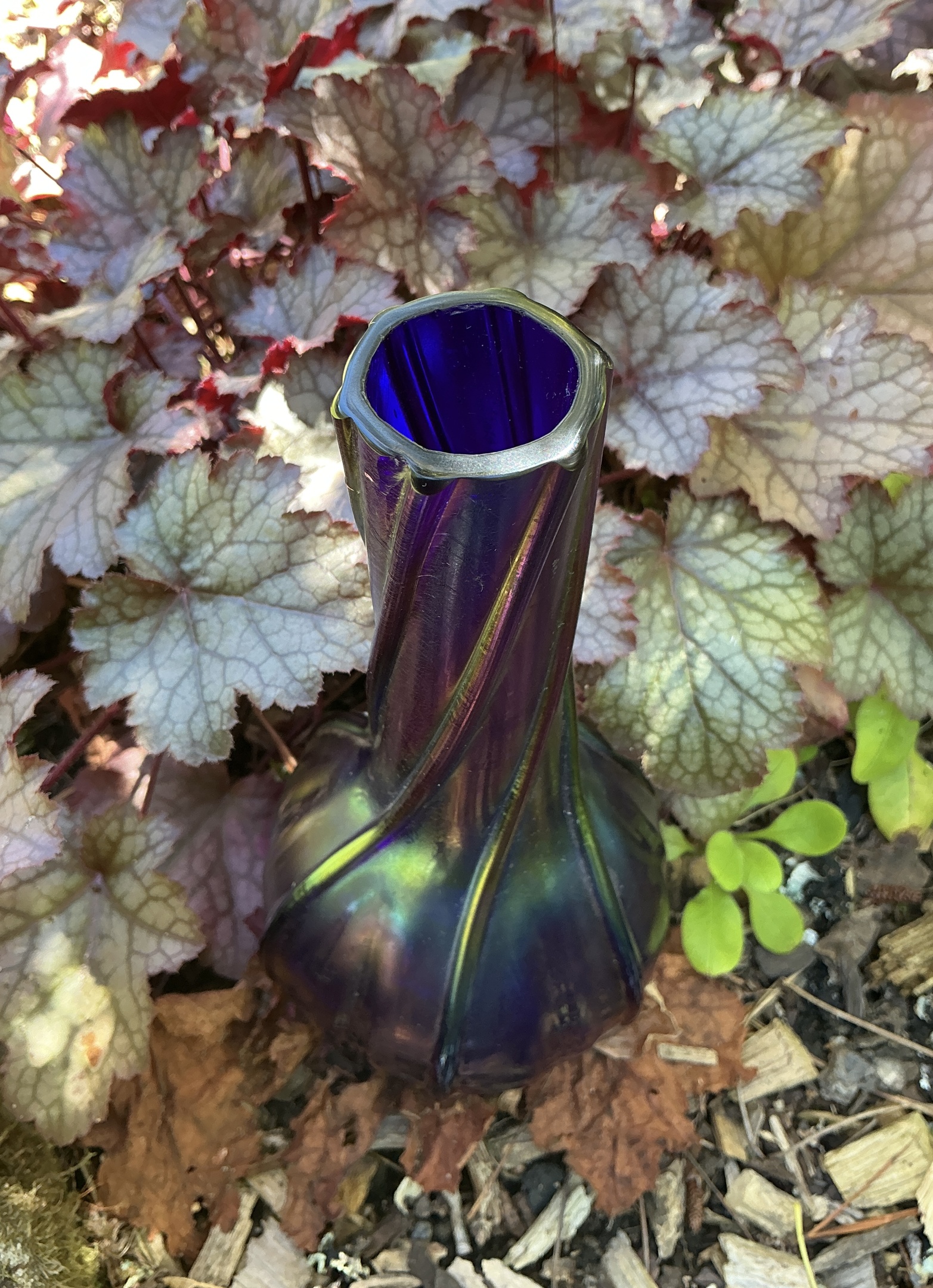
This was a super buy it now on eBay AU, from the same seller as the vase in my preceding post. This was also sold as carnival glass, but once again it is a piece of Bohemian glass of the Art Nouveau era. I’m going to keep a lookout on the sellers listings because maybe some more gems might turn up among their carnival glass!
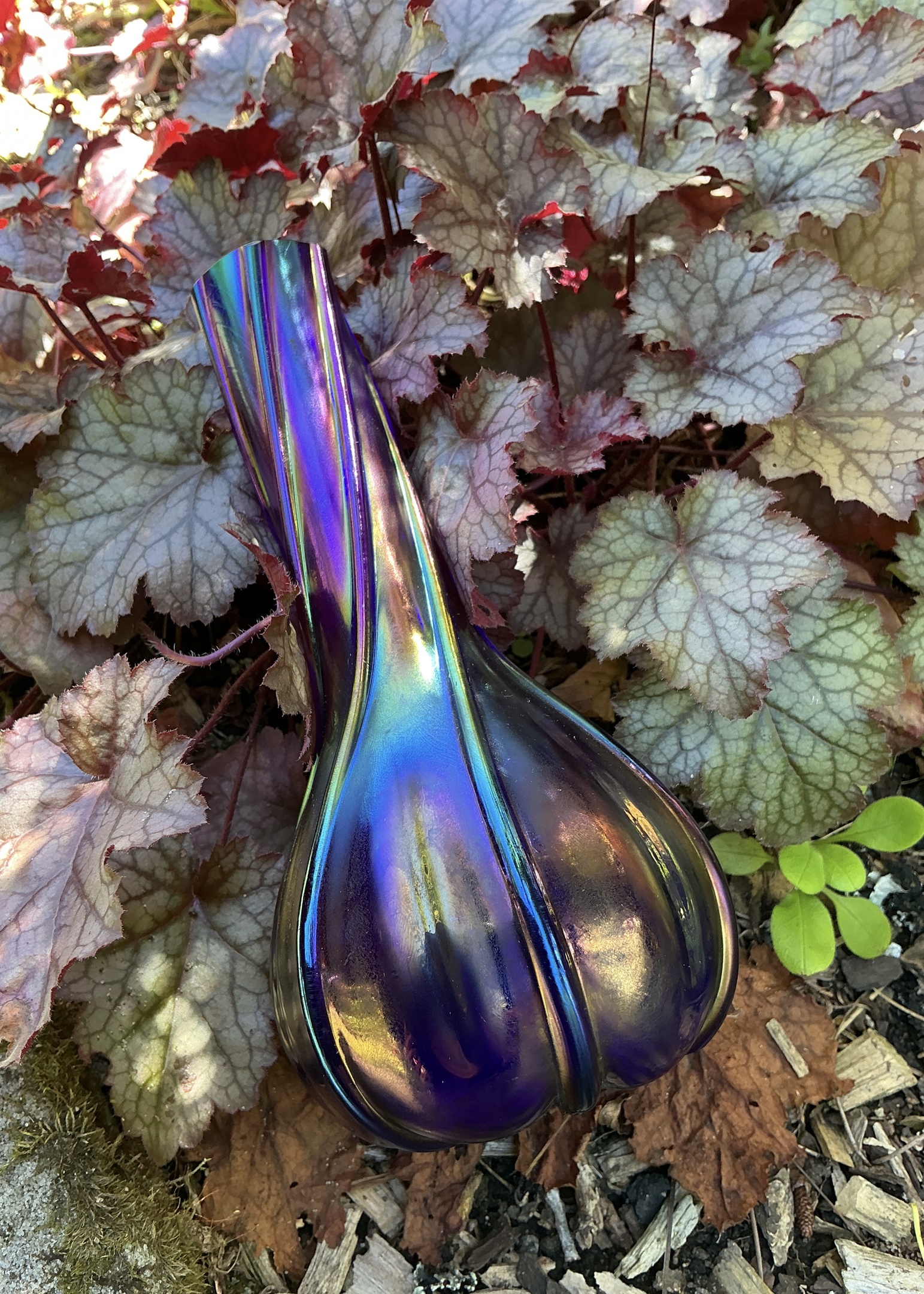
The vase is made from deep cobalt blue glass with an intense iridescent finish that makes it look purple. It measures 18.5 cm tall, 3 cm across the cut & polished top rim, & 6.5 cm across the base, which does not have a pontil mark.
With a simple bulbous form, the design is enlivened by swirling raised vertical ribs.
Bohemian origin, circa 1900. Maybe Kralik?

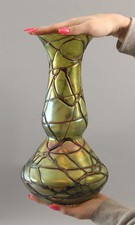


Very nice colour, it looks the same as this pair although mine are 25mm shorter https://www.collectorsweekly.com/stories/309582-a-pair-of-kralik-vases
Many thanks, Bernard, much appreciated! Yes, I agree, your pair look similar to this one. It was mis attributed as being “contemporary carnival glass”…
Many collectors these days use the words CARNIVAL as a synonym for IRIDESCENT. Not exactly accurate, but meanings change over decades and even millennia. One can describe finding "Carnival" glass in ancient Egyptian tombs
charles116, I hear what you’re saying, however, mis - attribution is a slippery slope. I feel it is more effective to try to use accurate terminology where possible. I also feel that most glass collectors are familiar with the tropes of attributing all blown, coloured glass to Murano, or everything with an applied flower to Stevens & Williams. Carnival glass is a particular type of glass that does have an iridescent finish, yet is also typically pressed or moulded with known & documented designs. Certainly I am not insisting all sellers (or even collectors) be correct all the time. That is too much to ask. Glass has a lot of complexity & unknowns about it as a subject. Nonetheless I would prefer if someone doesn’t know, to keep it simple. It’s just iridescent glass. How that iridescence came about, whether via a manufacturing process or environmental factors, can vary. I personally would not refer to ancient glass or even old bottles that have gained an iridescent finish over time due to being buried in the ground, as carnival glass.