







Posted 4 days ago
 Loetzforever
(115 items)
Here is the addition regarding the green aventurine glass that "kairomalte" had pointed out in his article—something that was not yet included in my previous post about version 136.
As I already reported in the article about "Ausführung 83", the manufacturing process for copper-containing aventurine glass (Italian avventurina, also called gold river) was discovered by accident in Venice at the beginning of the 17th century. For a long time, Murano was the only center for the production of aventurine glass. After it was rediscovered by Max von Pettenkofer in the second half of the 19th century, the manufacturing process was also replicated by Bavarian and Bohemian glassworks. Green aventurine glass was first created in 1865 by French chemist Théophile-Jules Pelouze. In this form the copper was replaced by chromium.
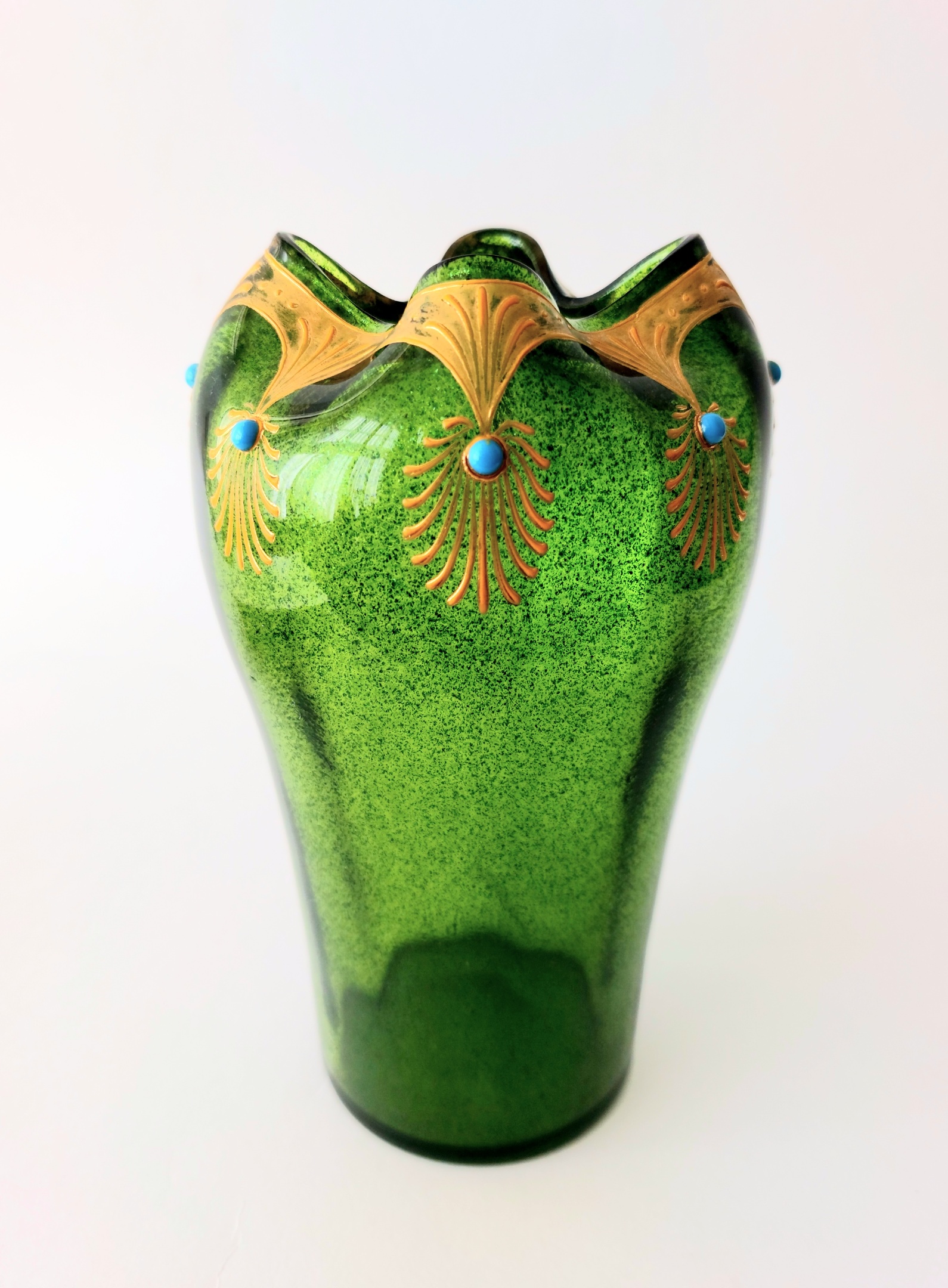
The Lötz company only very rarely produced this green aventurine glass. Only a few pieces are documented. In the book "Lötz" (Cantz) there is a reference to this glass in the decor catalog on page 289. This glass comes from the Passau Glass Museum and has the PN II 1106. The green aventurine glass from Lötz was made with a light blue partial overlay and is called the "Fuxit" decor. Most of the time, both decors were decorated with gold-plated painting and glass carbochons. Other Bavarian and Bohemian glass factories such as "Riedel",
"Harrach" (Formosa glass = red aventurine glass combed with green) and "Rindskopf" produced aventurine glass.
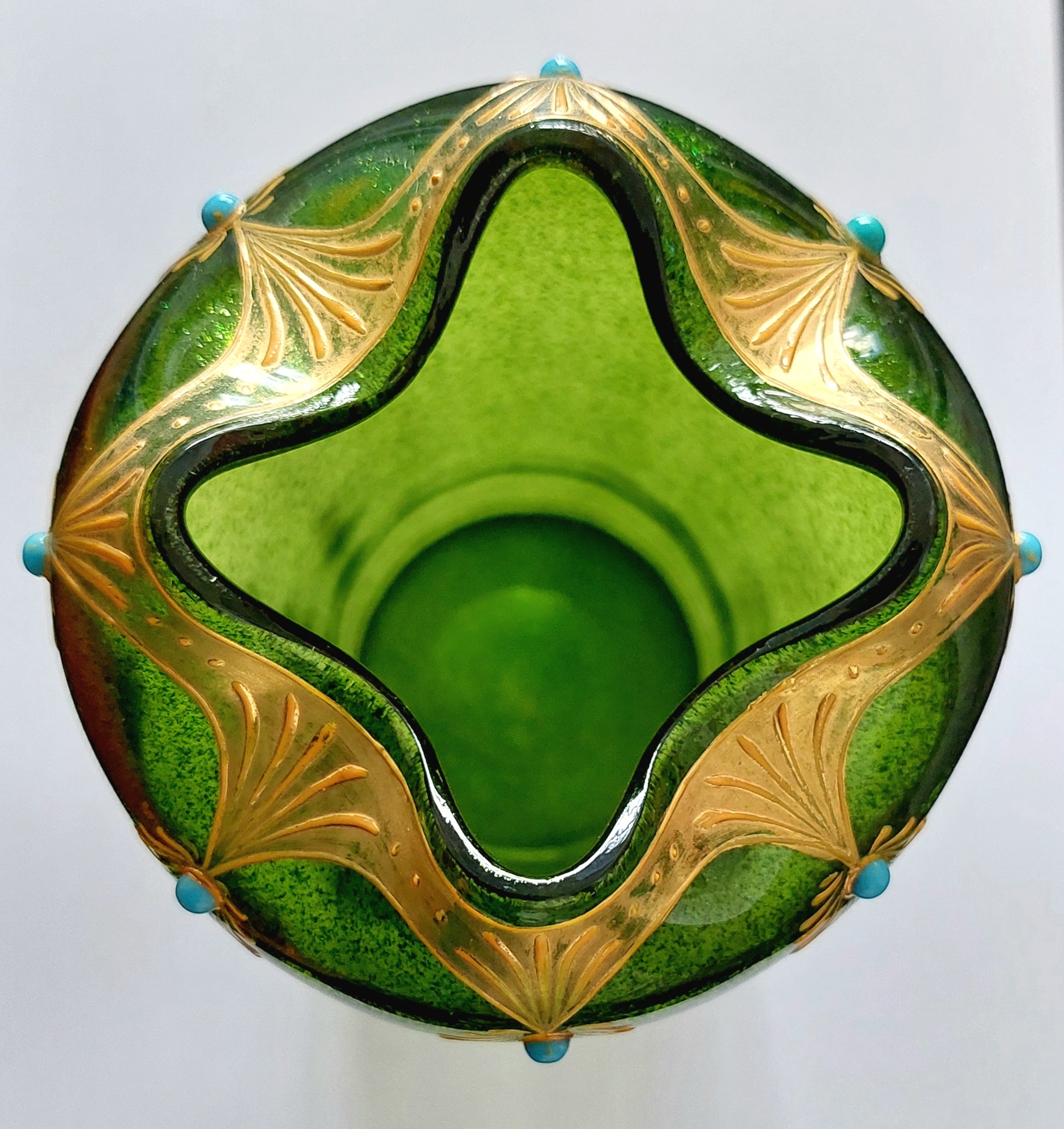
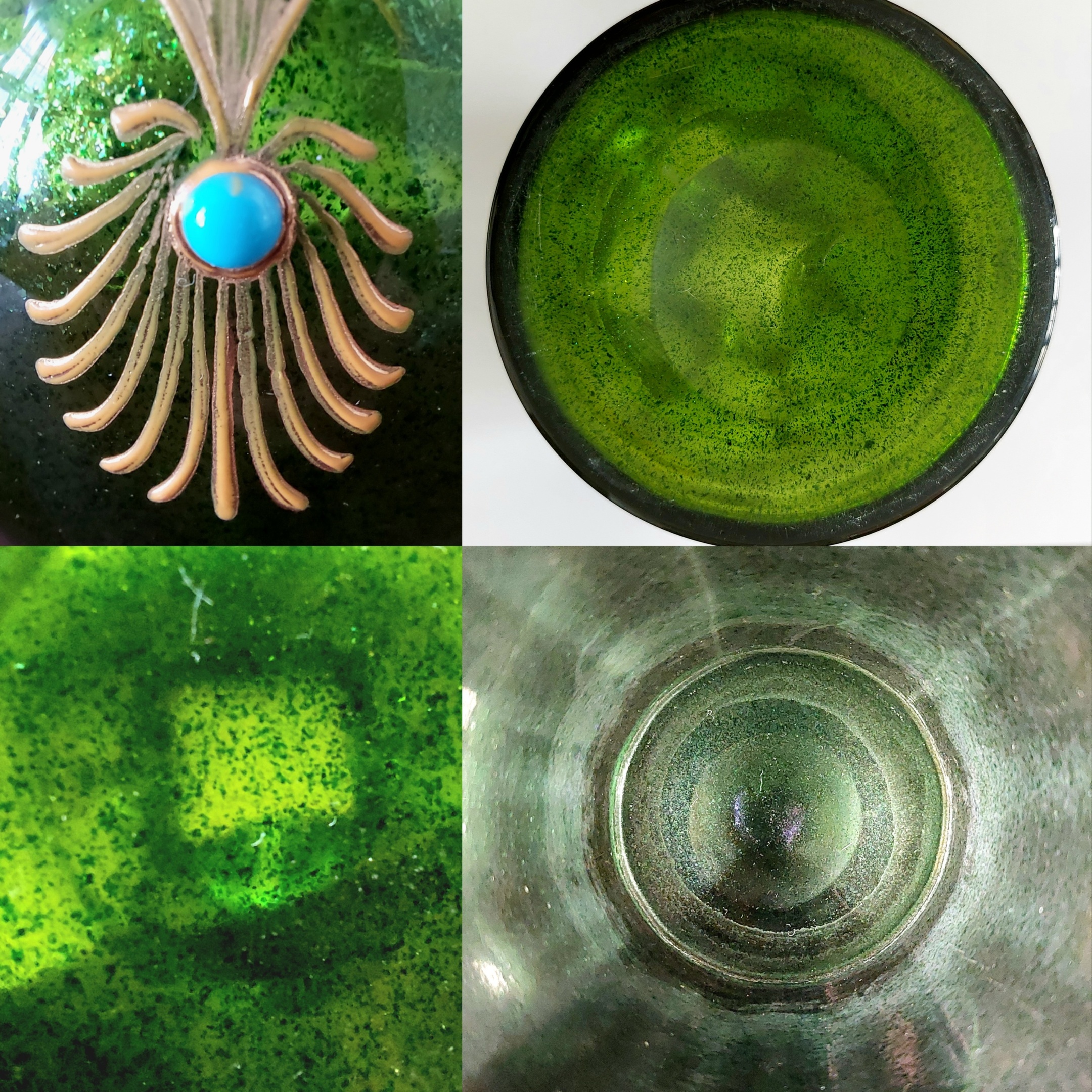
Designed in 1903, st PN II 1266, aventurine. Colorless ground with
an inner jacket made of green glass with mica powder. Painting
in ocher yellow with gold plating and turquoise glass carbochons.
Height 18.5cm
You can see other examples here on CW and on Lötz.com:
https://www.collectorsweekly.com/stories/207150-loetz-fuxit-aventurin-mit-blau-vase-c
https://www.collectorsweekly.com/stories/291750-loetz-aventurin-and-fuxit
https://www.loetz.com/decors-a-z/aventurin
Lötz: Aventurin Glas 1903/1904
Hier die Ergänzung zu dem grünen Aventuringlas, auf welches "kairomalte" in seinem Artikel hingewiesen hatte, der in meinem letzten Beitrag über die Ausführung 136 noch nicht enthalten war.
Wie ich schon im Artikel über "Ausführung 83" berichtet habe, wurde der Herstellungsprozess für kupferhaltiges Aventuringlas (ital. avventurina, auch Goldfluss genannt) in Venedig Anfang des 17. Jahrhunderts zufällig entdeckt. Lange Zeit war Murano das einzige Zentrum der Herstellung von Aventuringlas. Nach der Wiederentdeckung durch Max von Pettenkofer in der zweiten Hälfte des 19. Jahrhunderts wurde der Herstellungsprozess auch von bayerischen und böhmischen Glashütten nachvollzogen. Grünes Aventuringlas wurde erstmals 1865 von dem französischen Chemiker Théophile-Jules Pelouze hergestellt. In dieser Form wurde das Kupfer durch Chrom ersetzt.
Die Firma Lötz hat dieses grüne Aventuringlas nur sehr selten hergestellt. Es sind nur wenige Stücke dokumentiert. Im Buch "Lötz" (Cantz) wird im Dekorkatalog auf Seite 289 auf dieses Glas hingewiesen, dieses Glas stammt aus dem Glasmuseum Passau und hat die PN II 1106. Das grüne Aventuringlas von Lötz wurde noch mit hellblauem Teilüberfang hergestellt und als "Fuxit" Dekor bezeichnet. Meistens waren beide Dekore mit einer Malerei mit Goldauflage und Glascarbochons verziert. Auch andere bayrische und böhmische Glasfabriken wie zum Beispiel "Riedel",
"Harrach" (Formosaglas = rotes- mit grünem Aventuringlas gekämmt) und "Rindskopf" haben Aventuringlas hergestellt.
Entwurf 1903, st PN II 1266, Aventurin. Farbloser Grund mit
einem Innenmantel aus grünem Glas mit Glimmerpulver. Malerei
in ockergelb mit Goldauflage und türkisfarbenen Glascarbochons.
Höhe 18,5 cm
Hier auf CW und auf Lötz.com können Sie noch andere Beispiele sehen:
https://www.collectorsweekly.com/stories/207150-loetz-fuxit-aventurin-mit-blau-vase-c
https://www.collectorsweekly.com/stories/291750-loetz-aventurin-and-fuxit
https://www.loetz.com/decors-a-z/aventurin