







Posted 1 year ago
 glasfreund
(50 items)
The Johann Lötz Witwe glass factory has followed various paths to designate its decors. The best known are probably »Papillon« – an example of proper names – and »Phänomen« glass, an example of decor groups. The latter are more diverse and were given genre numbers to distinguish them (e.g., Phänomen Genre 6893). However, Lötz was not very consistent in its decor names. A few Phänomen Genres were given proper names such as »Argus« and »Medici«. In contrast, »Cytisus« and »Maximia« have all the characteristics of a phenomenon decor, but were never listed as such. For rarer decors, Lötz completely dispensed with names and described them only by the type of design, e.g., »opal gradient with green leaves and red flowers« – a decoration using the marquetry technique.
In 1907, the glassworks began using a new sequential numbering system for a wide variety of designs under the label “Ausführung” (design/execution). Ausführung variants were made practically until the end of the company. Some were produced in very large quantities (e.g., Ausführung 157), while others were apparently very rare. Some Ausführung numbers are still unknown today. There are also a few proper names among the Ausführungen, such as »Perlglas« (Ausführungen 61 to 77 and 86) or »Argentan« (Ausführungen 110 and 111).
The “Ausführungen” glasses of all designs do not share any common features, but there are numerous similarities within usually consecutive numbers. Examples of this are Ausführung 14 and 15 with cloverleaf applications on yellow or white-green marbled base glass respectively.
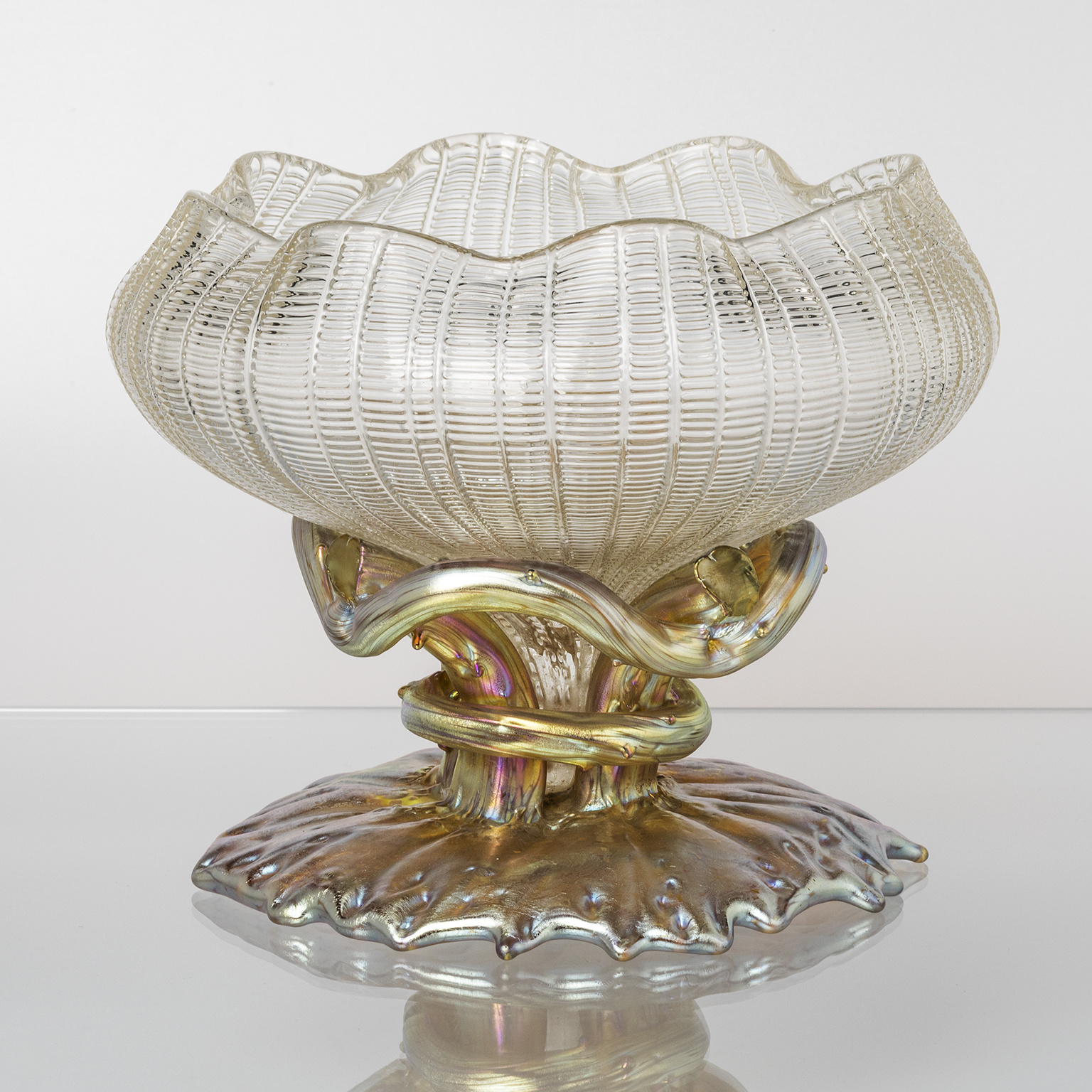
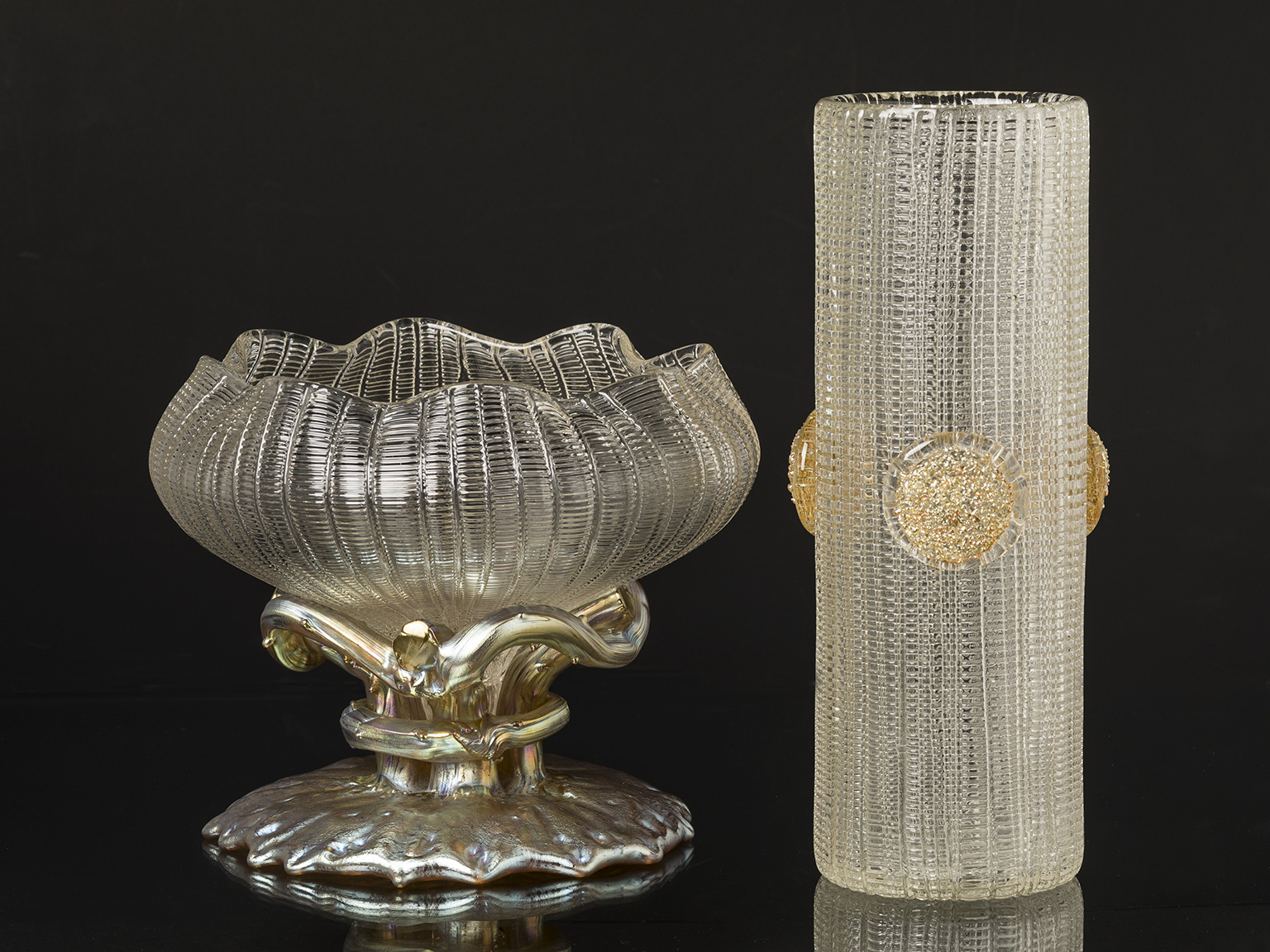
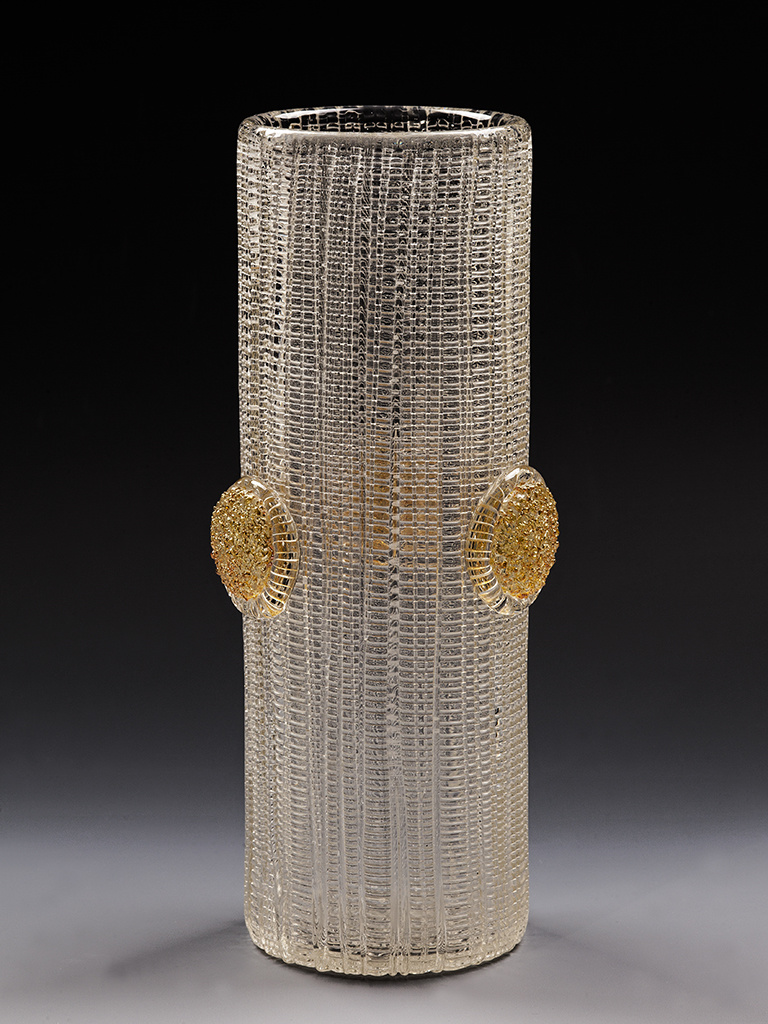
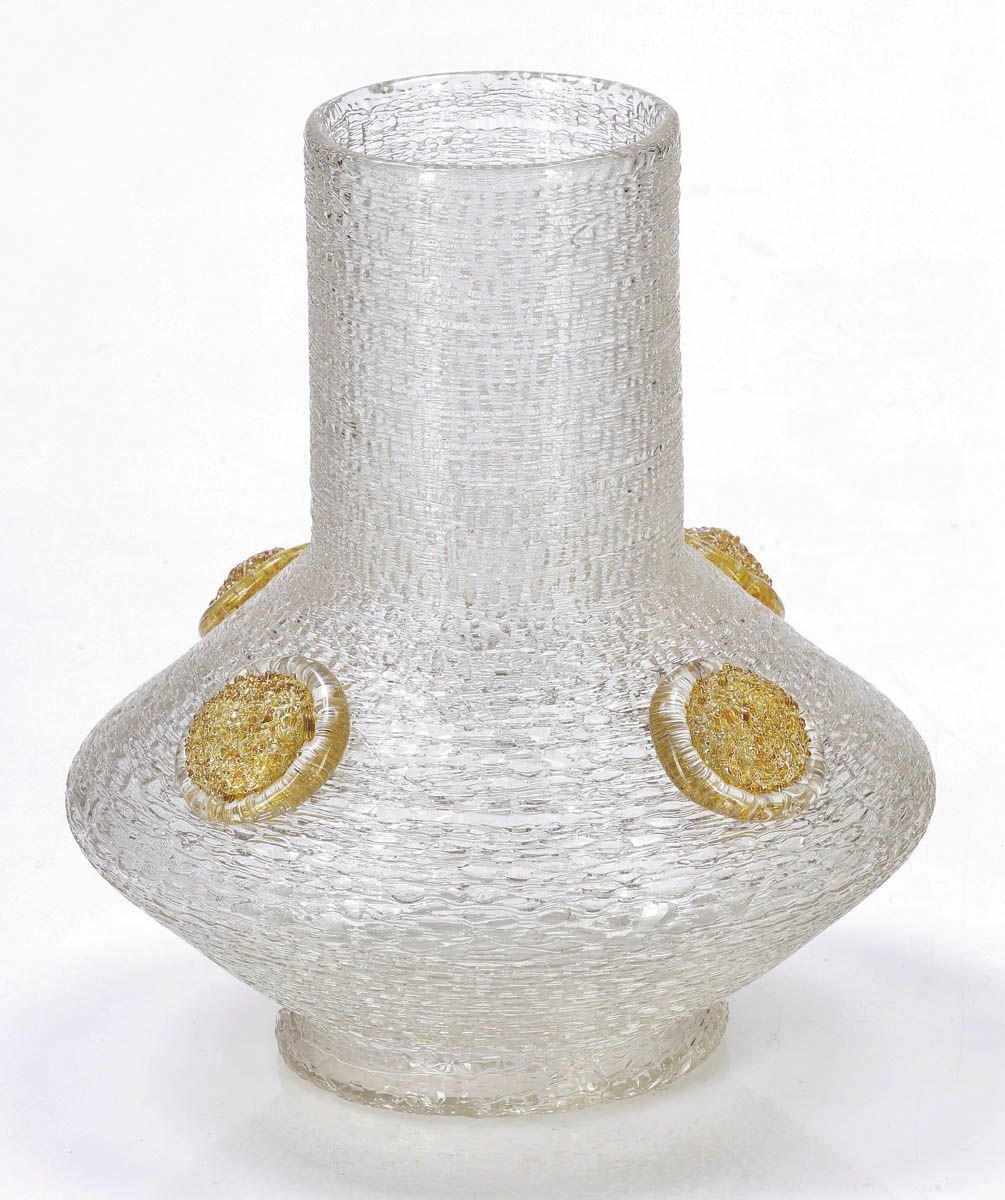
The common feature of the first “Ausführungen” is crystal as the base glass. Although Ausführung 1 up to Ausführung 5 are noted on approximately 250 paper patterns, only a few seem to exist today. I am only aware of a single example of Ausführung 1, which is now part of an important Czech glass collection. Here, a crystal thread is spun densely onto the base glass (»kristall dicht gesponnen«). Several round applications with “gold crumbs” complete the decor. In Ausführung 2, a smooth crystal thread is spun horizontally and vertically without the crumb applications. In 1908, Lötz used Ausführung 2 for vessels with intricately designed silver feet. They form a very unique group of art glasses. I am very grateful to an American collector who recently sold me her bowl in Ausführung 2 with a silver foot (PN II-6240). It is now on display in my collection together with a cylindrical vase in Ausführung 3. Ausführung 3 also features the horizontally and vertically spun crystal threads together with the “Gold Batzen” applications known from Ausführung 1.
Fig. 1: Bowl in Ausführung 2 with silver foot (PN II-6240) from 1908
Fig. 2: Ausführung 2 and 3
Fig. 3: Vase in Ausführung 3 (PN II-4477) from 1907
Fig. 4: Vase in Ausführung 1 (photo credit: Kastern auction house)



Thank you so much for your post. Very informative!
They look truly beautiful together!
A wonderful piece, and how lucky that you were able to acquire it! See also here: https://www.collectorsweekly.com/stories/272470-a-large-loetz-ausf-3-vase-in-brass-mount
Very nice and informative article! Thank you!