







Posted 2 months ago
 Loetzforever
(110 items)
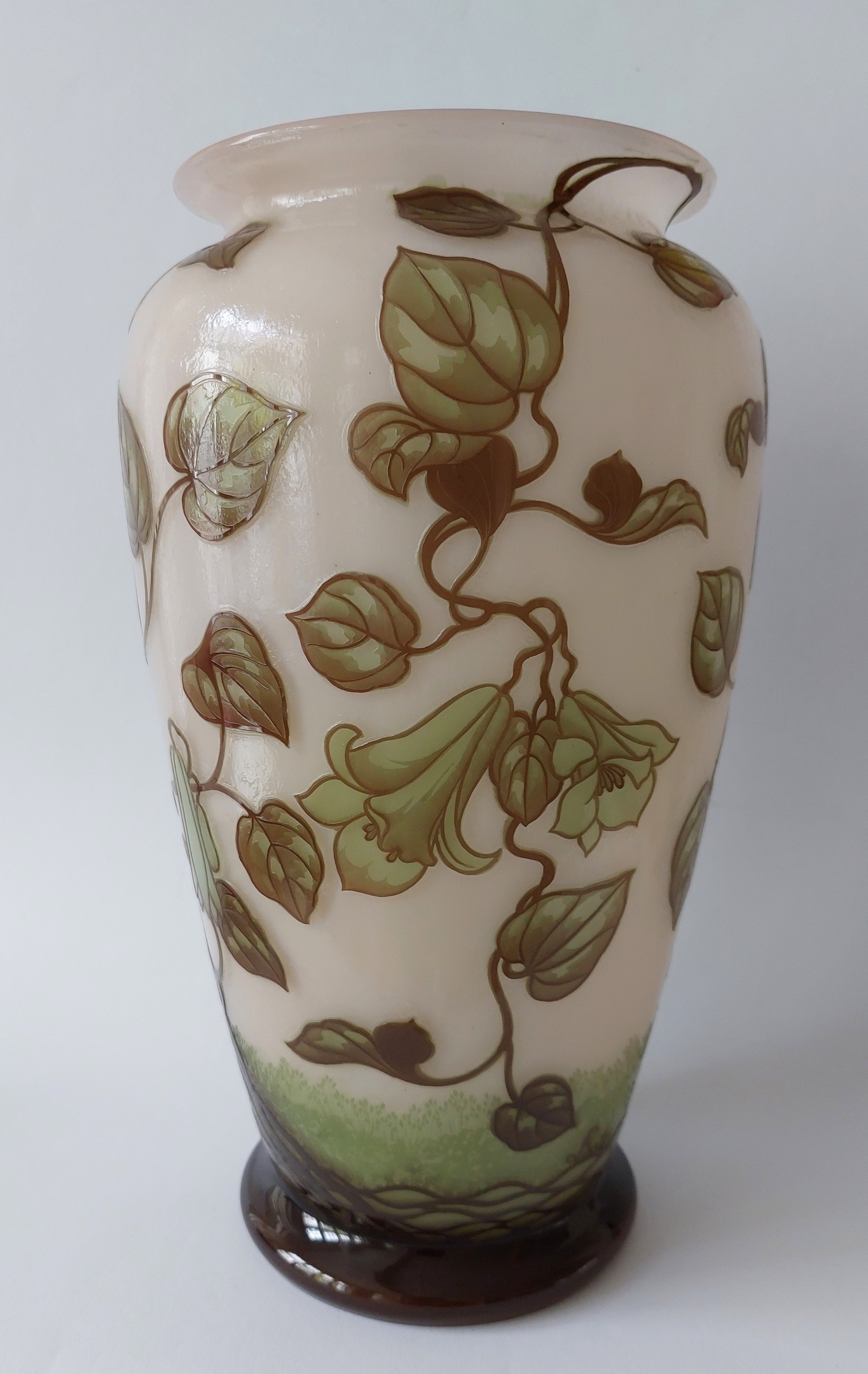
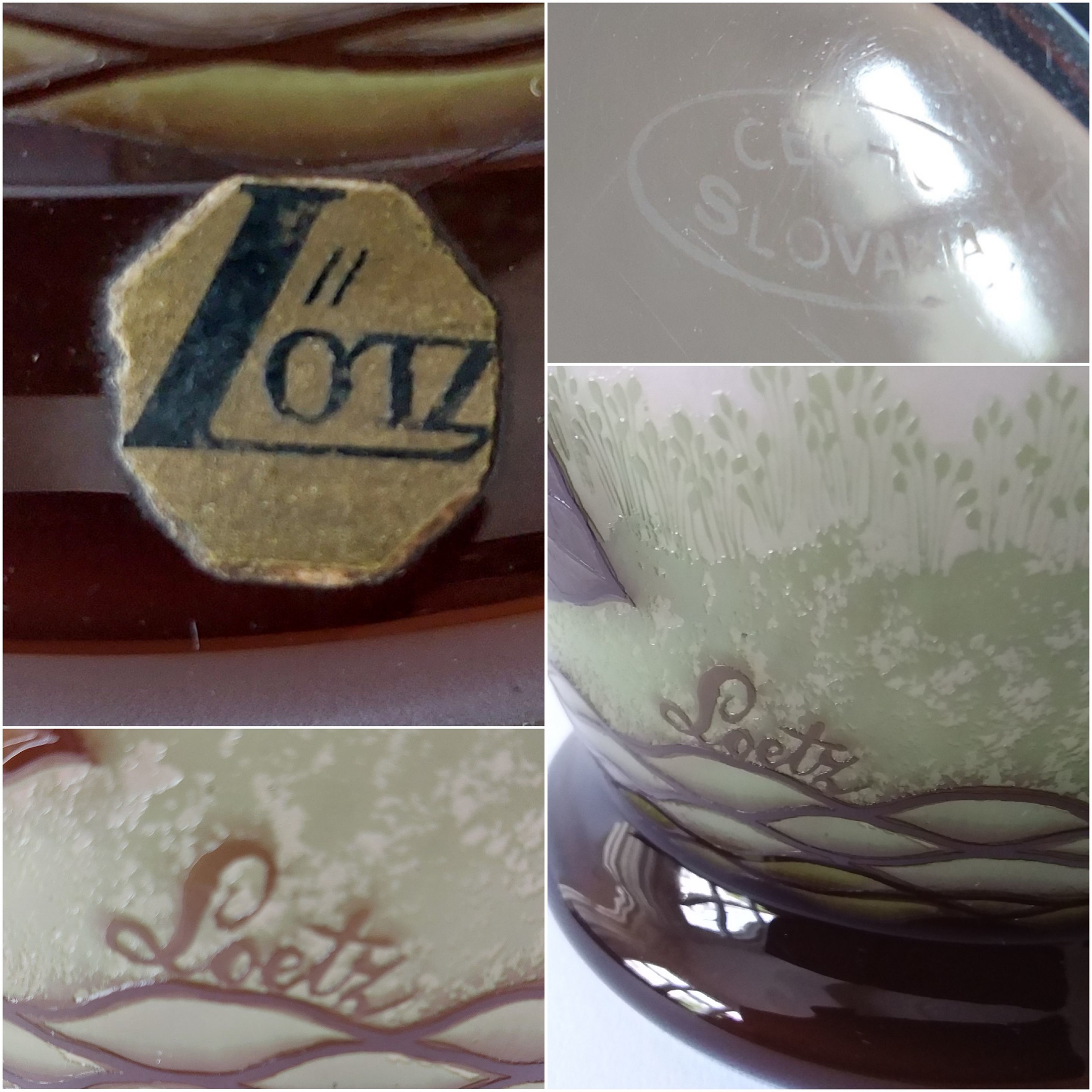
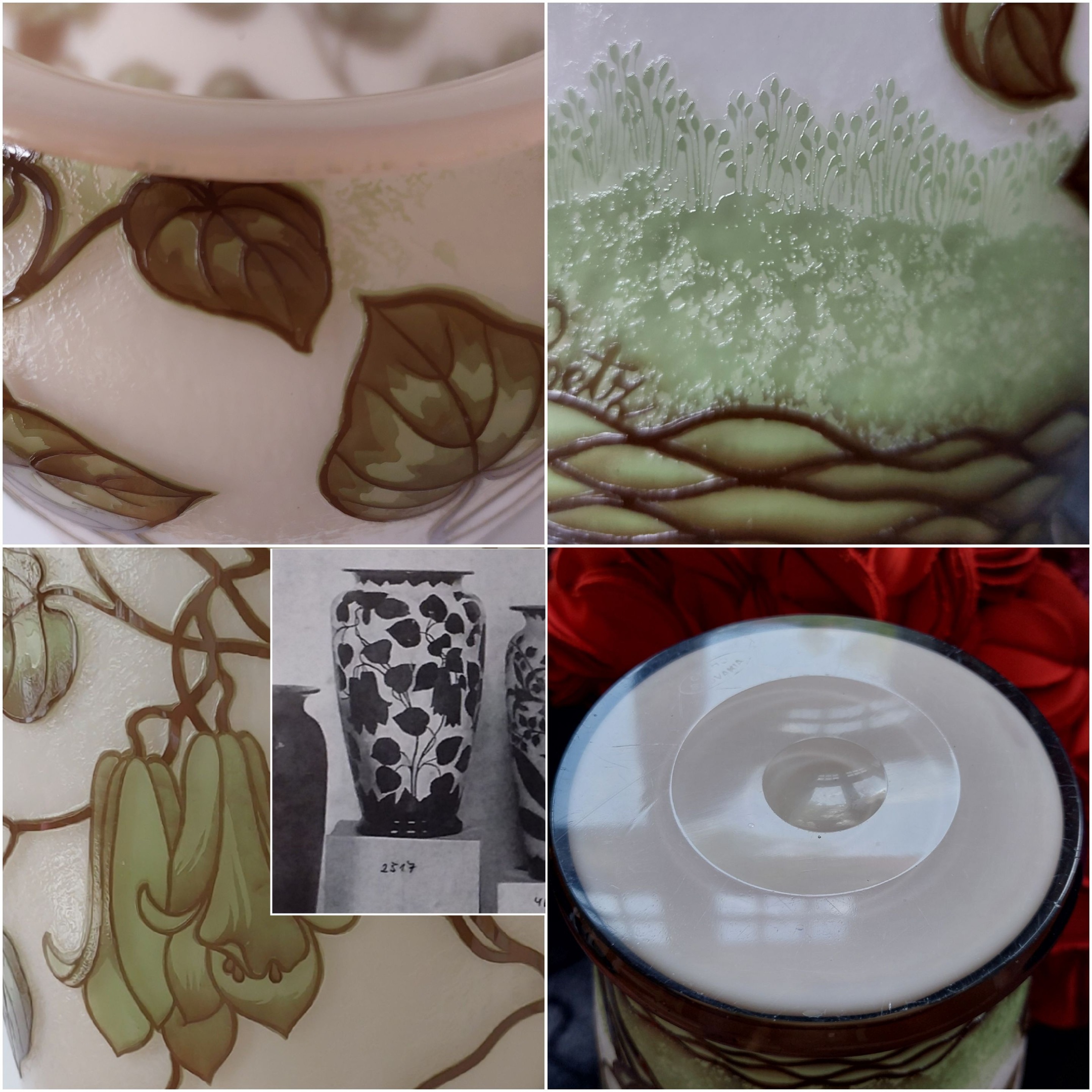
I had never seen a vase with this decoration before and was happy that I was able to buy it. It belongs to the series of etched vases with a wave decoration in the lower part above the foot. Perhaps it is also a later continuation of this series. The following can be said about the chronological classification: since the vase is stamped with "Czechoslovakia", it can only have been made after October 28, 1918 (foundation of the former Czechoslovakia). The PN III 2517 corresponds to the time of creation around 1925. It is basically the identical decoration that is shown in Ricke II (page 583), only that it has been supplemented with these waves and this grassy landscape. Apart from this illustration in Ricke, there is no reference to this piece, at least I couldn't find anything else about it. There is also a photo on the collage showing the really finely worked etching of the lower grassland (flower meadow?). This only catches the eye on closer inspection. Such an effort probably indicates an exhibition piece, perhaps it is even a later, as yet unknown version. Compared to the etched decorations for the French market ("Richard" etc.), this vase is of top quality.
Form from 1925, PN III 2517, pink alabaster with green and brown. Blown into the form and freely formed, very finely etched and fire polished. Signed with "Loetz" on the wall. Additionally stamped with "Czechoslovakia" in the ground outline and on the base there is an octagonal paper sticker with the name "Lötz". According to the book "Lötz" Volume 1 (Ricke), this sticker was used since the late 1920s and during the 1930s in parallel with the ram mark for the modern production line. Height: 33.5 cm
Loetz: PN III 2517
Eine Vase mit diesem Dekor hatte ich bisher noch nie gesehen und war froh, daß ich sie erwerben konnte. Sie gehört zu der Serie der geätzten Vasen mit einem Wellendekor im unteren Teil über dem Fuß. Vielleicht handelt es sich auch um eine spätere Fortführung dieser Serie. Zu der zeitlichen Einordnung gibt es folgendes zu sagen: da die Vase mit "Czechoslovakia" gestempelt ist, kann diese erst nach dem 28. Oktober 1918 (Gründung der ehemaligen Tschecheslowakei) entstanden sein. Die PN III 2517 entspricht der Enstehungszeit um 1925. Es handelt sich im Grund um das identische Dekor, welches bei Ricke II (Seite 583) abgebildet ist, nur daß es mit diesen Wellen und dieser Graslandschaft ergänzt wurde. Außer dieser Abbildung bei Ricke gibt es keinen Hinweis auf dieses Stück, zumindest fand ich nichts weiteres dazu. Auf der Collage befindet sich noch ein Foto, welches die wirklich fein ausgearbeitete Ätzung der unteren Graslandschaft (Blumenwiese?) zeigt. Diese fällt nur bei der näheren Betrachtung ins Auge. Ein solcher Aufwand spricht wahrscheinlich für ein Ausstellungsstück, eventuell handelt es sich gar um eine spätere noch unbekannte Ausführung. Verglichen mit den geätzten Dekoren für den französischen Markt ("Richard" usw.) hat diese Vase eine Spitzenqualität.
Form von 1925, PN III 2517, rosa Alabaster mit grün und braun. In
die Form geblasen und frei geformt, sehr fein geätzt und
feuerpoliert. Signiert mit „Loetz“ auf der Wandung. Zusätzlich im
ausgeschliffenen Abriss mit „Czechoslovakia“ gestempelt und am Fuß noch einen Papieraufkleber in achteckiger Form mit der Bezeichnung „Lötz“ . Laut dem Buch "Lötz" Band 1 (Ricke) wurde dieser Aufkleber seit den späten 20er und während der 30er Jahre parallel zur Widdermarke für die moderne Produktionslinie verwendet. Höhe. 33,5 cm




Beautiful! I like the subtle coloring of this piece.
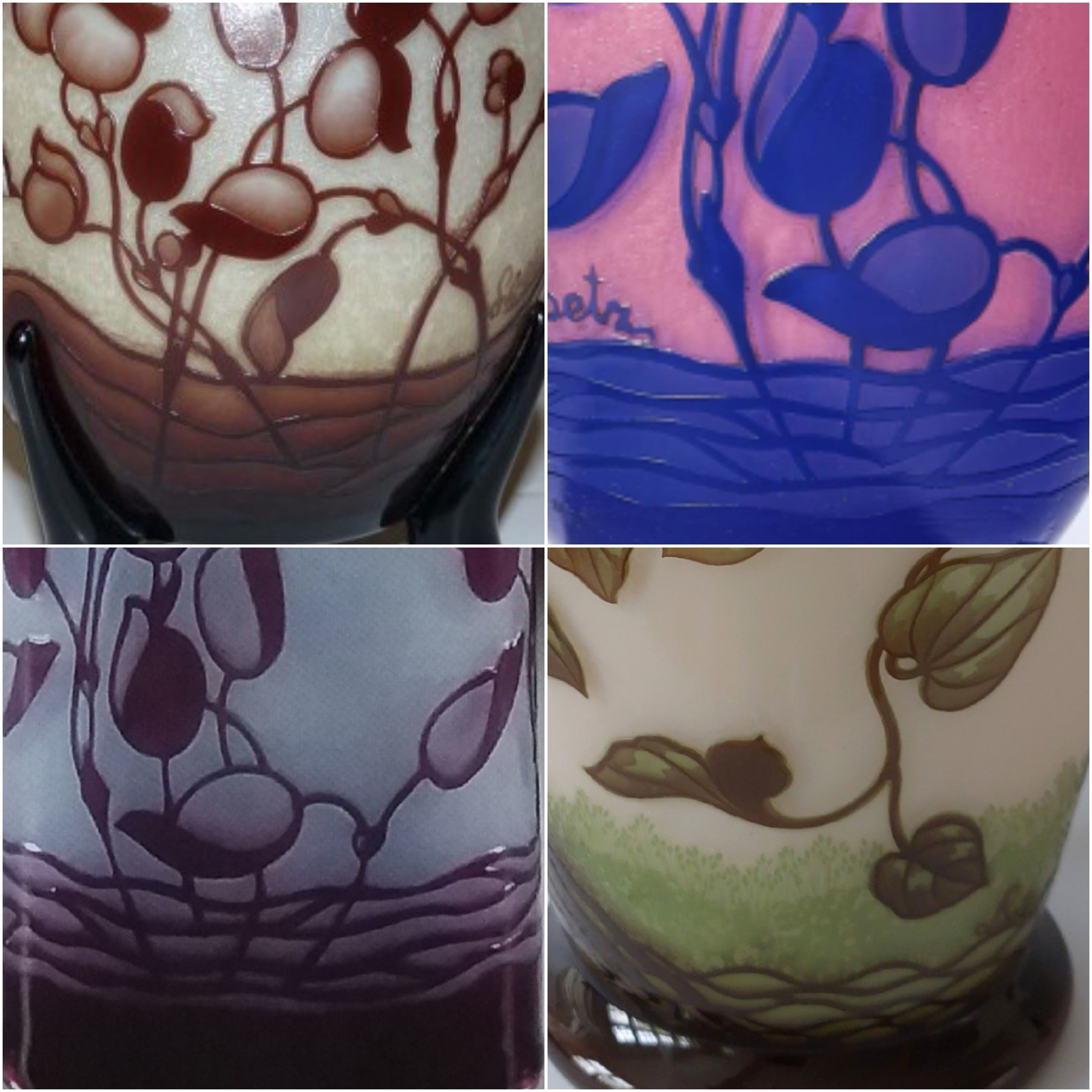
This is a wonderful piece! Thank you for posting it. In your last image, it appears that there are three pieces with a slightly different decorative motif. They seem to all belong to the same fire-polished cameo family, with superior quality as you have noted. But are they not considered to be different? I'm asking because these are the same as my vase posted here: https://www.collectorsweekly.com/stories/187328-loetz-cameo-vase?in=441-activity
Hello Wow22, I saw your vase on CW and find it very interesting. Given its top-heavy shape, it's amazing that it has survived all these years unscathed.
Unfortunately, after many years of research, it has still not been possible to identify this decoration/decorations. I fully agree with Bohemianglassandmore's comment on your post. I would also like to point out that even with an identical decoration, each piece is unique because it is handmade. This becomes clear when you see a rare pair.
You can see a pair from another manufacturer here:
https://www.collectorsweekly.com/stories/296595-chistallerie-wadgassen-villeroy-and-boch
Thank you so much for your response. Your posts and comments are always very enlightening. I keep returning to look at this stunning vase! So amazing...